In English grammar, conditional sentences are used to speculate about what could happen under certain circumstances. The second conditional is used to talk about hypothetical or imagined situations in the present or future. It is formed using the simple past tense in the if-clause and the modal verb “would” in the main clause.
Second conditional sentences are often used to express desires, wishes, or dreams that are unlikely to come true. They can also be used to give advice or make suggestions in a polite way.
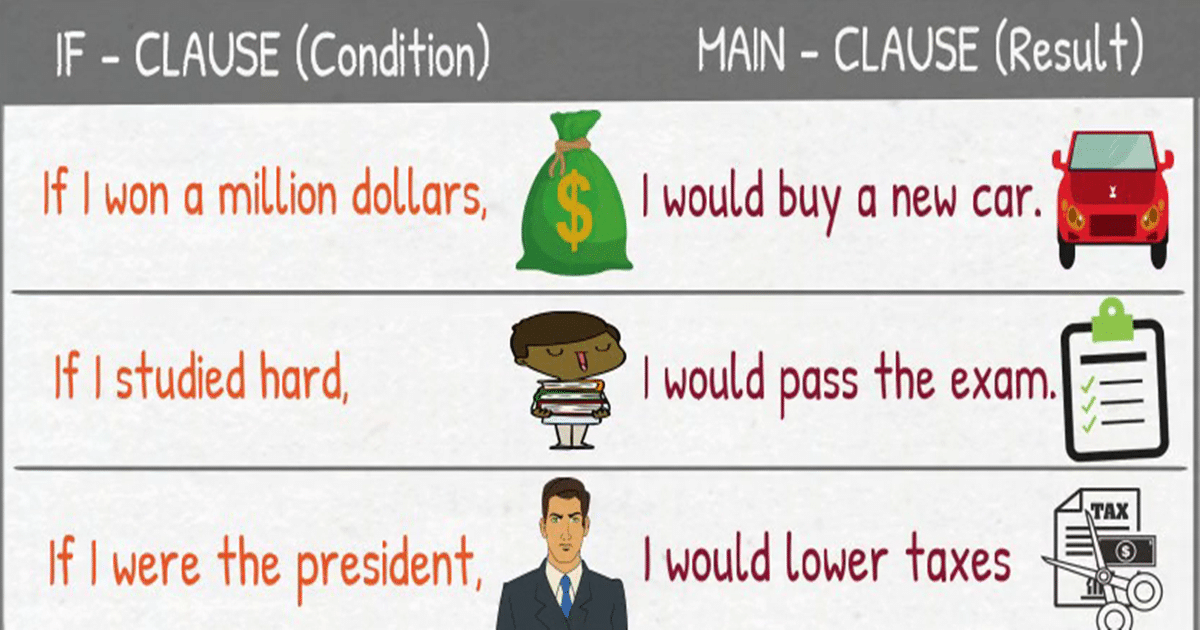
Examples of 2nd Conditional Sentences:
1. If I won the lottery, I would buy a big house.
2. If she studied harder, she would pass the exam.
3. If it rained tomorrow, we would stay indoors.
4. If I were you, I would apologize to him.
5. If they had more time, they would travel around the world.
Second conditional sentences can also be used to express regrets or apologies for a situation that cannot be changed. They are a way to talk about hypothetical outcomes in a polite and indirect manner.
In conclusion, the second conditional is a useful tool in English grammar for expressing hypothetical situations, desires, wishes, advice, and regrets. By using the simple past tense in the if-clause and the modal verb “would” in the main clause, you can create meaningful and polite sentences that convey your thoughts effectively.
Next time you want to talk about what could happen under certain circumstances, remember to use the second conditional to add depth and nuance to your conversations.