English grammar punctuation marks are essential components of writing that help convey meaning, clarify sentences, and guide readers through the text. Understanding how to use these punctuation marks correctly can greatly enhance the effectiveness of your writing.
From commas and periods to colons and semicolons, each punctuation mark serves a specific purpose in structuring sentences and organizing thoughts. Let’s explore some of the most common punctuation marks in English grammar.
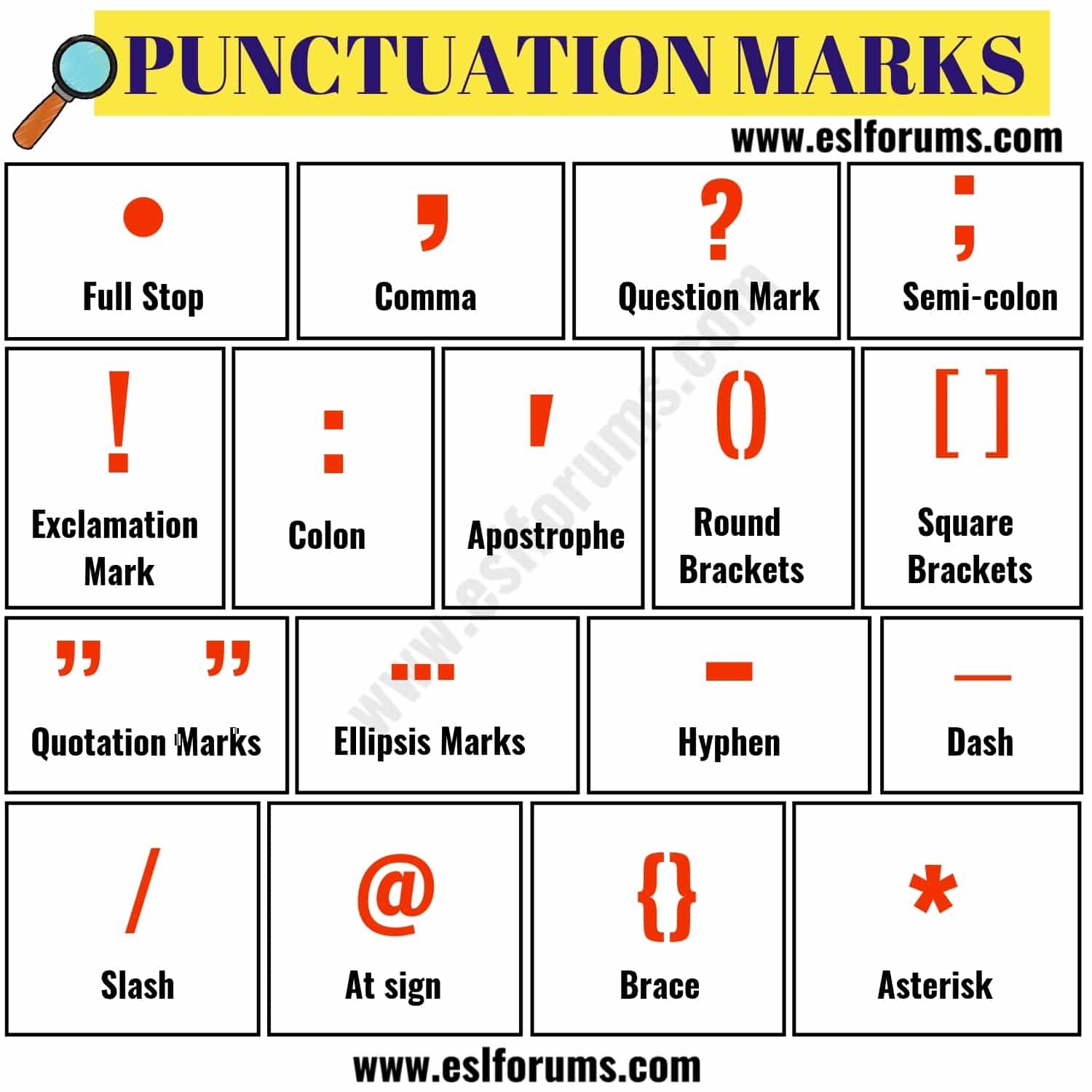
Common English Grammar Punctuation Marks
1. Comma (,): Used to separate items in a list, connect independent clauses, and set off introductory phrases.
2. Period (.): Indicates the end of a sentence or an abbreviation.
3. Colon (:): Introduces a list or explanation and can also be used to emphasize a point.
4. Semicolon (;): Connects two closely related independent clauses and separates items in a list when commas are already present.
5. Quotation Marks (” ” or ‘ ‘): Used to indicate direct speech, quotes, titles of short works, and to highlight specific words or phrases.
Understanding the proper usage of these punctuation marks can help improve the clarity and flow of your writing. Whether you are writing an essay, a report, or a creative piece, using punctuation marks effectively is crucial for effective communication.
Remember to always proofread your writing to ensure that your punctuation is correct and enhances the overall readability of your work. Practice using different punctuation marks in various contexts to become more proficient in their usage.
By mastering English grammar punctuation marks, you can elevate the quality of your writing and effectively convey your thoughts and ideas to your readers. So, next time you sit down to write, pay attention to the punctuation marks you use and see how they can make a difference in your writing.