In English grammar, the past perfect tense is used to describe an action that took place before another action in the past. It is formed by using the past tense of “have” (had) followed by the past participle of the main verb. This tense helps to show the sequence of events in a story or narrative.
Understanding how to use the past perfect tense can help to add depth and clarity to your writing. By mastering this tense, you can effectively convey the relationships between different past actions. Below are some examples of the past perfect tense in action.
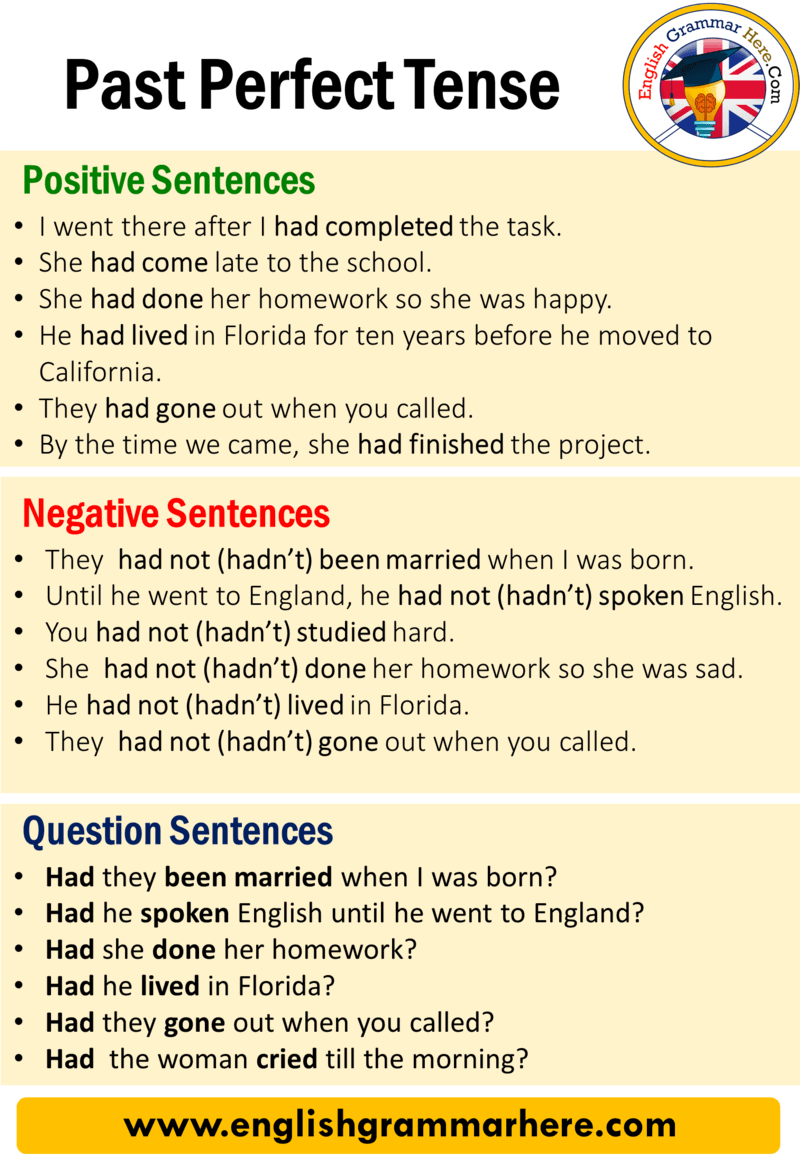
Examples:
1. She had already finished her homework before her friends arrived at her house. (The action of finishing homework took place before the action of her friends arriving.)
2. By the time the movie started, he had eaten all of the popcorn. (The action of eating the popcorn occurred before the movie started.)
3. They had never been to Europe before they went on their backpacking trip. (The action of going on the backpacking trip happened after the action of never being to Europe.)
4. The team had won the championship three times before their coach retired. (The action of winning the championship occurred before the coach retired.)
5. I had already left for work when I realized I forgot my phone at home. (The action of leaving for work happened before realizing the phone was forgotten.)
Using the past perfect tense can help to create a more nuanced and engaging narrative. By showing the sequence of events in the past, you can provide readers with a clearer understanding of the timeline of your story. Practice incorporating the past perfect tense into your writing to improve your storytelling skills.
In conclusion, the past perfect tense is a valuable tool for writers to convey the sequence of events in a story. By using this tense effectively, you can enhance the clarity and depth of your writing. Experiment with incorporating the past perfect tense into your narratives to see how it can elevate your storytelling.