In English grammar, a pronoun is a word that can function by itself as a noun phrase. It is used to avoid repetition of a noun and make sentences less repetitive and more concise. Pronouns can refer to people, places, things, or ideas.
There are several types of pronouns, including personal pronouns, demonstrative pronouns, interrogative pronouns, relative pronouns, indefinite pronouns, and reflexive pronouns. Each type serves a specific purpose in a sentence.
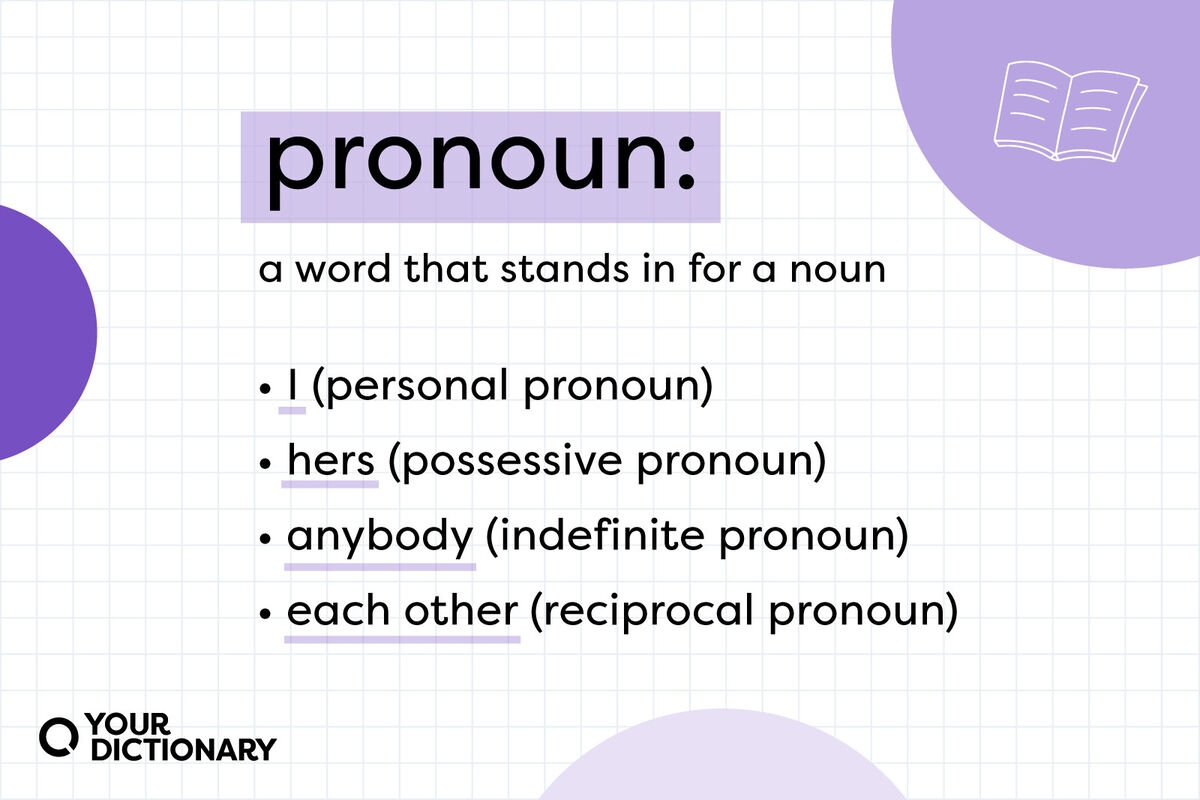
Definition of Pronoun with Example
A pronoun is a word that takes the place of a noun in a sentence. For example, in the sentence “She is going to the store,” the pronoun “she” replaces a specific female noun, such as “Mary.” This helps to avoid repeating the same noun multiple times in a sentence.
Personal pronouns, such as “I,” “you,” “he,” “she,” “it,” “we,” and “they,” are used to refer to specific people or things. For example, in the sentence “They are coming to the party,” the pronoun “they” refers to a group of people without specifying each individual’s name.
Demonstrative pronouns, like “this,” “that,” “these,” and “those,” are used to point to specific things or people. For instance, in the sentence “This is my book,” the pronoun “this” indicates a particular object that is close to the speaker.
Interrogative pronouns, such as “who,” “whom,” “whose,” “which,” and “what,” are used to ask questions. For example, in the sentence “Who is at the door?” the pronoun “who” is used to inquire about the identity of the person outside.
Relative pronouns, like “who,” “whom,” “whose,” “which,” and “that,” are used to connect clauses or phrases in a sentence. For instance, in the sentence “The book that I bought is on the table,” the pronoun “that” introduces the relative clause describing the book.
Indefinite pronouns, such as “everyone,” “someone,” “nobody,” “anything,” and “everything,” refer to nonspecific people or things. For example, in the sentence “Everyone is invited to the party,” the pronoun “everyone” does not specify any particular individual.
Reflexive pronouns, like “myself,” “yourself,” “himself,” “herself,” “itself,” “ourselves,” and “themselves,” are used to reflect back on a noun or pronoun previously mentioned in the sentence. For instance, in the sentence “She hurt herself while playing,” the pronoun “herself” refers back to the subject “she.”
In conclusion, pronouns play a crucial role in English grammar by replacing nouns and making sentences more concise and less repetitive. By understanding the different types of pronouns and how to use them correctly, you can improve the clarity and flow of your writing.