Nouns are an essential part of language and communication. They are words that represent a person, place, thing, or idea. Without nouns, it would be challenging to convey information or express thoughts effectively. Nouns play a crucial role in constructing sentences and forming the foundation of language.
There are different types of nouns, such as common nouns, proper nouns, concrete nouns, abstract nouns, countable nouns, and uncountable nouns. Each type serves a specific purpose in language and helps to provide clarity and specificity in communication.
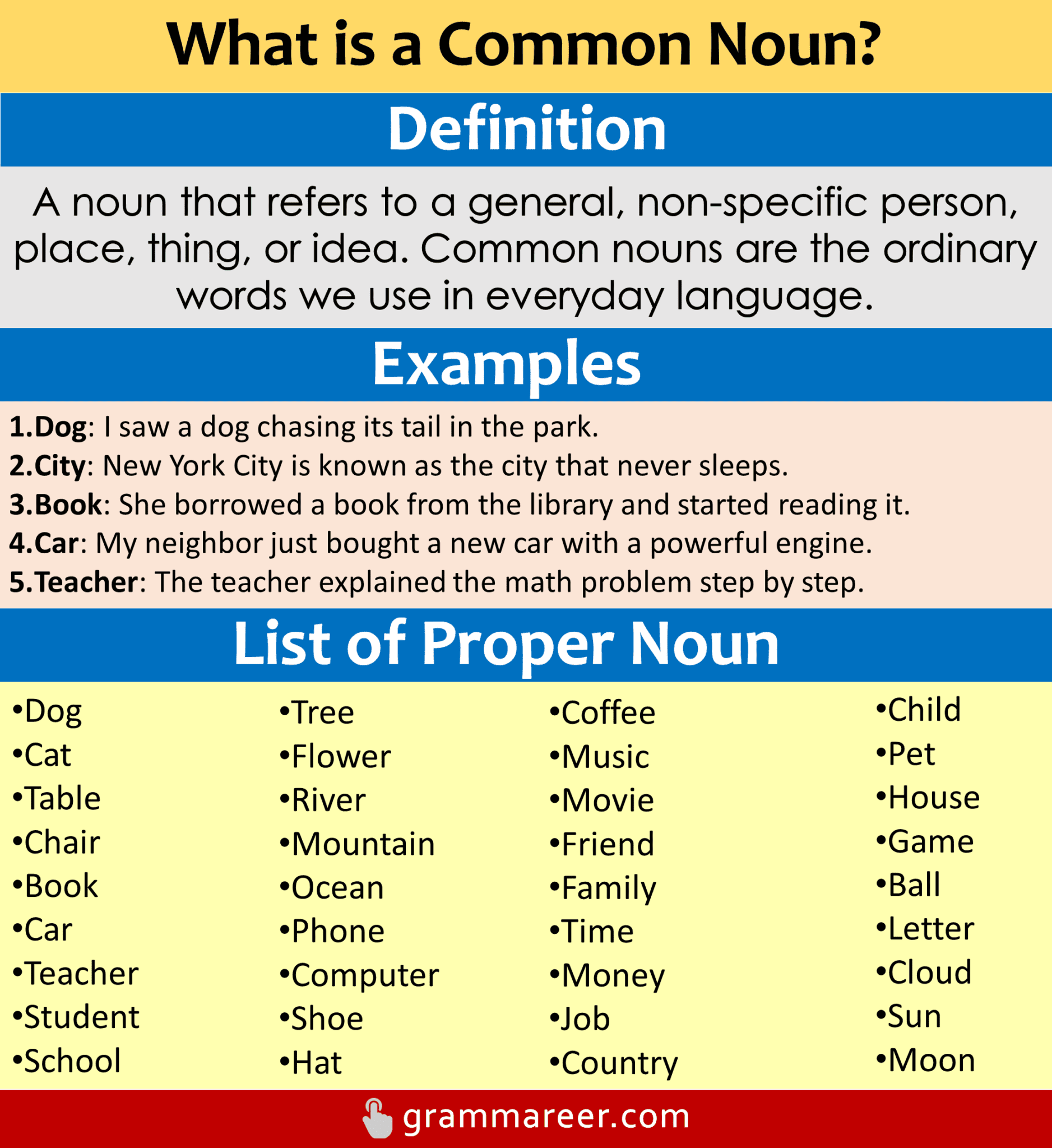
Definition of the Noun
A noun is a word that names a person, place, thing, or idea. It is a part of speech that helps identify and classify objects or concepts in language. Nouns can function as the subject or object of a sentence, as well as the complement or modifier of other words. They are essential for forming sentences and conveying meaning.
Common nouns are general names for people, places, or things, such as “dog,” “city,” or “book.” Proper nouns, on the other hand, are specific names that refer to unique entities, like “John,” “Paris,” or “Harry Potter.” Concrete nouns represent tangible objects that can be perceived through the senses, while abstract nouns denote ideas, emotions, or qualities that are intangible.
Countable nouns can be quantified and expressed in singular or plural form, such as “apple” or “apples.” Uncountable nouns, however, cannot be counted individually and usually represent abstract concepts or substances, like “water” or “happiness.” Understanding the different types of nouns can help improve language proficiency and communication skills.
In conclusion, nouns are fundamental elements of language that help us identify and categorize the world around us. By using nouns effectively, we can articulate our thoughts, share information, and communicate with others. Whether it’s a person, place, thing, or idea, nouns play a vital role in shaping the structure and meaning of sentences. Embracing the diversity and versatility of nouns can enhance our language comprehension and expression.