In the English language, pronouns play a crucial role in helping us avoid repetition and make our sentences more concise and clear. Pronouns are words that take the place of nouns in a sentence, allowing us to refer to people, places, things, or ideas without constantly repeating their names. Using pronouns correctly is essential for effective communication and writing.
Whether you’re writing an essay, giving a speech, or having a conversation, pronouns help you express ideas more efficiently and maintain the flow of your sentences. Understanding the different types of pronouns and how to use them correctly is key to becoming a proficient English speaker and writer.
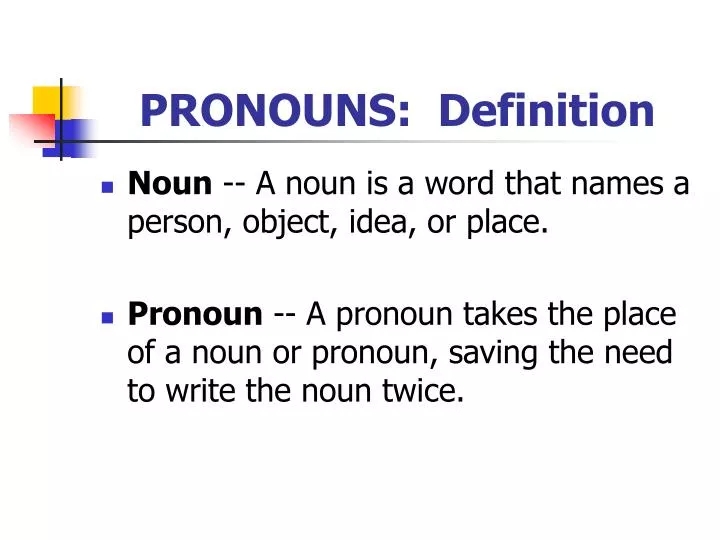
Definition of Pronoun
A pronoun is a word that takes the place of a noun in a sentence. Instead of constantly repeating a noun, we can use a pronoun to refer back to it without confusion. Pronouns can refer to people (he, she, they), places (it, there), things (this, that), or ideas (who, which). By using pronouns, we can make our sentences clearer and more concise.
There are several types of pronouns in English, including personal pronouns (I, you, he, she, it, we, they), demonstrative pronouns (this, that, these, those), relative pronouns (who, whom, whose, which, that), and indefinite pronouns (anyone, something, everybody, nobody). Each type of pronoun serves a specific purpose in a sentence and must be used correctly to avoid confusion.
When using pronouns, it’s essential to match them correctly with the nouns they refer to in terms of gender, number, and person. Incorrect pronoun usage can lead to ambiguity or grammatical errors in a sentence. By mastering the rules of pronoun usage, you can enhance the clarity and effectiveness of your writing and communication.
In conclusion, pronouns are essential linguistic tools that help us communicate more efficiently and effectively in the English language. By understanding the definition of pronouns and how to use them correctly, you can improve the clarity and coherence of your writing and speech. Practice using pronouns in various contexts to become more proficient in expressing ideas and thoughts in a concise and precise manner.