When learning the German language, one of the key components to master is the proper use of pronouns. Pronouns play a crucial role in communication as they help to replace nouns and avoid repetition. Understanding and using pronouns correctly can greatly improve your German language skills and fluency.
Deutsch pronouns come in various forms and are used in different contexts. It is important to familiarize yourself with the different types of pronouns and when to use them to convey your thoughts effectively in German.
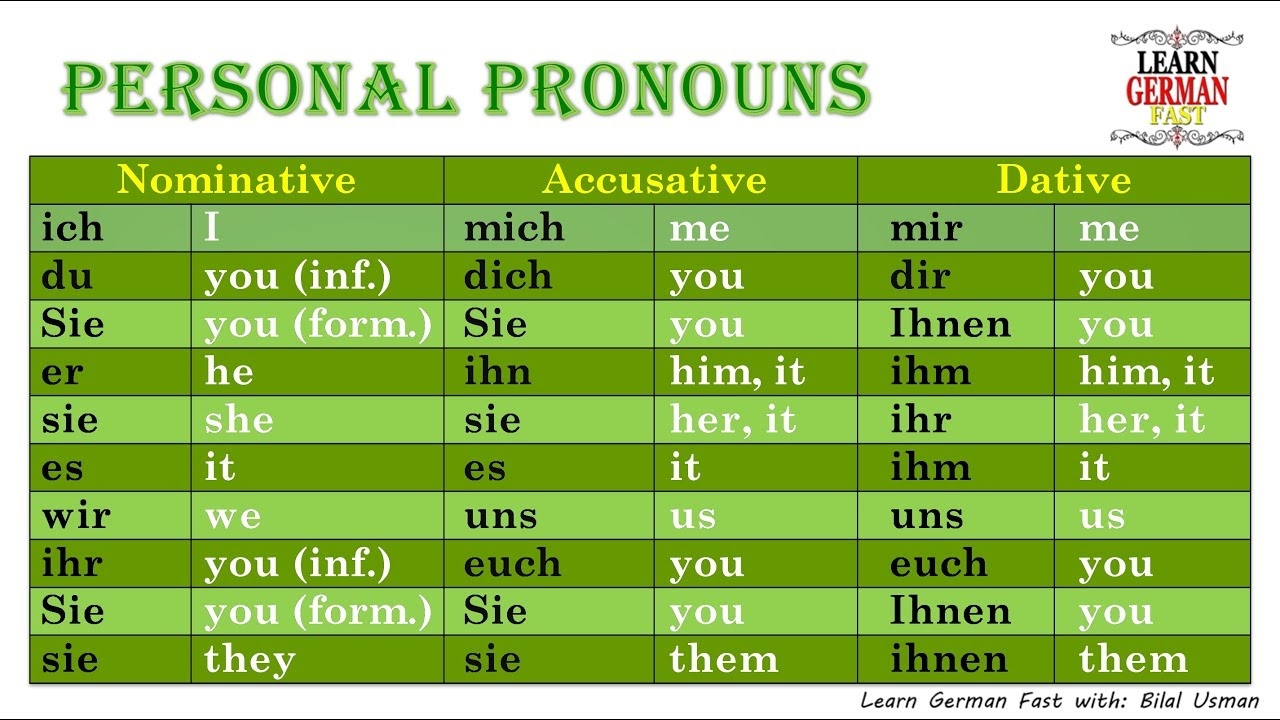
Deutsch Pronouns
There are several types of pronouns in the German language, including personal pronouns, possessive pronouns, demonstrative pronouns, and reflexive pronouns. Personal pronouns in German include ich (I), du (you), er/sie/es (he/she/it), wir (we), ihr (you all), and sie/Sie (they/you formal). Possessive pronouns indicate ownership and include mein (my), dein (your), sein (his/its), unser (our), euer (your all), and ihr (their). Demonstrative pronouns such as dieser (this) and jener (that) are used to point to specific nouns. Reflexive pronouns are used when the subject and object of a sentence are the same, such as mich (myself) and sich (himself/herself/themselves).
It is important to pay attention to the gender, number, and case of the noun when choosing the appropriate pronoun in German. For example, the pronoun used for “the” can vary depending on whether the noun is masculine, feminine, or neuter, and whether it is in the nominative, accusative, dative, or genitive case.
Practice using Deutsch pronouns in sentences to become more comfortable with their usage. The more you practice, the more natural it will become to choose the correct pronoun in different situations. Reading and listening to German conversations can also help you become familiar with how pronouns are used in context.
Overall, mastering Deutsch pronouns is essential for effective communication in the German language. By understanding the different types of pronouns and when to use them, you can improve your language skills and fluency. Keep practicing and incorporating pronouns into your speech and writing to become more confident in your German proficiency.
In conclusion, Deutsch pronouns are a vital aspect of the German language that should not be overlooked. By learning and practicing the various types of pronouns, you can enhance your language skills and communicate more effectively in German.