Idioms are expressions that have meanings beyond their literal interpretation. They are commonly used in everyday language to convey ideas or emotions in a more colorful and vivid way. Idioms can be confusing for non-native speakers, as they may not understand the hidden meanings behind them. However, learning idioms can enhance your language skills and make your communication more engaging.
Idioms are an integral part of English language and culture, and they can be found in various contexts such as literature, conversations, and even in movies. Understanding idioms can help you better comprehend the nuances of the language and become a more fluent speaker. Below is a list of idioms examples that are commonly used in English:
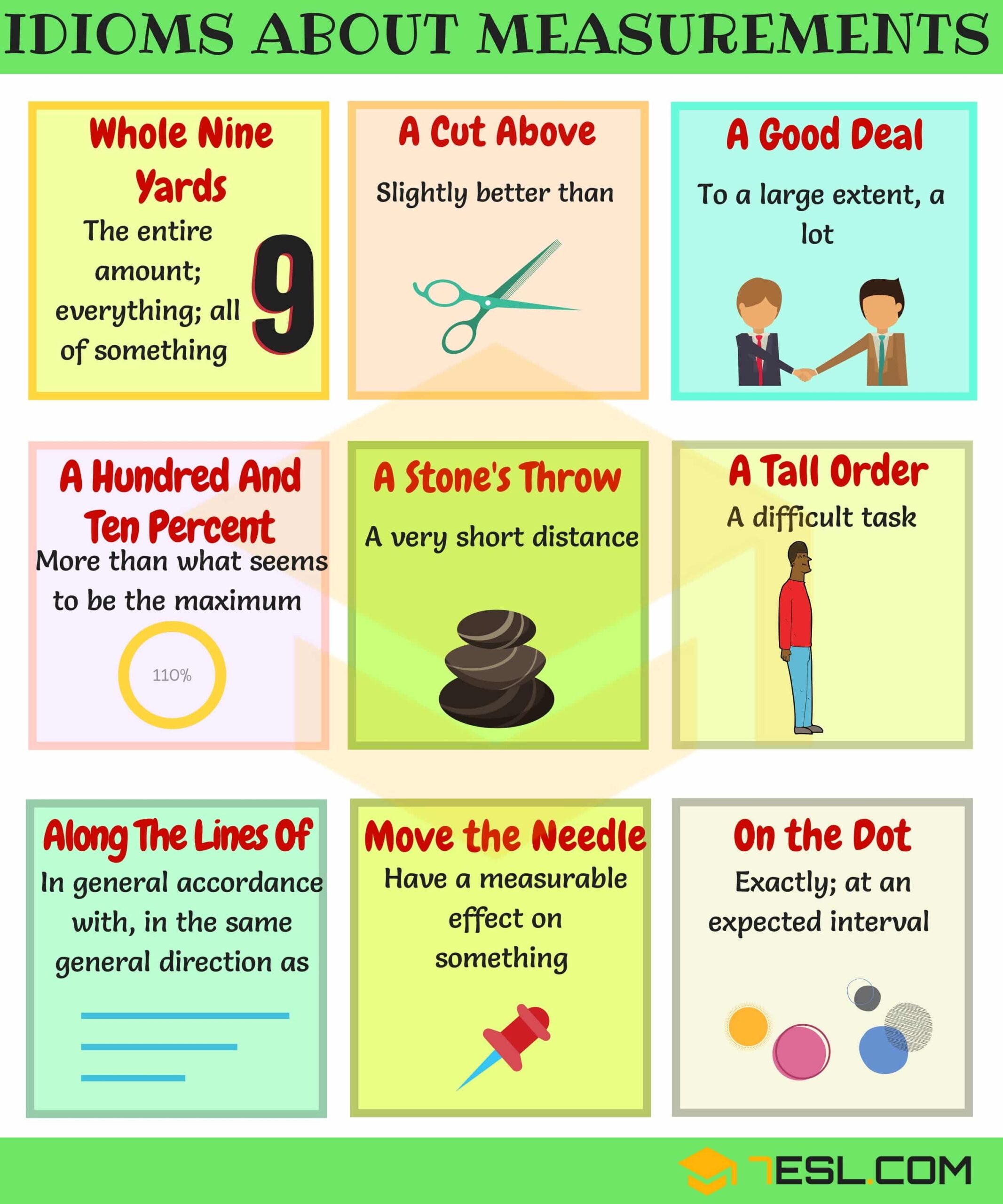
List of Idioms Examples:
- Break a leg
- Cost an arm and a leg
- Hit the nail on the head
- It’s raining cats and dogs
- Piece of cake
1. “Break a leg” – This idiom is used to wish someone good luck before a performance or event. It is believed to have originated in the theater, where saying “good luck” is considered bad luck.
2. “Cost an arm and a leg” – This idiom is used to describe something that is very expensive. It implies that the price of the item is so high that it would cost you a body part.
3. “Hit the nail on the head” – This idiom means to do or say something exactly right or accurately. It is often used when someone makes a correct assessment or observation.
4. “It’s raining cats and dogs” – This idiom is used to describe heavy or intense rainfall. It does not literally mean that animals are falling from the sky, but rather emphasizes the severity of the rain.
5. “Piece of cake” – This idiom is used to describe something that is very easy to do. It suggests that the task at hand requires minimal effort or skill.
Learning idioms can add depth and richness to your language skills. By incorporating idiomatic expressions into your vocabulary, you can communicate more effectively and creatively. So, the next time you come across an idiom, don’t be puzzled by its hidden meaning – embrace it as a unique aspect of the English language.