English verb tenses play a crucial role in conveying the time and duration of an action or event. By using the correct tense, you can accurately communicate when something happened or will happen in the future. Understanding verb tenses is essential for effective communication in both spoken and written English.
Verb tenses are divided into three main categories: past, present, and future. Each category has various forms that indicate different aspects of time, such as simple, continuous, perfect, and perfect continuous. By mastering these tenses, you can express yourself more clearly and accurately in English.
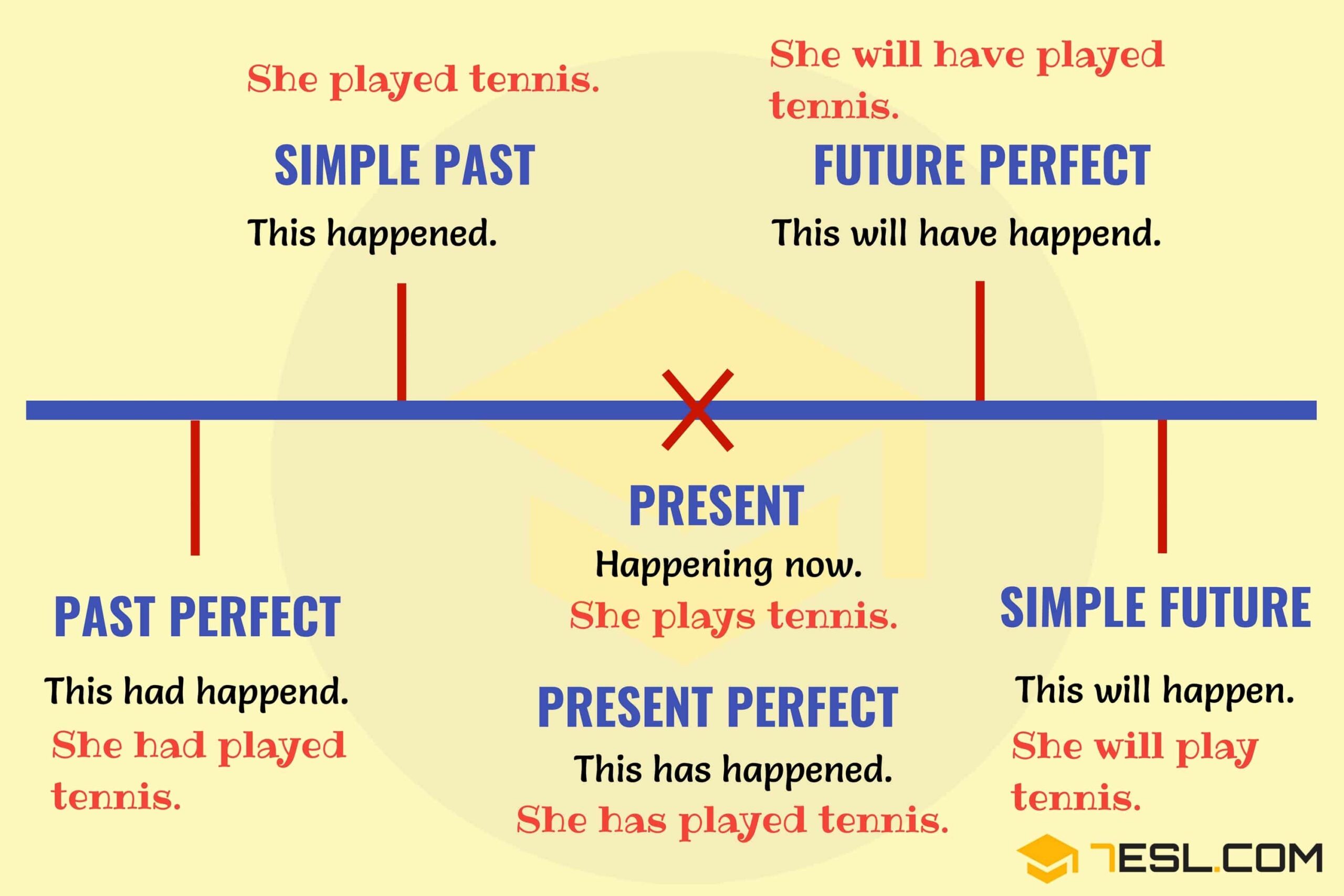
English Verb Tenses
The present tense is used to describe actions that are happening now or are generally true. It has four main forms: simple present, present continuous, present perfect, and present perfect continuous. For example, “I work in an office” (simple present), “I am working on a project” (present continuous), “I have finished my work” (present perfect), and “I have been working all day” (present perfect continuous).
The past tense is used to talk about actions that have already happened. It also has four main forms: simple past, past continuous, past perfect, and past perfect continuous. For instance, “She visited her grandmother yesterday” (simple past), “I was studying when you called” (past continuous), “He had already left when I arrived” (past perfect), and “I had been waiting for hours” (past perfect continuous).
The future tense is used to discuss actions that will happen at a later time. It has three main forms: simple future, future continuous, and future perfect. Examples include “We will go to the beach tomorrow” (simple future), “She will be sleeping when we arrive” (future continuous), and “By this time next year, I will have graduated” (future perfect).
It’s important to note that English verb tenses can be combined and used in various ways to convey more complex meanings. By understanding the nuances of each tense and how they interact with one another, you can become a more proficient and confident English speaker.
In conclusion, mastering English verb tenses is essential for effective communication and expressing yourself accurately in both spoken and written English. By familiarizing yourself with the different forms and uses of each tense, you can enhance your language skills and convey your thoughts and ideas more clearly to others.