Adjectives are words that describe or modify nouns or pronouns. They add detail and enhance the meaning of a sentence. Without adjectives, our language would be bland and lacking in color. Adjectives can be used to describe qualities, quantities, sizes, colors, and more.
One of the most common types of adjectives is the descriptive adjective, which describes the characteristics or qualities of a noun. For example, in the sentence “The beautiful sunset painted the sky in shades of pink and orange,” the adjectives “beautiful,” “pink,” and “orange” all describe the noun “sunset.”
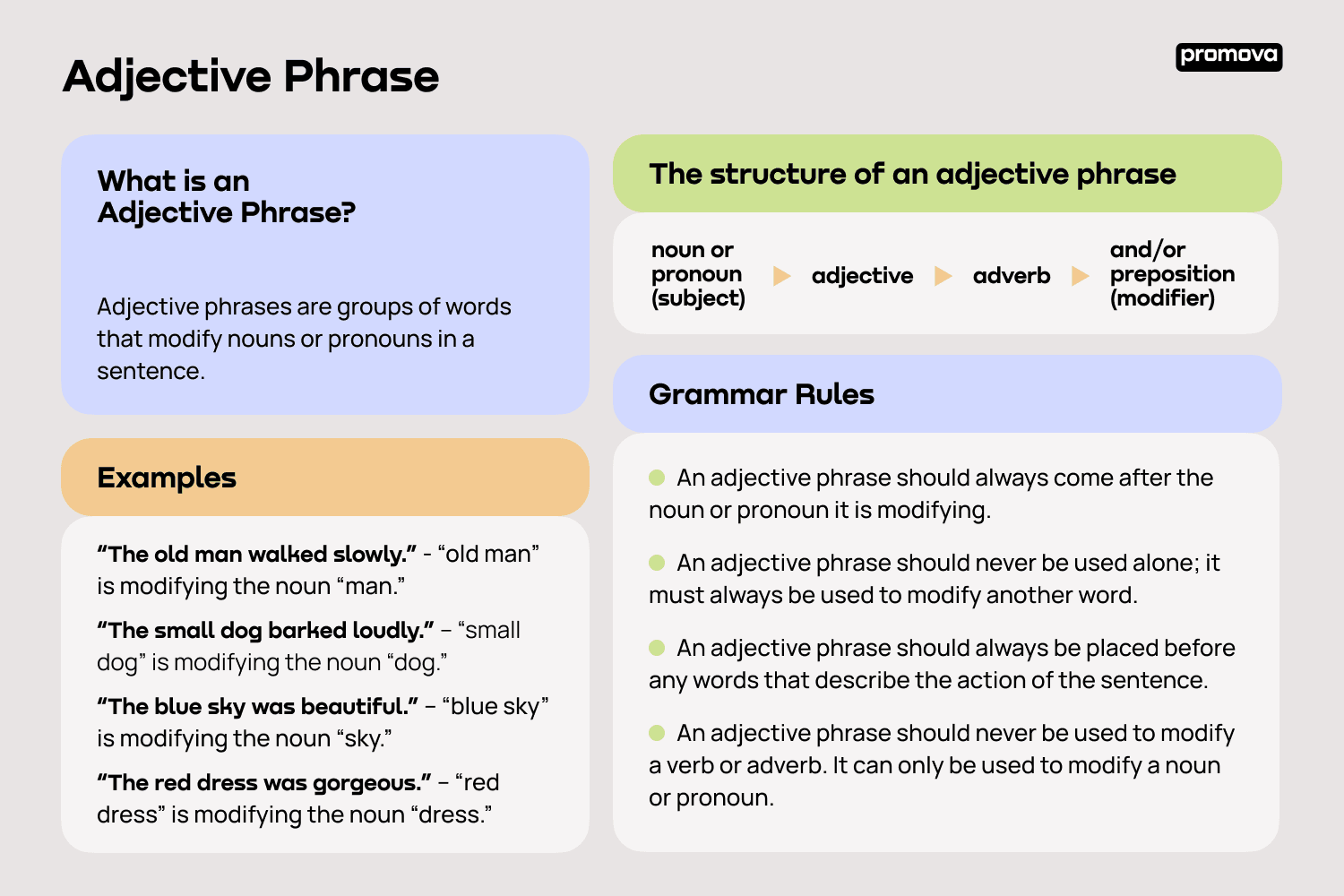
Example the Adjective
Here are some examples of adjectives:
1. The tall tree swayed in the wind.
2. She wore a soft, cozy sweater on a chilly day.
3. The old, rusty car sputtered down the road.
4. The delicious aroma of freshly baked bread filled the room.
5. The bright, sunny day lifted everyone’s spirits.
Adjectives can also be used to compare things, such as with comparative and superlative adjectives. Comparative adjectives are used to compare two things, while superlative adjectives are used to compare three or more things. For example, “The red apple is sweeter than the green apple” uses the comparative adjective “sweeter,” while “The red apple is the sweetest of all” uses the superlative adjective “sweetest.”
Adjectives can also be used to specify or limit a noun, such as with articles like “a,” “an,” and “the.” These are known as articles and are considered adjectives. For example, in the sentence “A cat chased the mouse,” the articles “a” and “the” are adjectives that specify which cat and mouse are being referred to.
In conclusion, adjectives play a crucial role in our language by adding depth and detail to our descriptions. They help us paint vivid pictures with words and bring our writing to life. By using adjectives effectively, we can create more engaging and impactful sentences that resonate with our readers.