Personal pronouns are words used to replace nouns in a sentence. They can refer to a specific person or thing without actually naming them. Personal pronouns are used in everyday language to make communication smoother and more efficient. There are different types of personal pronouns, including subject pronouns, object pronouns, possessive pronouns, and reflexive pronouns.
Personal pronouns are an essential part of the English language, and they help to make sentences clearer and more concise. Understanding how to use personal pronouns correctly can greatly improve your writing and communication skills.
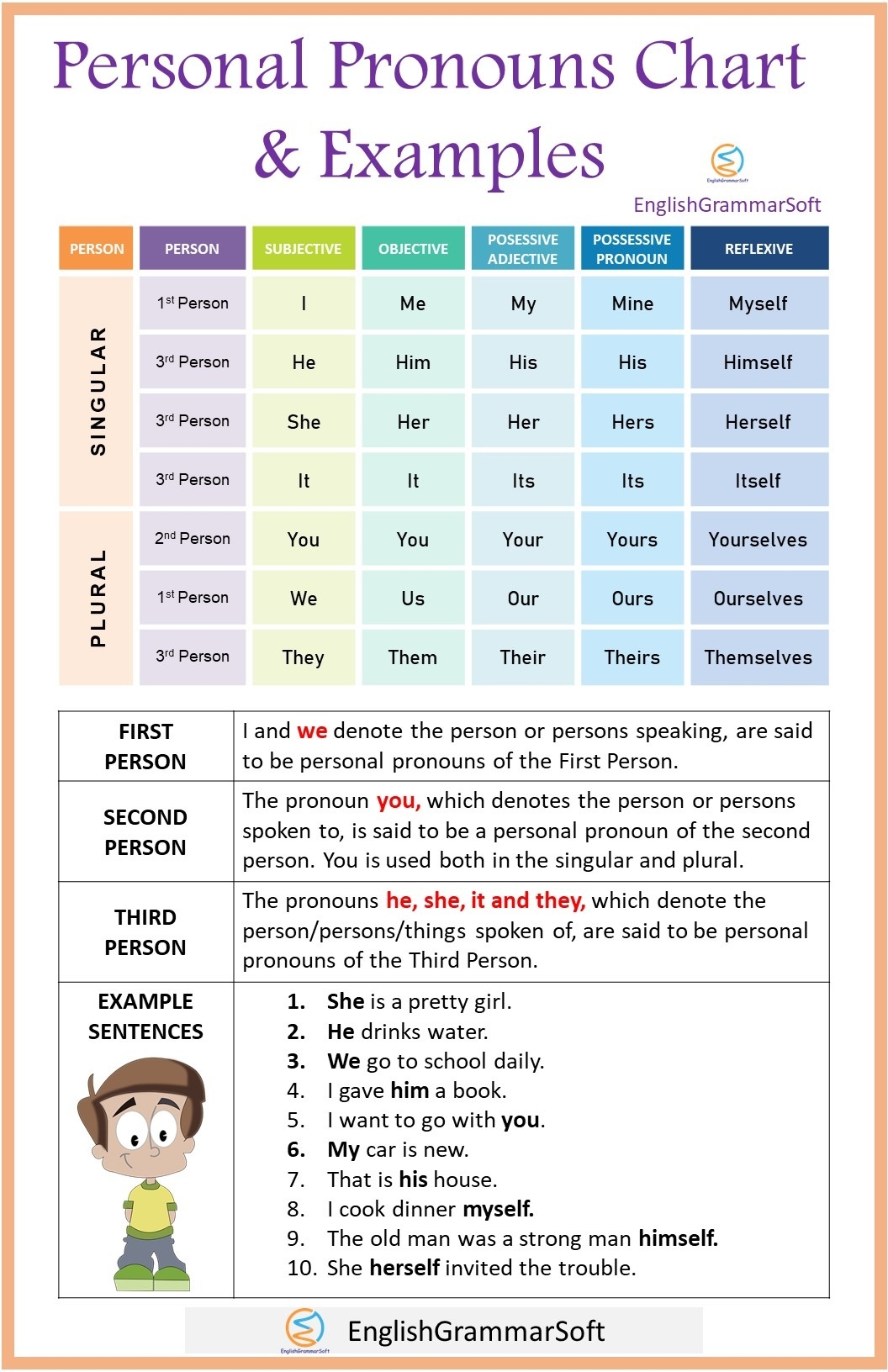
Examples of Personal Pronouns
1. Subject Pronouns: Subject pronouns are used as the subject of a sentence. Some examples include:
- I
- You
- He
- She
- It
- We
- They
2. Object Pronouns: Object pronouns are used as the object of a verb or preposition. Some examples include:
- Me
- You
- Him
- Her
- It
- Us
- Them
3. Possessive Pronouns: Possessive pronouns show ownership or possession. Some examples include:
- My
- Your
- His
- Her
- Its
- Our
- Their
4. Reflexive Pronouns: Reflexive pronouns are used when the subject and object of a sentence are the same. Some examples include:
- Myself
- Yourself
- Himself
- Herself
- Itself
- Ourselves
- Themselves
Personal pronouns play a crucial role in English grammar and are essential for effective communication. By understanding and using personal pronouns correctly, you can improve your writing and speaking skills.