Pronouns are an essential part of the English language as they help replace nouns in a sentence to avoid repetition. They can refer to people, places, things, or ideas. Pronouns come in different forms such as personal pronouns, possessive pronouns, reflexive pronouns, demonstrative pronouns, and more.
Understanding the various types of pronouns and their usage can greatly improve your writing and communication skills. Let’s explore some examples of pronouns in the English language.
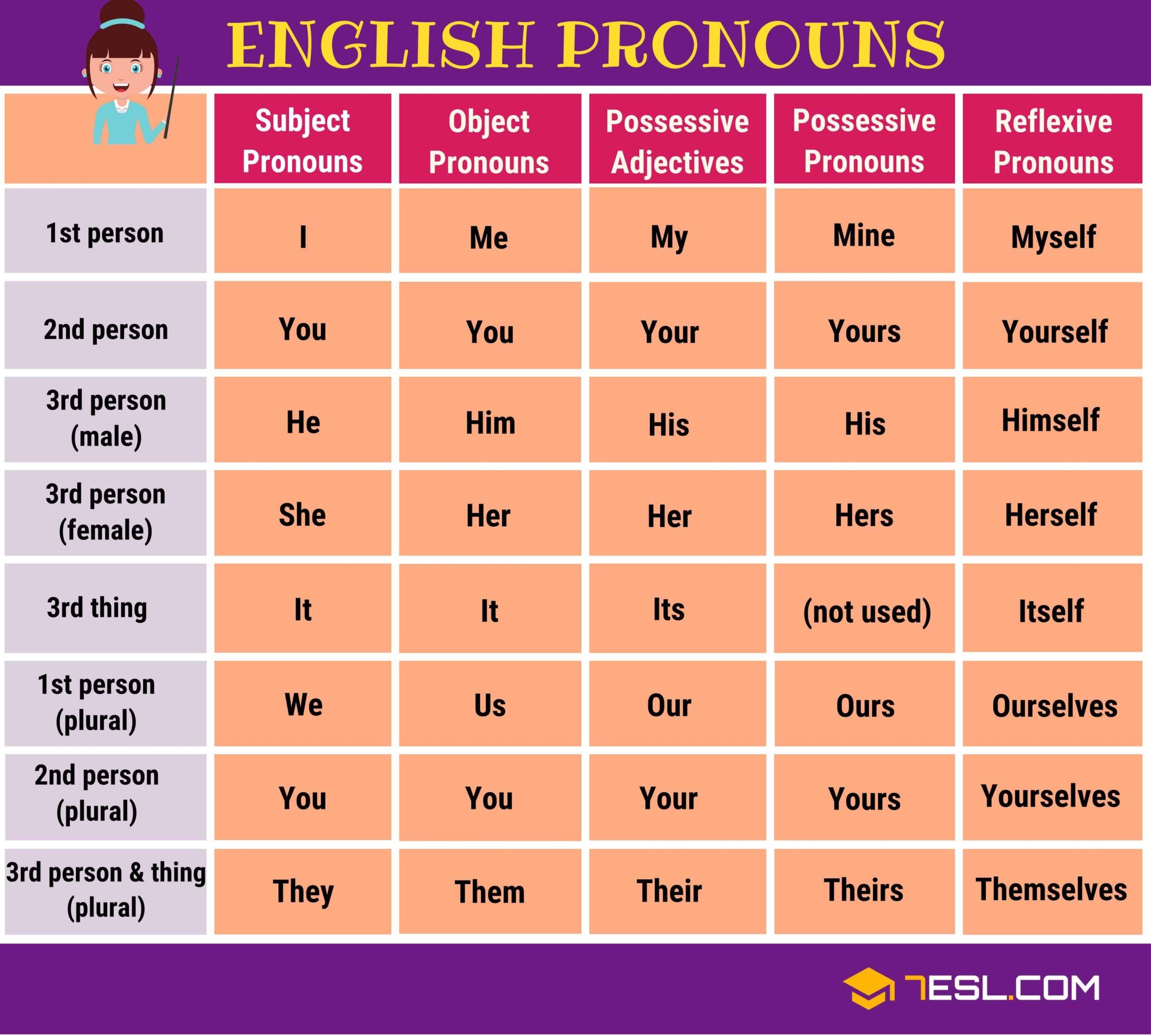
Examples of Pronouns
1. Personal Pronouns: Personal pronouns are used to refer to specific people or things. Examples include:
- I, me, you, he, she, it, we, they
2. Possessive Pronouns: Possessive pronouns show ownership or possession. Examples include:
- mine, yours, his, hers, its, ours, theirs
3. Reflexive Pronouns: Reflexive pronouns are used when the subject and object of a sentence are the same. Examples include:
- myself, yourself, himself, herself, itself, ourselves, themselves
4. Demonstrative Pronouns: Demonstrative pronouns point to specific things or people. Examples include:
- this, that, these, those
5. Interrogative Pronouns: Interrogative pronouns are used to ask questions. Examples include:
- who, whom, whose, which, what
Understanding how to use pronouns correctly can improve the clarity and flow of your writing. Practice using different types of pronouns in sentences to become more proficient in their usage.
In conclusion, pronouns play a crucial role in the English language by replacing nouns and adding variety to sentences. By mastering the usage of pronouns, you can enhance your writing skills and communicate more effectively. Remember to use pronouns appropriately based on their types and functions to convey your message clearly.