In today’s society, there is a growing awareness and acceptance of gender diversity. As a result, gender-neutral or genderless pronouns have become more prevalent in order to be inclusive of individuals who do not identify within the traditional binary gender system. These pronouns provide a way for people to express their gender identity authentically and comfortably.
Using genderless pronouns is a way to show respect for individuals’ identities and to create a more inclusive and welcoming environment. It is important to be mindful of the pronouns we use when referring to others, as using the correct pronouns can make a significant difference in someone’s sense of validation and belonging.
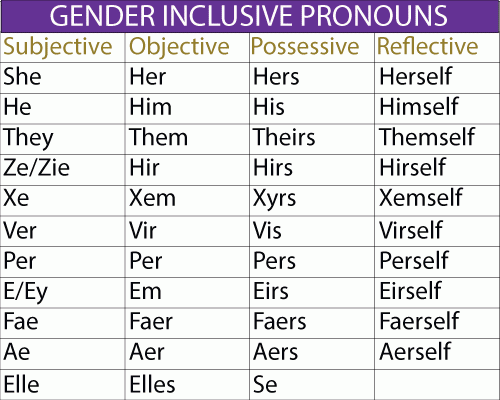
List of Genderless Pronouns:
1. They/Them/Theirs – This is a commonly used gender-neutral pronoun that can be used in the singular form to refer to a person without assuming their gender.
2. Ze/Hir/Hirs – These pronouns are another gender-neutral option that some individuals prefer to use in place of he/she or him/her.
3. Xe/Xem/Xyrs – These pronouns are also gender-neutral and provide an alternative to the traditional binary pronouns.
4. Per/Pers/Perself – This set of gender-neutral pronouns is another option for individuals who do not identify with he or she.
5. Ve/Ver/Vers – These pronouns are used by some individuals as a way to express their gender identity in a non-binary or genderqueer manner.
Using genderless pronouns allows individuals to be seen and respected for who they are, regardless of their gender identity. It is important to ask people for their preferred pronouns and to use them correctly in order to create a more inclusive and supportive community for all.
In conclusion, genderless pronouns are a way to honor and validate individuals’ gender identities that may not fit within the traditional binary system. By using these pronouns, we can create a more inclusive and respectful environment for everyone. Let’s continue to educate ourselves and others on the importance of using gender-neutral language and pronouns in order to promote acceptance and diversity.