When learning English, one of the most common struggles for students is knowing whether to use a gerund or infinitive in a sentence. Both forms have specific rules and uses that can vary depending on the context. Understanding when to use a gerund or infinitive is essential for effective communication in English.
Gerunds are verbs that end in -ing and function as nouns in a sentence. They are used to talk about actions or activities. On the other hand, infinitives are the base form of a verb with the word “to” in front of it (e.g., to eat, to run) and can function as nouns, adjectives, or adverbs.
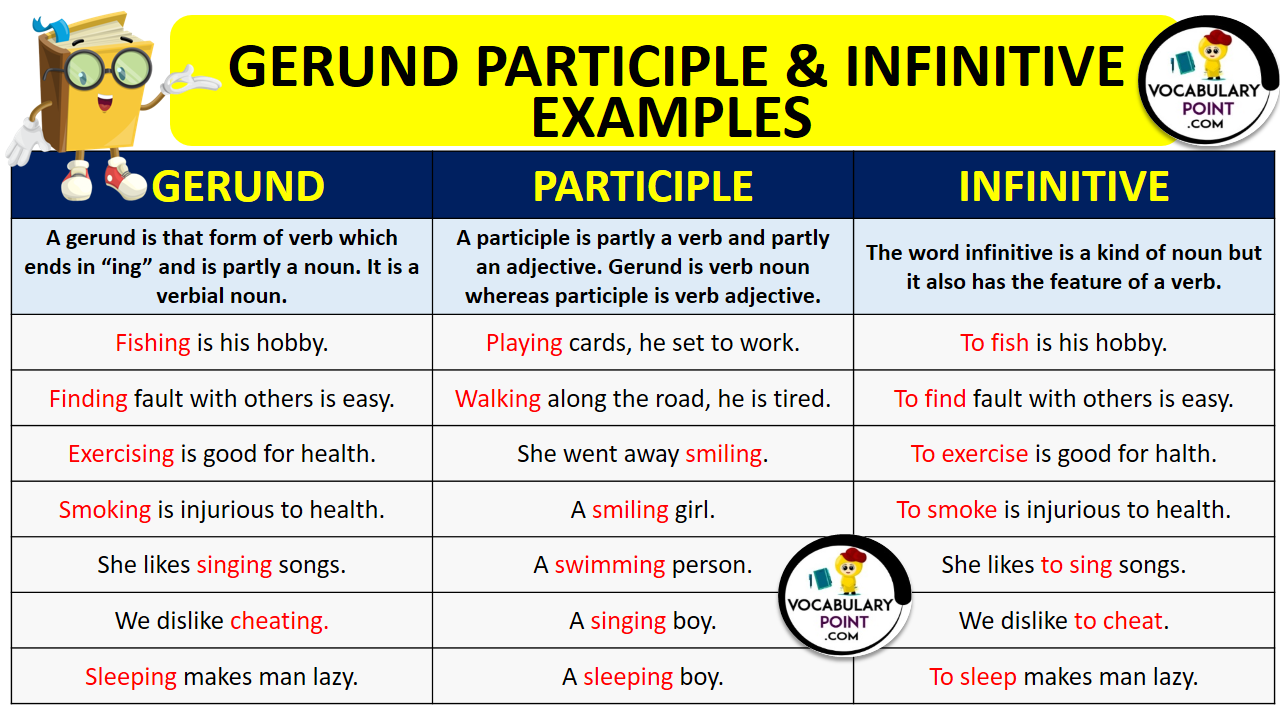
Gerund or Infinitive List
1. Gerund: Swimming is good exercise.
2. Infinitive: I want to go to the beach.
3. Gerund: I enjoy dancing in my free time.
4. Infinitive: She needs to study for her exams.
5. Gerund: Running helps me clear my mind.
Knowing when to use a gerund or infinitive can be tricky, but there are some general rules to follow. Gerunds are often used after certain verbs like enjoy, dislike, and avoid. Infinitives, on the other hand, are used after verbs like want, need, and plan. However, there are exceptions to these rules, so it’s essential to practice using both forms in different contexts.
It’s important to pay attention to the meaning of the sentence when deciding whether to use a gerund or infinitive. Some verbs can change their meaning depending on the form used. For example, “stop” can mean to cease an action when followed by a gerund (e.g., He stopped smoking) but can mean to take a break from one activity to start another when followed by an infinitive (e.g., He stopped to catch his breath).
Overall, mastering the use of gerunds and infinitives takes practice and patience. By familiarizing yourself with common verbs that are followed by either form and paying attention to the context of the sentence, you can improve your English language skills. Whether you’re writing or speaking, using gerunds and infinitives correctly will help you communicate more effectively.
In conclusion, understanding the differences between gerunds and infinitives is essential for mastering English grammar. By using the provided list and practicing with various examples, you can improve your language skills and confidently use both forms in your communication.