Gerunds and infinitives are verb forms that function as nouns in a sentence. They can be used in a variety of ways to convey different meanings and nuances. It is important to understand the differences between gerunds and infinitives in order to use them correctly in your writing and speech.
Gerunds are formed by adding -ing to a verb, while infinitives are formed by using the base form of the verb with ‘to’ before it. Both gerunds and infinitives can be used as subjects, objects, complements, and more in a sentence, depending on the context.
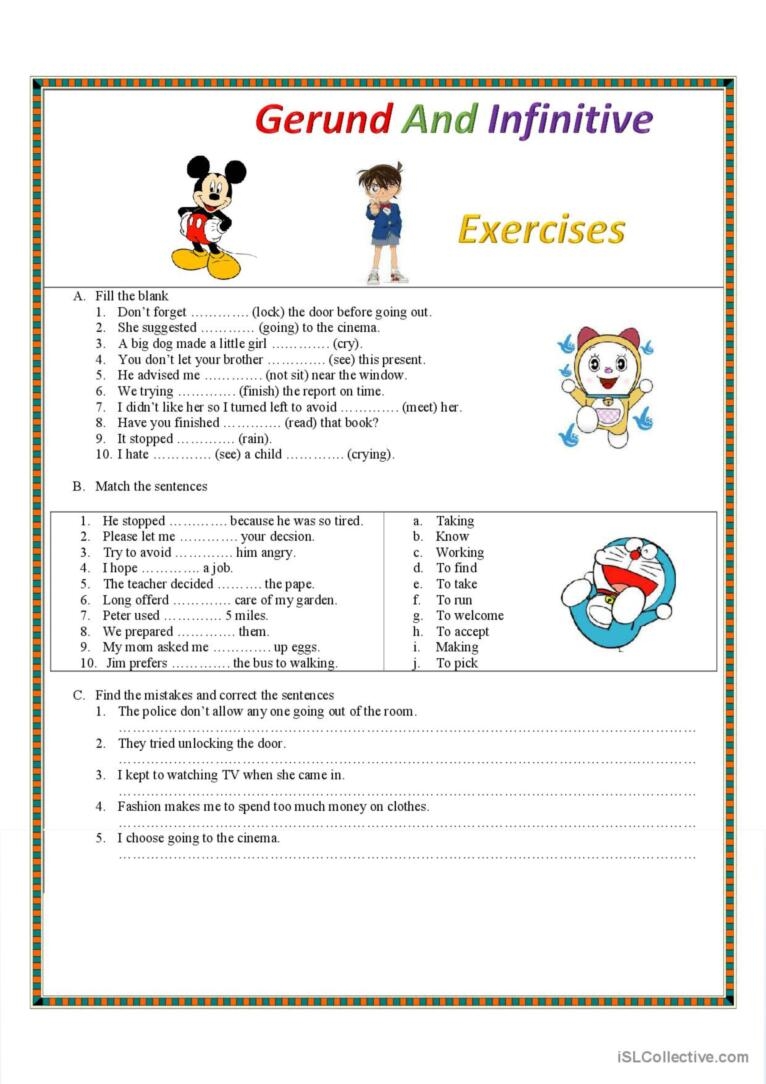
Gerunds and Infinitives Exercise 1
Here is an exercise to help you practice using gerunds and infinitives correctly:
1. I enjoy ____ (read) books in my free time.
2. She needs ____ (study) for her exams.
3. They decided ____ (go) on a trip to Europe this summer.
4. He promised ____ (help) me with my homework.
5. We are planning ____ (visit) the museum tomorrow.
Try to fill in the blanks with the correct form of the gerund or infinitive. Remember to consider the context of the sentence and the function of the verb form within it.
Practicing exercises like these can help you become more comfortable with using gerunds and infinitives in your writing and speaking. By mastering the use of gerunds and infinitives, you can add depth and variety to your language skills.
Remember, gerunds and infinitives are versatile verb forms that can be used in a variety of ways to convey different meanings. Keep practicing and experimenting with them to become more proficient in using them effectively in your communication.
With regular practice and attention to detail, you can improve your understanding and use of gerunds and infinitives in no time. Keep challenging yourself with exercises like these to strengthen your language skills and enhance your overall communication abilities.