When writing, it is important to ensure that your sentences are complete and properly structured. One common mistake that writers make is using sentence fragments. A sentence fragment is a group of words that is punctuated as a sentence but is not a complete thought. Identifying and correcting sentence fragments can improve the clarity and effectiveness of your writing.
There are several ways to identify sentence fragments in your writing. One way is to check for subject-verb agreement. A complete sentence should have a subject and a verb that agree in number and person. If you find that your sentence lacks one of these elements, it may be a fragment.
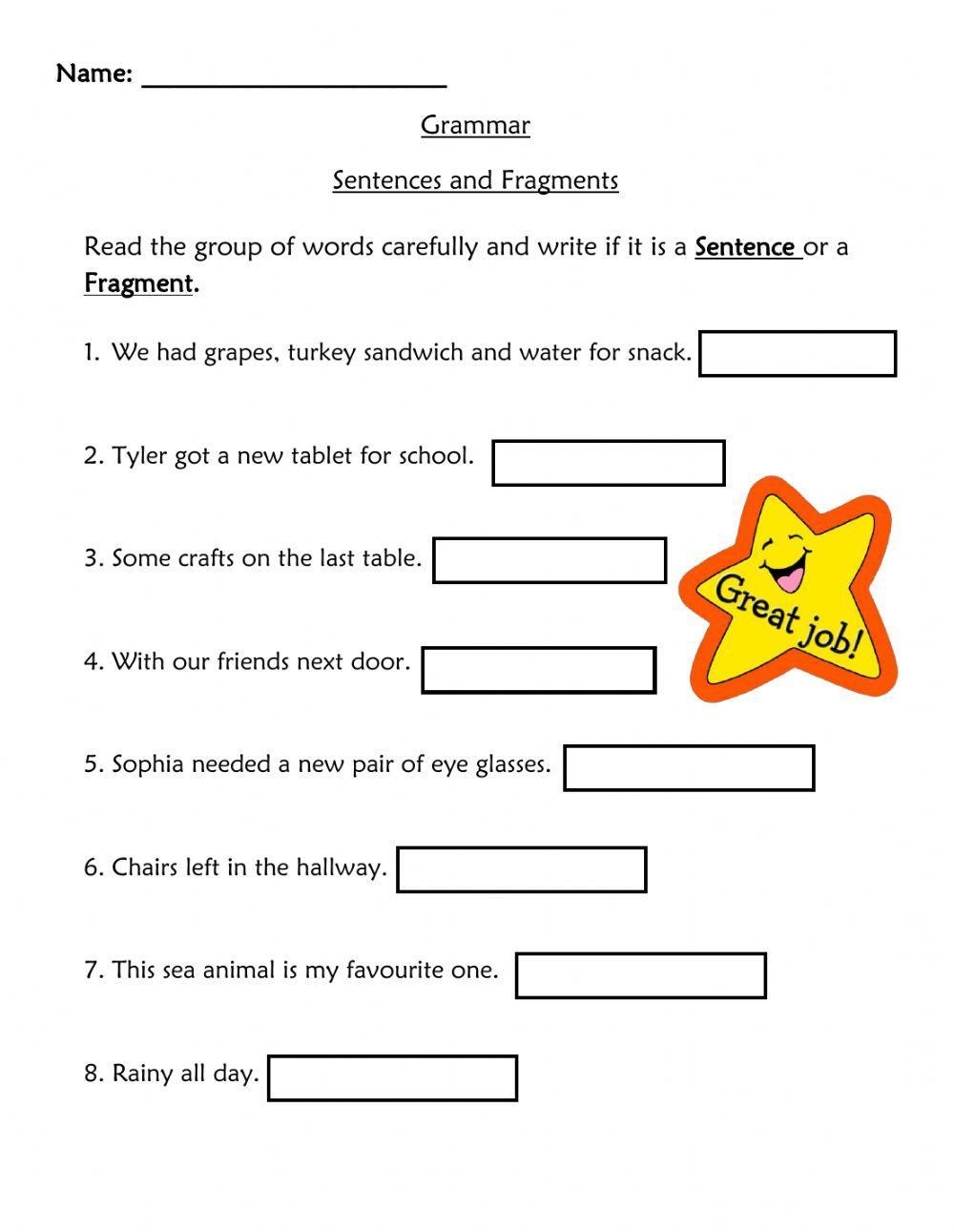
Common Signs of Sentence Fragments:
Another way to identify sentence fragments is to look for dependent clauses that are not connected to an independent clause. A dependent clause is a group of words that contains a subject and a verb but does not express a complete thought. If you have a dependent clause that is not followed by an independent clause, it may be a fragment.
Additionally, sentence fragments often lack a main subject or verb. If you find that your sentence is missing one of these essential elements, it is likely a fragment. It is important to ensure that each sentence in your writing expresses a complete thought and conveys your intended meaning clearly.
Another common sign of a sentence fragment is the use of phrases that are not complete sentences on their own. For example, starting a sentence with words like “Because” or “Although” can often lead to fragments if they are not followed by a complete thought. Be sure to connect these phrases to an independent clause to avoid creating fragments.
In conclusion, identifying sentence fragments in your writing is crucial for maintaining clarity and coherence. By checking for subject-verb agreement, looking for dependent clauses without independent clauses, ensuring the presence of main subjects and verbs, and connecting incomplete phrases to complete thoughts, you can effectively eliminate sentence fragments from your writing. Remember that complete sentences express complete thoughts and contribute to the overall effectiveness of your writing.