In the field of medicine, understanding medical terminology is crucial for healthcare professionals to communicate effectively and accurately. Medical terms are often composed of a root word, a prefix, and a suffix. Prefixes are added to the beginning of a word, while suffixes are added to the end. By breaking down medical terms into these components, healthcare providers can better understand the meaning of complex medical terms.
Prefixes and suffixes are essential components of medical terminology that help to modify the meaning of a word. Prefixes often indicate location, number, or time, while suffixes can indicate a procedure, condition, or disease. By learning common prefixes and suffixes, healthcare professionals can more easily decipher and interpret medical terminology.
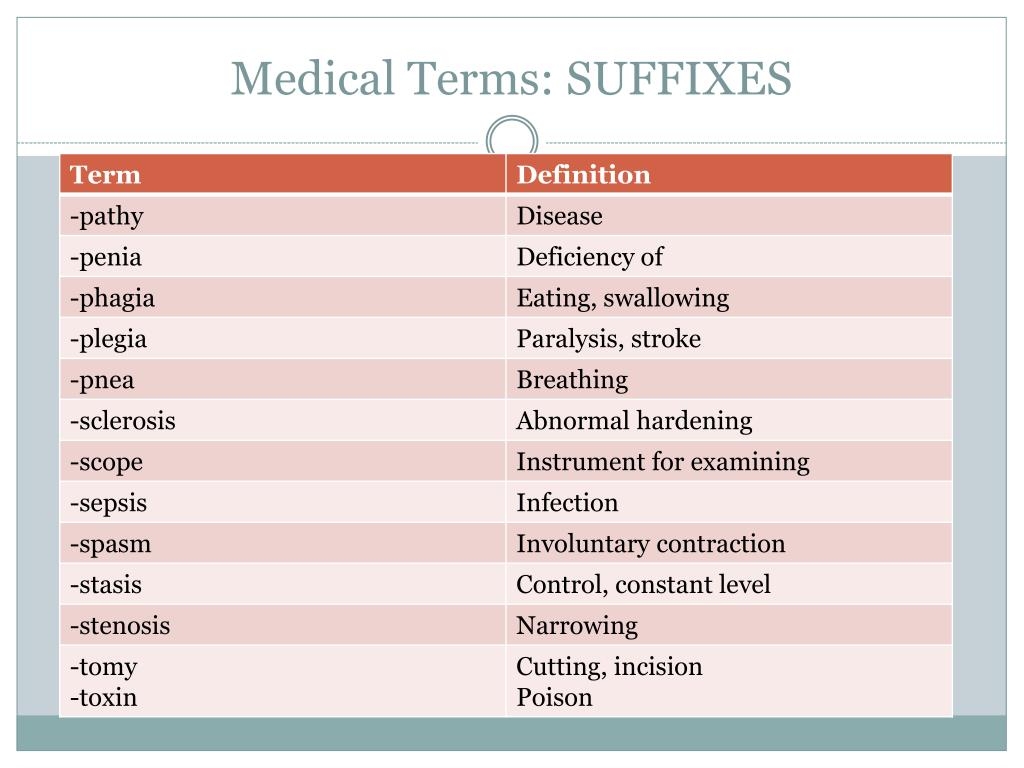
Medical Term Suffix and Prefix
One common medical term suffix is “-itis,” which indicates inflammation. For example, tonsillitis refers to inflammation of the tonsils. Another common suffix is “-ectomy,” which indicates the surgical removal of a body part. For example, appendectomy refers to the surgical removal of the appendix. Understanding these suffixes can help healthcare professionals identify and diagnose various medical conditions.
Prefixes such as “hypo-” indicate deficiency or below normal, while “hyper-” indicates excessive or above normal. For example, hypothyroidism refers to an underactive thyroid gland, while hyperglycemia refers to high blood sugar levels. By recognizing these prefixes, healthcare providers can quickly assess a patient’s condition and determine appropriate treatment.
Medical terminology can be overwhelming due to the vast number of terms and their components. However, by breaking down medical terms into root words, prefixes, and suffixes, healthcare professionals can gain a better understanding of complex medical terminology. This knowledge is essential for accurate diagnosis, treatment, and communication within the healthcare field.
In conclusion, understanding medical term suffixes and prefixes is vital for healthcare professionals to effectively communicate and interpret complex medical terminology. By recognizing common prefixes and suffixes, healthcare providers can better diagnose and treat patients. This knowledge enhances patient care and ensures accurate communication within the medical field.