Adjectives are words that describe or modify nouns or pronouns. They add detail and specificity to our language, allowing us to paint a more vivid picture with our words. Without adjectives, our sentences would lack color and depth. In this article, we will explore some common examples of adjectives and how they enhance our writing.
Adjectives come in many different forms, including descriptive, demonstrative, and quantitative. Descriptive adjectives, such as “beautiful,” “tall,” or “blue,” provide more information about the qualities of a noun. Demonstrative adjectives, like “this,” “those,” or “such,” indicate which noun is being referred to. Quantitative adjectives, such as “many,” “few,” or “several,” give us a sense of quantity or number. By using a variety of adjectives, we can create more engaging and detailed descriptions.
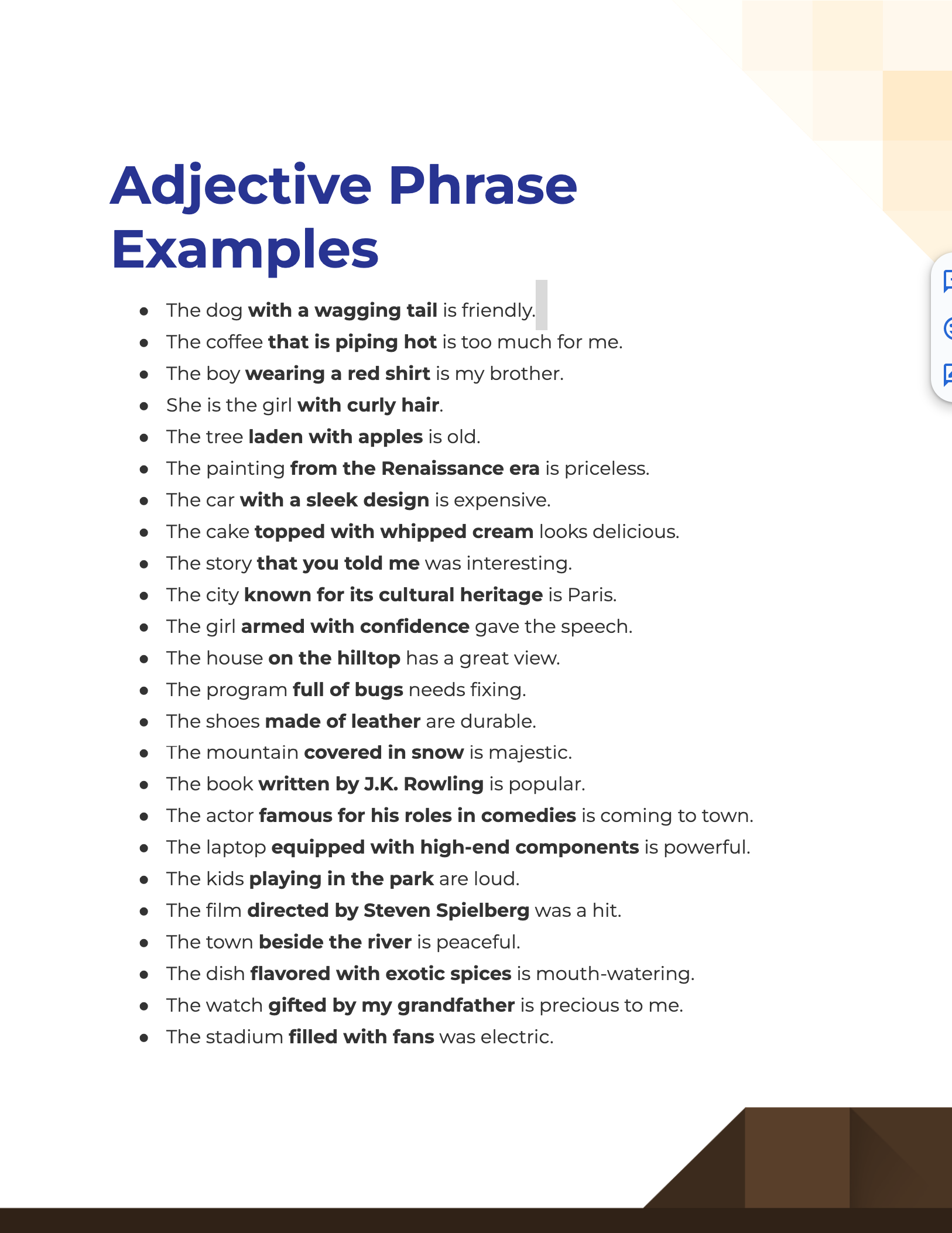
Examples of Adjectives
1. The green grass swayed in the breeze.
2. She wore a sparkling tiara on her head.
3. The old man sat quietly on the bench.
Adjectives can also be used to compare or contrast nouns. Comparative adjectives, like “bigger” or “faster,” are used to compare two or more things. Superlative adjectives, such as “biggest” or “fastest,” indicate the highest degree of a quality. By using these adjectives, we can provide more nuanced descriptions and make our writing more interesting.
4. This is the best pizza I’ve ever tasted.
5. She is smarter than her classmates.
In conclusion, adjectives play a crucial role in enriching our language and making our writing more engaging. By using a variety of adjectives, we can create vivid and detailed descriptions that bring our words to life. Whether describing the beauty of a sunset, the taste of a delicious meal, or the character of a person, adjectives help us communicate more effectively and paint a more colorful picture with our words.