Understanding the difference between past perfect and simple past tenses is essential for clear and accurate communication in English. Both tenses refer to actions or events that took place in the past, but they are used in different contexts.
It is important to know when to use past perfect and simple past in order to convey the correct sequence of events and relationships between them.
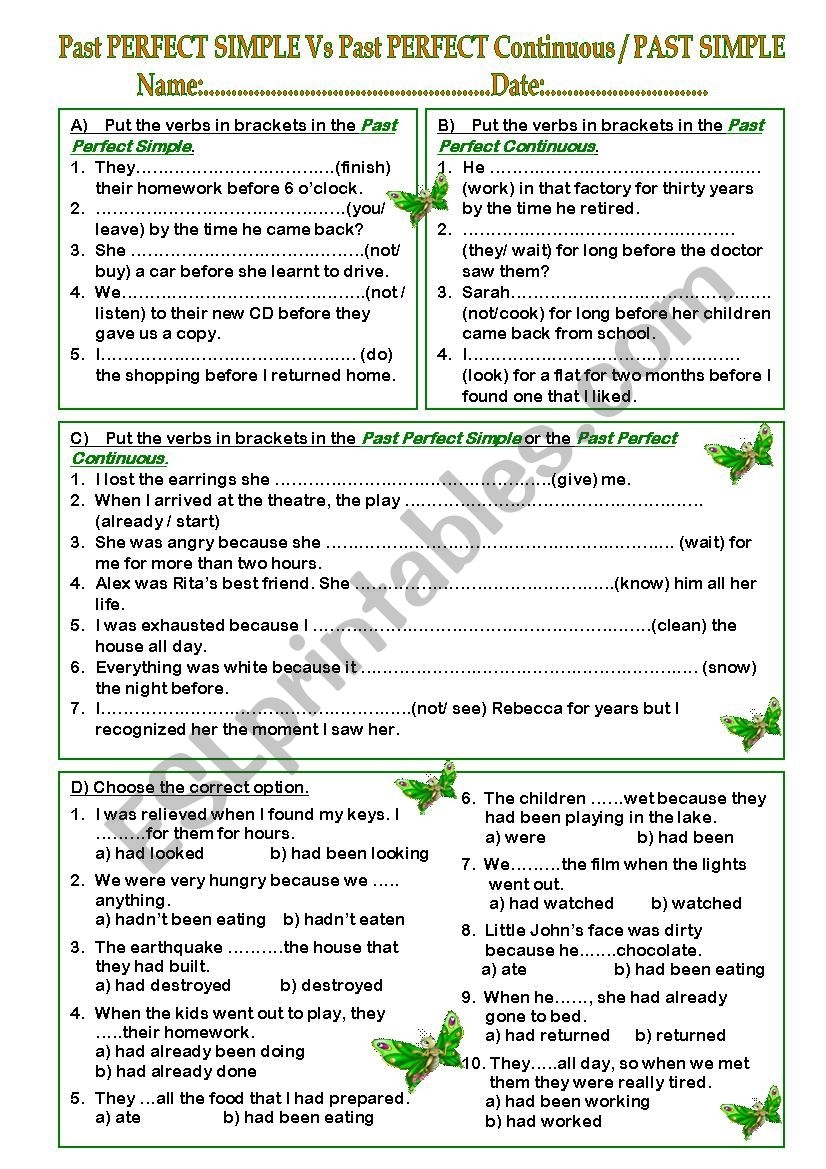
Past Perfect and Simple Past
The simple past tense is used to describe actions or events that happened at a specific point in the past. It is often used to talk about completed actions in the past without any connection to the present. For example: “She went to the store yesterday.”
On the other hand, the past perfect tense is used to show that one action happened before another action in the past. It is formed by using the past tense of “to have” (had) followed by the past participle of the main verb. For example: “By the time I arrived, they had already eaten dinner.”
When using the past perfect tense, it is important to establish the sequence of events clearly to avoid confusion. This tense is often used in combination with the simple past to show which action happened first. For example: “He had finished his homework before he went to bed.”
It is also common to use the past perfect tense to talk about hypothetical situations, regrets, or events that did not happen in the past. For example: “If I had known, I would have helped.”
Overall, understanding the difference between past perfect and simple past tenses is crucial for effective communication in English. By mastering these tenses, you can accurately convey the sequence of events and relationships between them in your writing and speech.
In conclusion, both past perfect and simple past tenses play important roles in describing past events in English. By learning how and when to use each tense, you can enhance your language skills and communicate more effectively.