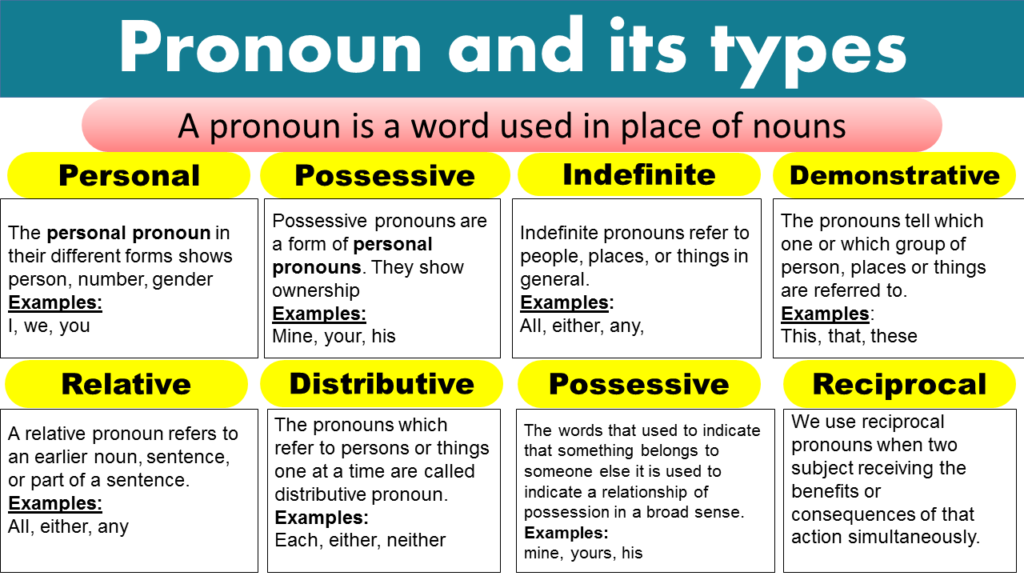
Personal pronouns are words that are used in place of nouns to refer to people, animals, things, or ideas. They help to make sentences less repetitive and more concise. There are different types of personal pronouns, such as subject pronouns, object pronouns, possessive pronouns, and reflexive pronouns. Here are some examples of personal pronouns:
Object Pronouns:
Object pronouns are used as the object of a sentence. They include: me, you, him, her, it, us, and them. For example:
– Can you help me with my homework?
– I gave him the book.
– She invited us to her party.
Possessive Pronouns:
Possessive pronouns show ownership or possession. They include: mine, yours, his, hers, its, ours, and theirs. For example:
– The red car is mine.
– Is this book yours?
– The cat licked its paw.
Reflexive Pronouns:
Reflexive pronouns are used when the subject and object of a sentence are the same. They include: myself, yourself, himself, herself, itself, ourselves, and themselves. For example:
– I hurt myself while playing basketball.
– She made the cake herself.
– They painted the house themselves.
In conclusion, personal pronouns are an essential part of the English language as they help to avoid repetition and make sentences clearer and more concise. By understanding and using personal pronouns correctly, you can improve the quality of your writing and communication skills.