Personal pronouns are an essential part of language and communication. They are used to refer to individuals or groups of people without having to repeatedly use their names. Personal pronouns help make sentences flow more smoothly and can also convey important information about relationships and identities.
There are several types of personal pronouns, including subject pronouns, object pronouns, possessive pronouns, and reflexive pronouns. Each type serves a specific grammatical function and helps clarify who or what is being referred to in a sentence.
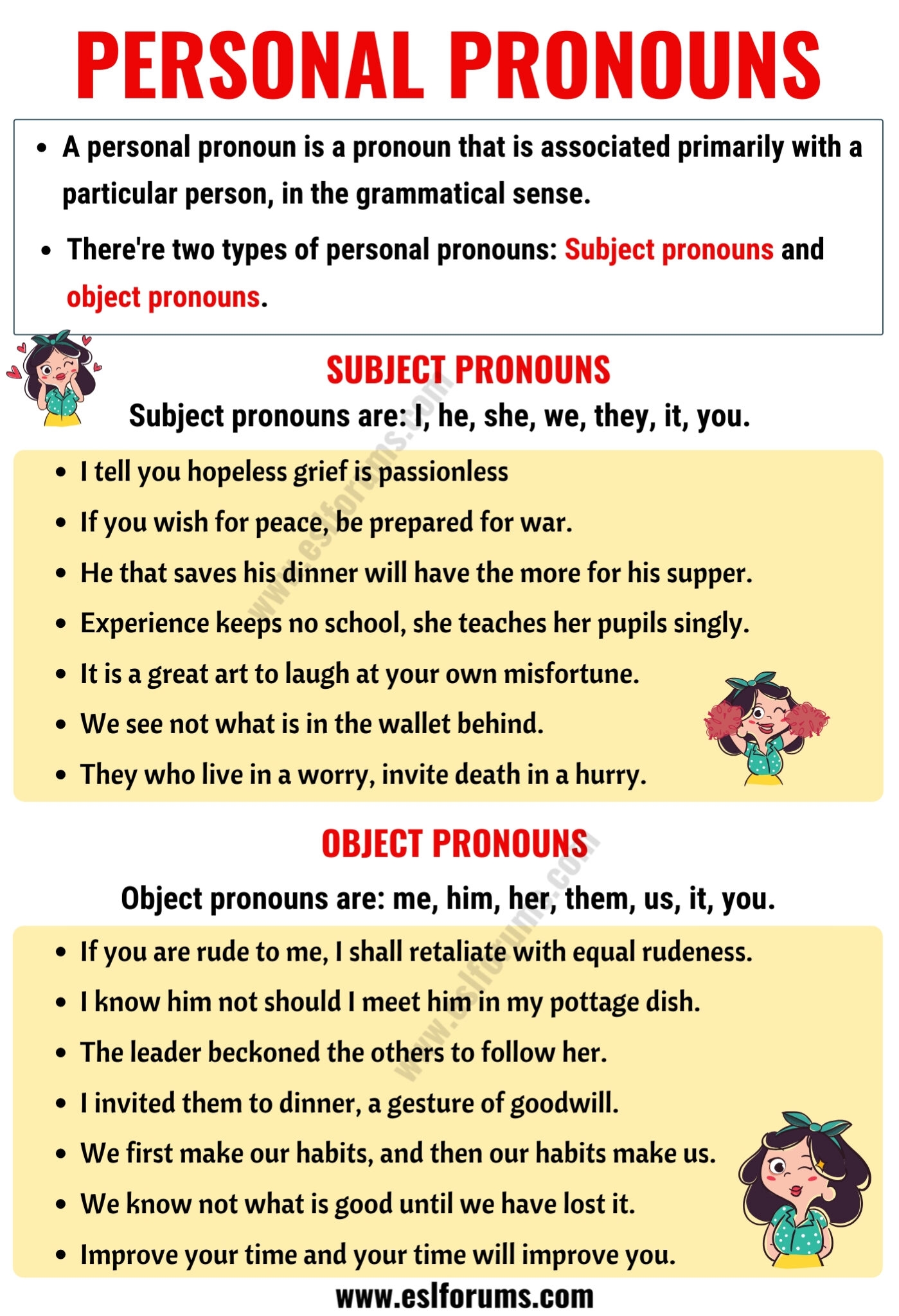
Personal Pronouns
Subject pronouns, such as “I,” “you,” “he,” “she,” “it,” “we,” and “they,” are used as the subjects of sentences. Object pronouns, like “me,” “you,” “him,” “her,” “it,” “us,” and “them,” function as the objects of verbs or prepositions. Possessive pronouns, such as “mine,” “yours,” “his,” “hers,” “ours,” and “theirs,” indicate ownership or possession. Reflexive pronouns, like “myself,” “yourself,” “himself,” “herself,” “itself,” “ourselves,” and “themselves,” refer back to the subject of the sentence.
It’s important to use the correct personal pronouns in order to communicate effectively and respectfully. Using the wrong pronouns can lead to confusion or offense, especially when referring to individuals with specific gender identities or preferences. It’s always best to ask someone for their preferred pronouns if you are unsure.
Personal pronouns also play a significant role in writing and storytelling. They help create a sense of connection between the reader and the characters in a story by providing insight into their thoughts, feelings, and actions. By using personal pronouns effectively, writers can engage readers and enhance the overall impact of their work.
In conclusion, personal pronouns are a fundamental aspect of language that help us communicate more clearly and effectively. By understanding the different types of personal pronouns and how to use them correctly, we can improve our writing, speech, and interpersonal relationships. Remember to always be mindful of others’ pronoun preferences and use language that is inclusive and respectful.