Phrasal verbs are an essential part of the English language, helping to add depth and nuance to communication. They consist of a verb followed by one or more particles, such as prepositions or adverbs, which together create a unique meaning distinct from the individual words. Understanding and using phrasal verbs correctly can greatly enhance one’s fluency and proficiency in English.
While phrasal verbs may seem daunting at first, they are actually quite common in everyday speech and writing. Native speakers use them regularly, making them an integral aspect of the language. By learning and mastering phrasal verbs, non-native speakers can improve their comprehension and communication skills, leading to more natural and fluent conversations.
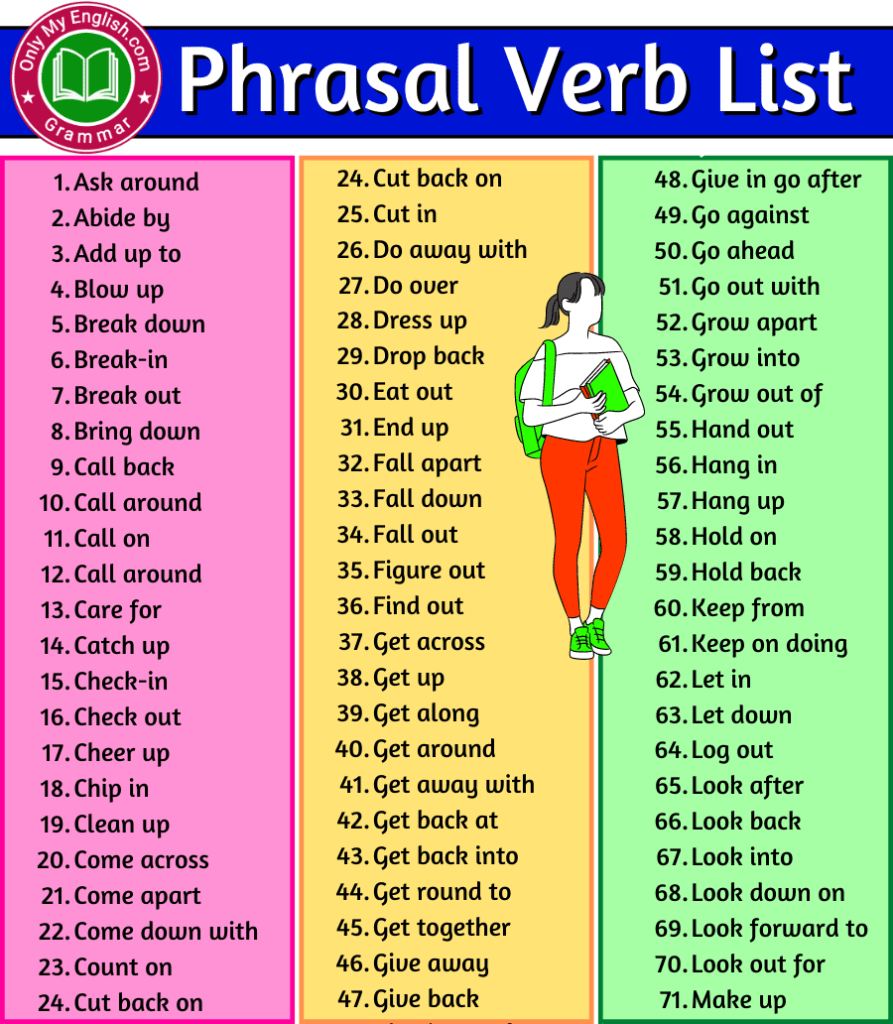
Common Phrasal Verbs
1. Take off: to remove clothing or to depart quickly
2. Turn on: to activate or start something
3. Put off: to postpone or delay something
4. Get over: to recover from an illness or emotional distress
5. Look forward to: to anticipate or eagerly await something
One of the challenges of phrasal verbs is that their meanings are often idiomatic, meaning they cannot be easily deduced from the individual words. This can lead to confusion for English learners, as the same phrasal verb can have multiple meanings depending on the context in which it is used. However, with practice and exposure to authentic language, learners can become more comfortable with using phrasal verbs in their own speech and writing.
Another aspect of phrasal verbs that can be difficult for learners is their flexibility and variability. Phrasal verbs can often be separated, with the object placed between the verb and the particle, or kept together depending on the context. Understanding when to separate or keep phrasal verbs together can take time and practice, but it is an important skill to master for effective communication.
In conclusion, phrasal verbs play a crucial role in the English language, adding richness and complexity to communication. While they may pose challenges for learners, mastering phrasal verbs can greatly enhance one’s language skills and fluency. By studying common phrasal verbs and practicing their use in context, learners can improve their understanding and use of these important linguistic structures.
Overall, phrasal verbs are an essential aspect of English that should not be overlooked in language learning. By incorporating them into one’s vocabulary and practice, learners can elevate their language skills and communicate more effectively in a variety of contexts.