Understanding Subjects and Verbs in English Grammar
In the realm of English grammar, the subject and verb form the backbone of a sentence. They are essential components that convey meaning and establish clarity in communication. A subject is typically a noun or pronoun that indicates who or what the sentence is about, while the verb expresses the action or state of being. Mastering these elements is crucial for effective writing and speaking.

Recognizing the relationship between subjects and verbs helps in constructing grammatically correct sentences. This understanding not only enhances clarity but also improves overall language proficiency. Whether you are writing an essay, crafting a story, or engaging in everyday conversation, knowing how to properly use subjects and verbs will elevate your communication skills.
Subject and Verb
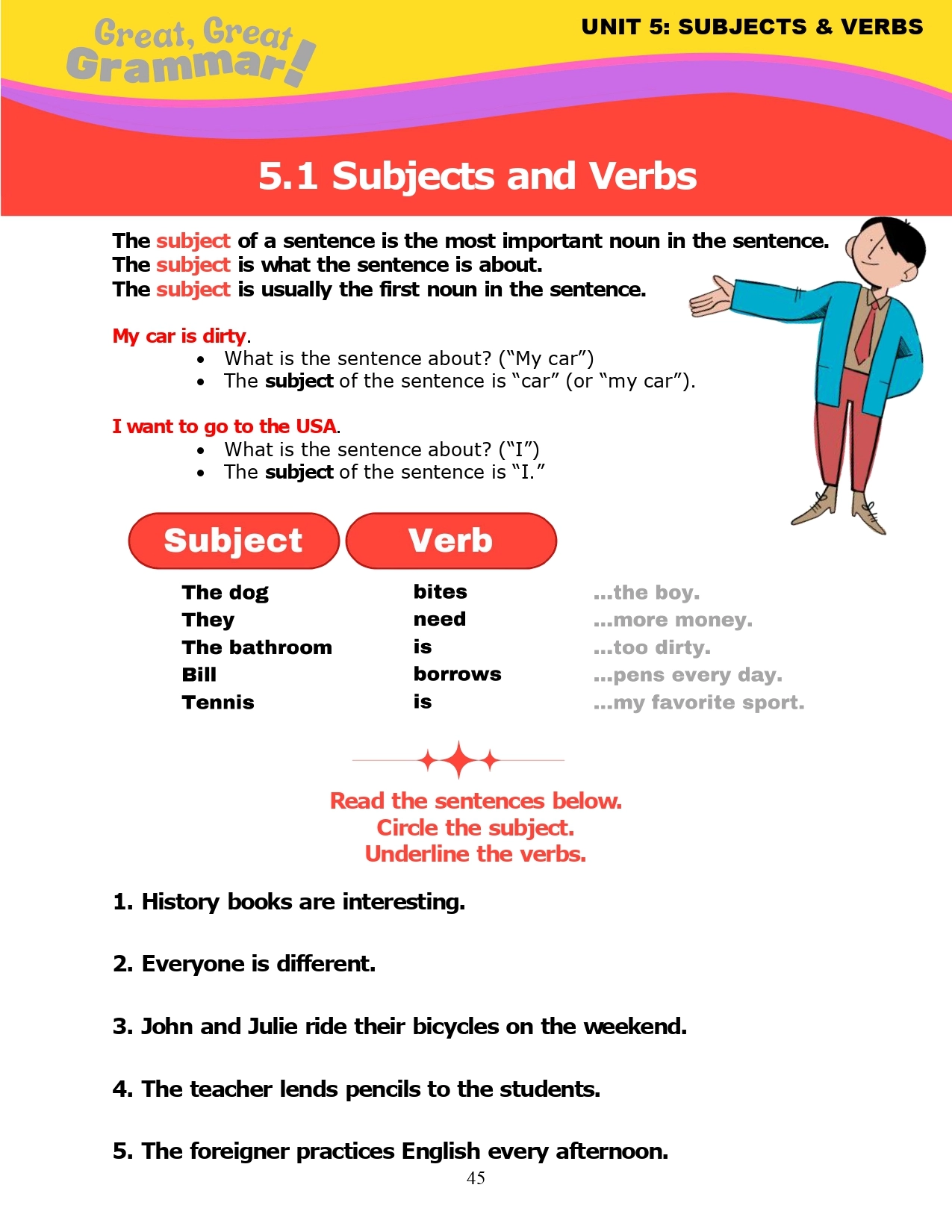
The subject of a sentence answers the question “who?” or “what?” For example, in the sentence “The dog barks,” “the dog” is the subject. It tells us who is performing the action. On the other hand, the verb “barks” indicates what action is taking place. This simple structure is fundamental to all sentences.
Subjects can be simple or compound. A simple subject consists of a single noun or pronoun, while a compound subject includes two or more nouns or pronouns joined by a conjunction. For instance, in “Tom and Jerry run,” “Tom and Jerry” form a compound subject that performs the action together. Understanding this distinction allows for more complex sentence construction.
Verbs also come in various forms, including action verbs, linking verbs, and auxiliary verbs. Action verbs describe what the subject does, such as “run,” “jump,” or “swim.” Linking verbs connect the subject to additional information about it, like “is,” “seem,” or “become.” Auxiliary verbs, also known as helping verbs, assist main verbs in forming different tenses or moods, such as “has eaten” or “will go.”
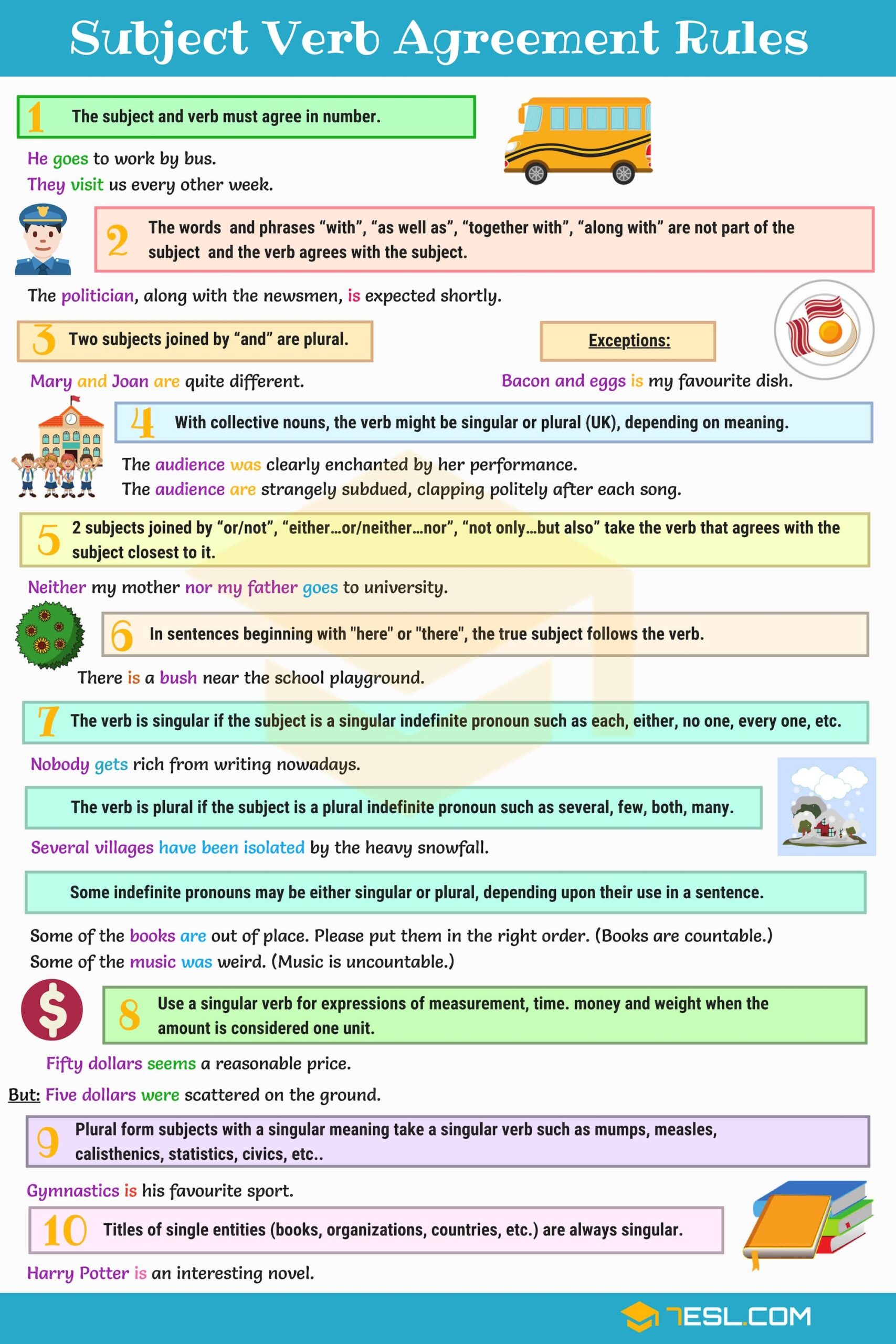
Additionally, subject-verb agreement is a critical aspect of grammar. This rule states that subjects must agree with their verbs in number (singular or plural). For example, “She runs” (singular) versus “They run” (plural). Failing to maintain this agreement can lead to confusion and grammatical errors.
In conclusion, understanding subjects and verbs is vital for anyone looking to improve their English language skills. By mastering these fundamental components of grammar, individuals can construct clear and effective sentences. Whether for academic purposes or everyday communication, a solid grasp of subjects and verbs will enhance your writing and speaking abilities.
Download and Print subject and verb Listed below