Adjectives are an essential part of speech that helps us describe and modify nouns or pronouns. They add depth and color to our language by providing more information about the subject. Without adjectives, our sentences would be bland and lack detail. Whether it’s describing the size, shape, color, or any other quality of an object, adjectives play a crucial role in painting a vivid picture in the reader’s mind.
Adjectives are versatile and can be used in various ways to enhance our writing. They can be used to compare two or more things, indicate the quantity or number of something, or even specify which one out of a group. Understanding how to use adjectives correctly can help you express yourself more clearly and effectively.
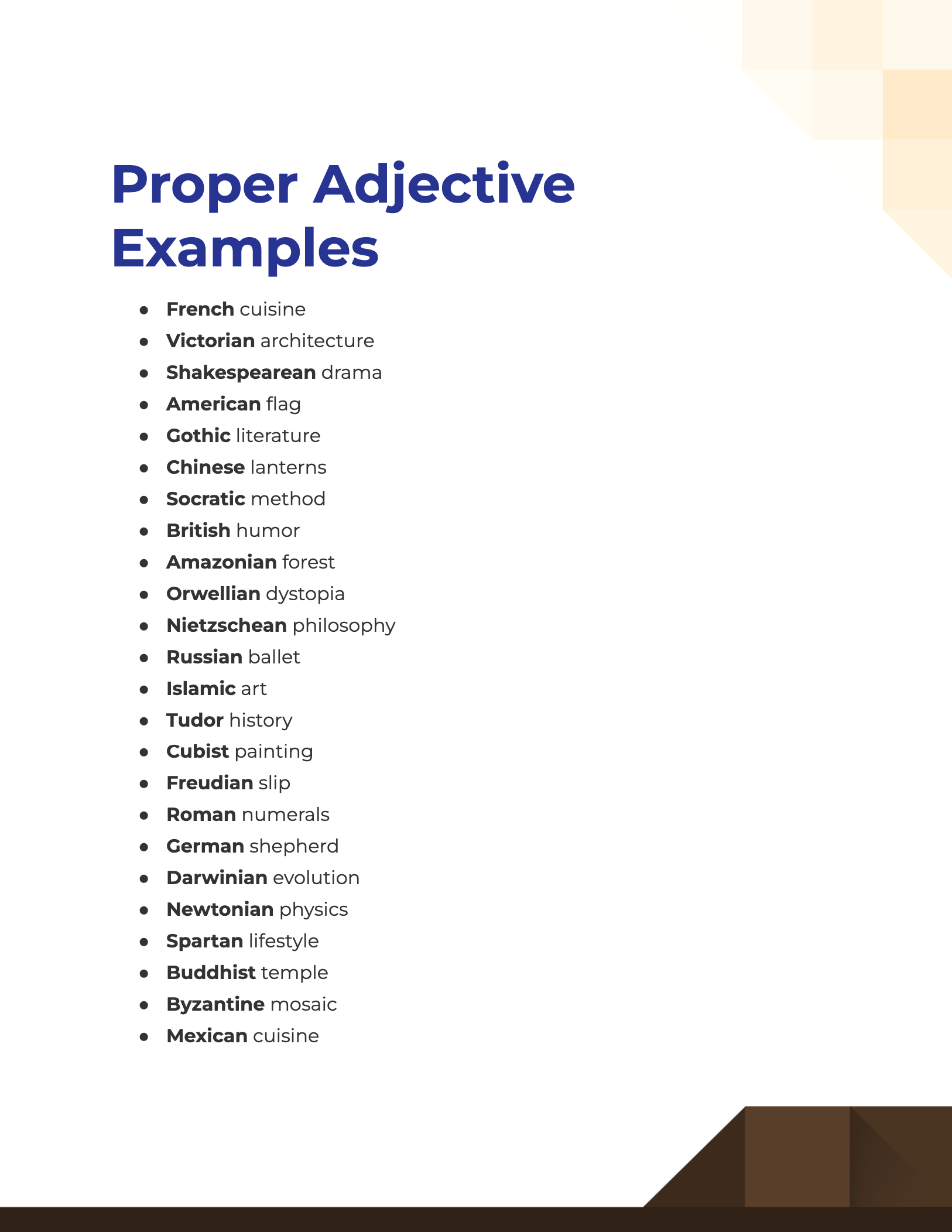
Types of Adjectives with Examples
1. Descriptive Adjectives: These adjectives are used to describe the characteristics or qualities of a noun. For example, in the sentence “The beautiful sunset painted the sky with hues of orange and pink,” the word “beautiful” is a descriptive adjective that adds more detail to the sunset.
2. Comparative Adjectives: These adjectives are used to compare two or more things. They often end in “-er” or use the word “more” before the adjective. For example, in the sentence “She is taller than her sister,” the word “taller” is a comparative adjective that shows the comparison between the two sisters’ heights.
3. Possessive Adjectives: These adjectives indicate ownership or possession. They include words like “my,” “your,” “his,” “her,” “its,” “our,” and “their.” For example, in the sentence “His blue car is parked in the driveway,” the word “his” is a possessive adjective that shows who owns the car.
4. Demonstrative Adjectives: These adjectives point out specific nouns and include words like “this,” “that,” “these,” and “those.” For example, in the sentence “I prefer this book over that one,” the word “this” is a demonstrative adjective that specifies which book is preferred.
5. Numeral Adjectives: These adjectives indicate the number or order of a noun. They can be cardinal (one, two, three) or ordinal (first, second, third). For example, in the sentence “She has three cats, and the first one is named Luna,” the words “three” and “first” are numeral adjectives that show the quantity and order of the cats.
In conclusion, adjectives are powerful tools that can transform your writing and make it more engaging for your audience. By incorporating different types of adjectives into your sentences, you can create vivid imagery and provide more context to your descriptions. So, next time you write, remember to sprinkle in some adjectives to bring your words to life!