In English grammar, the past perfect tense and past participle are two important concepts that are often confused by learners. Understanding the difference between the two can help improve your writing and communication skills. Let’s delve into the distinctions between past perfect and past participle.
The past perfect tense is used to indicate that an action was completed before another action took place in the past. It is formed by using the auxiliary verb “had” followed by the past participle of the main verb. For example, “She had finished her homework before going to bed.” In this sentence, “had finished” is the past perfect form.
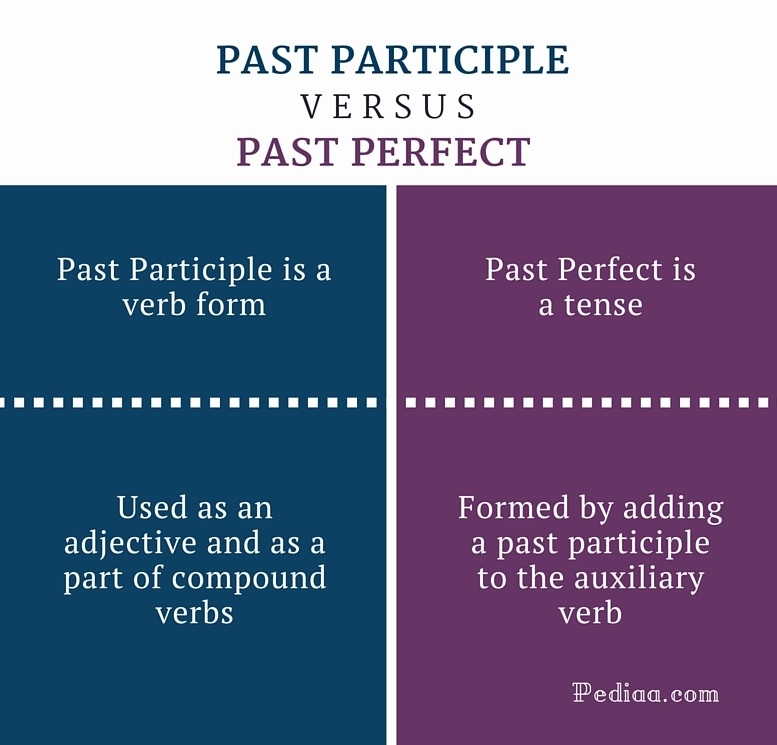
On the other hand, the past participle is a form of the verb that is used in various tenses, including the present perfect, past perfect, and passive voice. It is often used in conjunction with auxiliary verbs like “has,” “have,” “had,” or “be.” For example, in the sentence “The book was written by a famous author,” “written” is the past participle of the verb “write.”
It’s important to note that the past participle can also be used as an adjective to describe a noun. For instance, in the phrase “a broken window,” “broken” functions as an adjective modifying the noun “window.” This usage of the past participle adds descriptive detail to the sentence.
When distinguishing between past perfect and past participle, remember that the past perfect tense is specifically used to show the sequence of actions in the past, while the past participle has a more versatile role in forming various verb tenses and as an adjective in sentences.
By mastering the differences between past perfect and past participle, you can enhance your writing skills and communicate more effectively in English. Practice using both forms in sentences to solidify your understanding and improve your language proficiency.
In conclusion, understanding the nuances of past perfect and past participle is essential for mastering the English language. By recognizing when to use each form correctly, you can elevate the quality of your writing and convey your ideas with clarity. Keep practicing and honing your skills to become a proficient user of these grammatical concepts.