Understanding the difference between past simple and present perfect tense is essential for English language learners. Both tenses are used to talk about actions that happened in the past, but they are used in different contexts and have different structures. Let’s explore the nuances of these two tenses to help you use them correctly in your writing and speaking.
The past simple tense is used to talk about completed actions that happened at a specific time in the past. For example, “I went to the store yesterday.” In this sentence, the action (going to the store) happened in the past at a specific time (yesterday). The past simple tense is formed by adding ‘-ed’ to regular verbs or using irregular forms for irregular verbs.
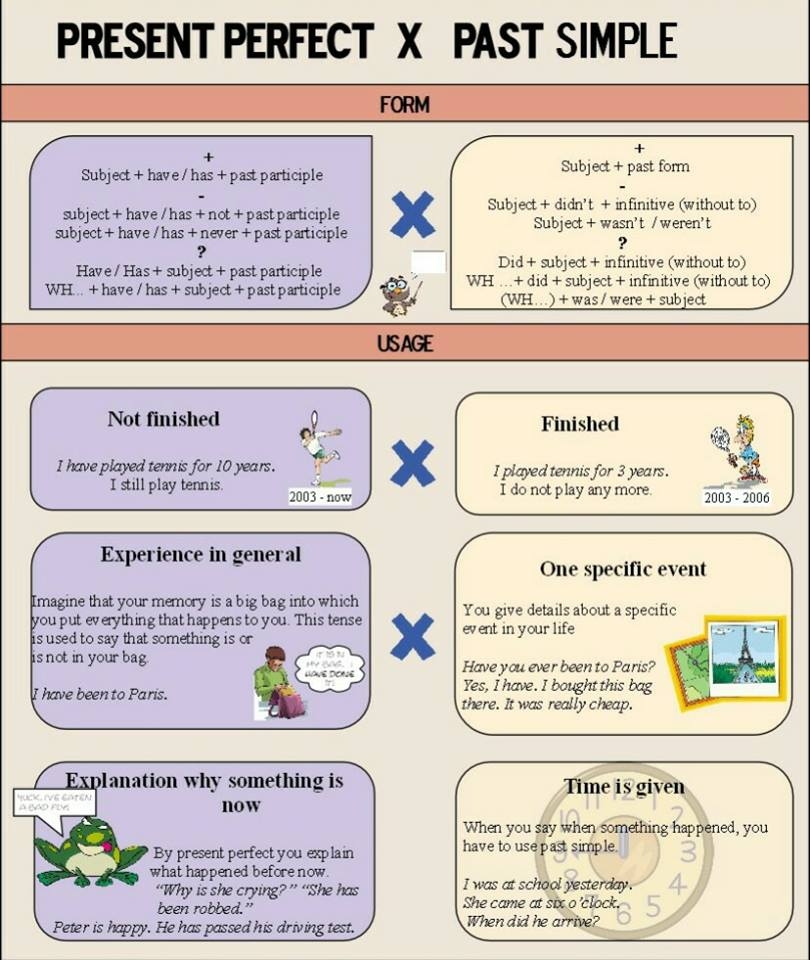
On the other hand, the present perfect tense is used to talk about actions that happened at an unspecified time in the past or have a connection to the present. For example, “I have visited Paris.” In this sentence, the action of visiting Paris has a connection to the present, suggesting that the speaker has knowledge or experience related to the action. The present perfect tense is formed by using ‘have’ or ‘has’ with the past participle form of the verb.
One key difference between the past simple and present perfect tense is the time frame of the actions. The past simple tense is used for actions that happened at a specific time in the past, while the present perfect tense is used for actions that have a connection to the present or happened at an unspecified time in the past. Understanding this distinction will help you choose the correct tense in your writing and speaking.
Another difference between the two tenses is the use of adverbs of time. Adverbs of time such as ‘yesterday,’ ‘last week,’ and ‘in 1999’ are commonly used with the past simple tense to specify when an action occurred. In contrast, adverbs of time such as ‘ever,’ ‘never,’ ‘already,’ and ‘yet’ are often used with the present perfect tense to indicate the connection between the past action and the present moment.
By mastering the differences between past simple and present perfect tense, you can improve your English language skills and communicate more effectively. Practice using both tenses in various contexts to become more comfortable with their usage and enhance your language proficiency.
In conclusion, understanding when to use past simple and present perfect tense is crucial for English language learners. By recognizing the nuances of each tense and practicing their usage, you can become more proficient in expressing past actions and their connections to the present. Keep practicing and honing your skills to become a more confident and skilled English speaker.