When it comes to English grammar, understanding the difference between past simple and perfect tenses can be crucial for effective communication. Both tenses are used to talk about actions that happened in the past, but they are used in slightly different ways. Let’s explore the distinctions between these two tenses to help you use them correctly in your writing and speaking.
One of the key differences between past simple and perfect tenses is the way they express the timing of an action. The past simple tense is used to describe actions that were completed at a specific point in the past. For example, “I went to the store yesterday.” On the other hand, the perfect tense is used to indicate that an action was completed before another point in time in the past. For instance, “I had already finished my homework when you called.”
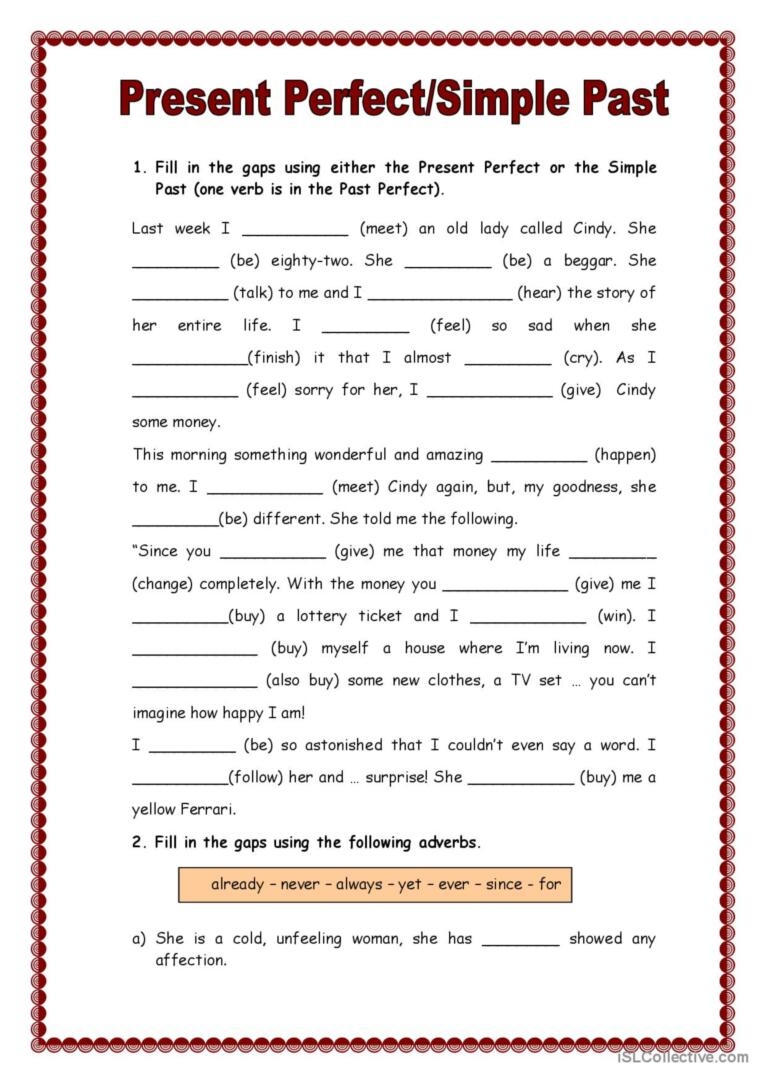
Past Simple vs Perfect
In addition to timing, the past simple and perfect tenses also differ in terms of their structure. The past simple tense is formed by using the base form of the verb with the addition of “-ed” for regular verbs. Irregular verbs have unique past simple forms that do not follow a specific pattern. On the other hand, the perfect tense is formed by using the auxiliary verb “have” or “has” followed by the past participle of the main verb. For example, “She has already eaten dinner.”
Another important distinction between past simple and perfect tenses is their usage in storytelling and narration. The past simple tense is commonly used to describe a sequence of events in a story or to provide background information. On the other hand, the perfect tense is often used to highlight the completion of an action or to emphasize the result of a past event. For example, “I have never seen such a beautiful sunset before.”
Overall, mastering the difference between past simple and perfect tenses can greatly improve your English language skills and help you communicate more effectively. By understanding when to use each tense and how they differ in terms of timing, structure, and usage, you can enhance the clarity and precision of your writing and speaking. Practice using both tenses in various contexts to become more comfortable with their nuances and to become a more proficient English speaker.
In conclusion, both the past simple and perfect tenses play important roles in expressing past actions in English. By recognizing the distinctions between these two tenses and practicing their usage, you can enhance your language skills and become a more confident communicator. Keep in mind the differences in timing, structure, and usage to ensure that you are using past simple and perfect tenses correctly in your conversations and writing.