Understanding the past tense present perfect is essential for mastering the English language. It allows us to express actions that were completed at some point in the past, but have relevance to the present. This tense can be tricky to grasp, but with practice, it can greatly enhance your communication skills.
Many English learners struggle with the concept of past tense present perfect, as it often differs from how past tense is used in their native language. However, once you understand the rules and patterns of this tense, you will be able to use it effectively in both spoken and written communication.
Past Tense Present Perfect
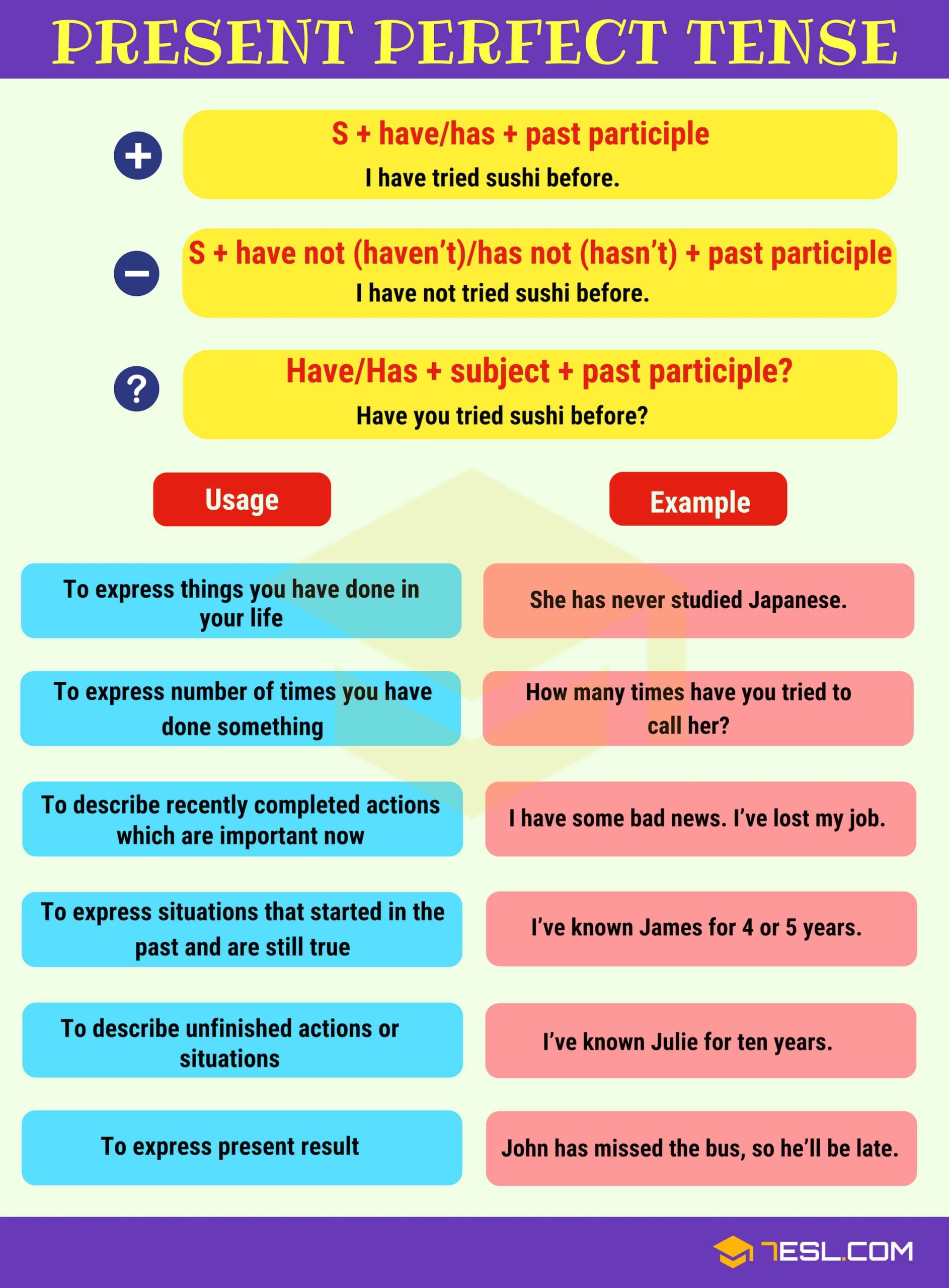
The past tense present perfect is formed by using the auxiliary verb “have” or “has” followed by the past participle of the main verb. For example, “I have finished my homework” or “She has traveled to Europe.” This tense is used to describe actions that were completed in the past but have a connection to the present moment.
One common use of the past tense present perfect is to talk about experiences or accomplishments. For instance, “I have visited Paris” implies that the speaker has been to Paris at some point in their life. This tense is also used to talk about recent events or actions that have an impact on the present, such as “I have lost my keys” or “He has just left.”
Another important aspect of the past tense present perfect is the use of time expressions such as “already,” “yet,” and “just.” These words help to indicate when the action took place in relation to the present moment. For example, “I have already eaten breakfast” suggests that the speaker ate breakfast before the current conversation.
Overall, mastering the past tense present perfect is a valuable skill for English language learners. By understanding how and when to use this tense, you can effectively communicate about past actions with relevance to the present. Practice using the past tense present perfect in your conversations and writing to improve your language skills.
In conclusion, the past tense present perfect is a crucial aspect of English grammar that allows us to connect past actions to the present. By familiarizing yourself with the rules and patterns of this tense, you can enhance your communication skills and express yourself more effectively in English.