Adjectives are an essential part of speech that help to describe or modify nouns and pronouns. They provide more information about the noun or pronoun by answering questions such as “What kind?” “Which one?” “How many?” or “How much?” Adjectives can be used to make writing more vivid and interesting by adding detail and specificity to the text.
There are several types of adjectives, including descriptive adjectives, demonstrative adjectives, and possessive adjectives. Descriptive adjectives describe the qualities or characteristics of a noun, such as color, size, shape, or texture. Demonstrative adjectives indicate which noun is being referred to, such as “this,” “that,” “these,” or “those.” Possessive adjectives show ownership or possession, such as “my,” “your,” “his,” “her,” “its,” “our,” or “their.”
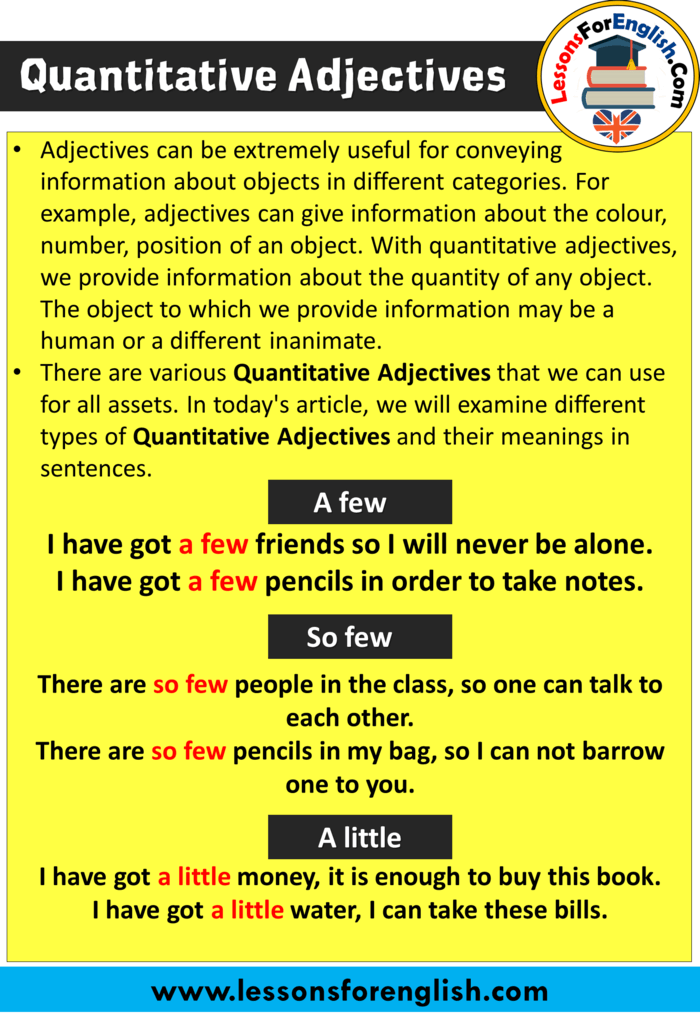
One of the main functions of adjectives is to help make comparisons between nouns or pronouns. Comparative adjectives are used to compare two things, while superlative adjectives are used to compare three or more things. For example, in the sentence “The red car is faster than the blue car,” “faster” is a comparative adjective. In the sentence “She is the tallest girl in the class,” “tallest” is a superlative adjective.
Adjectives can also be used to create emphasis or add emotional impact to a sentence. For example, using strong adjectives such as “beautiful,” “amazing,” “horrible,” or “terrifying” can help to convey a specific tone or mood in writing. Adjectives can also be used to provide additional information about a noun or pronoun, such as its origin, material, or purpose.
In conclusion, adjectives play a crucial role in enhancing the quality of writing by providing detail, clarity, and depth to descriptions. By using adjectives effectively, writers can create more engaging and expressive content that captures the reader’s attention and brings their words to life.