English learners often struggle with understanding the difference between present perfect and past simple tenses. Both tenses refer to actions that have been completed in the past, but they are used in different contexts. Let’s explore the nuances of these two tenses to help you master them.
The present perfect tense is used to describe actions that happened at an unspecified time in the past or have a connection to the present. For example, “I have visited Paris” indicates that the speaker has visited Paris at some point in their life, but does not specify when. On the other hand, the past simple tense is used to talk about actions that were completed at a specific time in the past. For instance, “I visited Paris last summer” indicates a clear timeframe for the action.
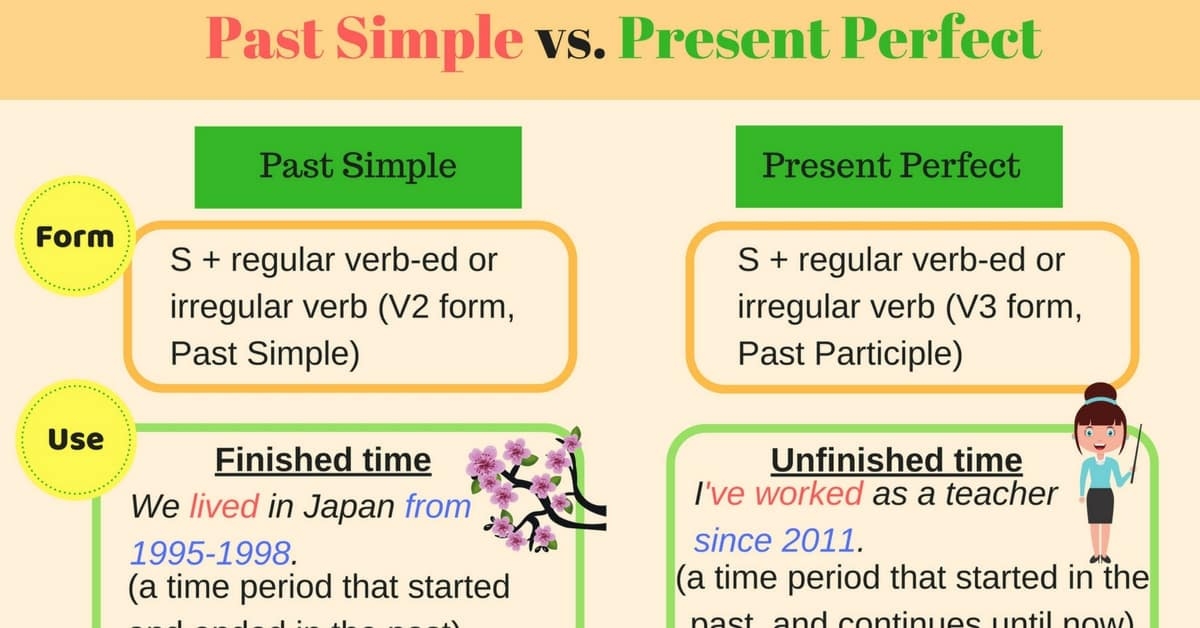
One key difference between the two tenses is the use of time expressions. The present perfect tense is often used with time expressions such as “ever,” “never,” “already,” and “yet.” For example, “I have never been to Japan” implies that the speaker has never visited Japan up to the present moment. In contrast, the past simple tense is used with specific time expressions like “yesterday,” “last week,” or “in 2015.” These time expressions clearly indicate when the action took place.
Another difference between present perfect and past simple English is the focus on the result of the action. The present perfect tense emphasizes the result or current state of the action, while the past simple tense focuses on the action itself. For instance, “I have read that book” highlights the fact that the speaker has finished reading the book and may have some knowledge or opinion about it. In contrast, “I read that book” simply states the action of reading without implying any further information.
It’s important to pay attention to the context and the specific nuances of each tense when choosing between present perfect and past simple English. Practice using both tenses in different situations to improve your understanding and fluency in English. With time and practice, you will become more confident in using these tenses correctly.
In conclusion, mastering the differences between present perfect and past simple English is essential for effective communication. By understanding when and how to use each tense appropriately, you can convey your thoughts and experiences accurately in English. Keep practicing and honing your skills to become proficient in both tenses.