Adjectives and adverbs are essential parts of speech that help to add depth and detail to our language. Adjectives describe nouns or pronouns, while adverbs modify verbs, adjectives, or other adverbs. Understanding how to transition from using adjectives to adverbs can greatly enhance the quality of your writing, making it more descriptive and engaging.
When converting adjectives to adverbs, it’s important to remember that adjectives describe the quality or characteristics of something, while adverbs describe how something is done or the degree to which it is done. By transforming adjectives into adverbs, you can provide more information and context to your sentences, creating a more vivid picture for your readers.
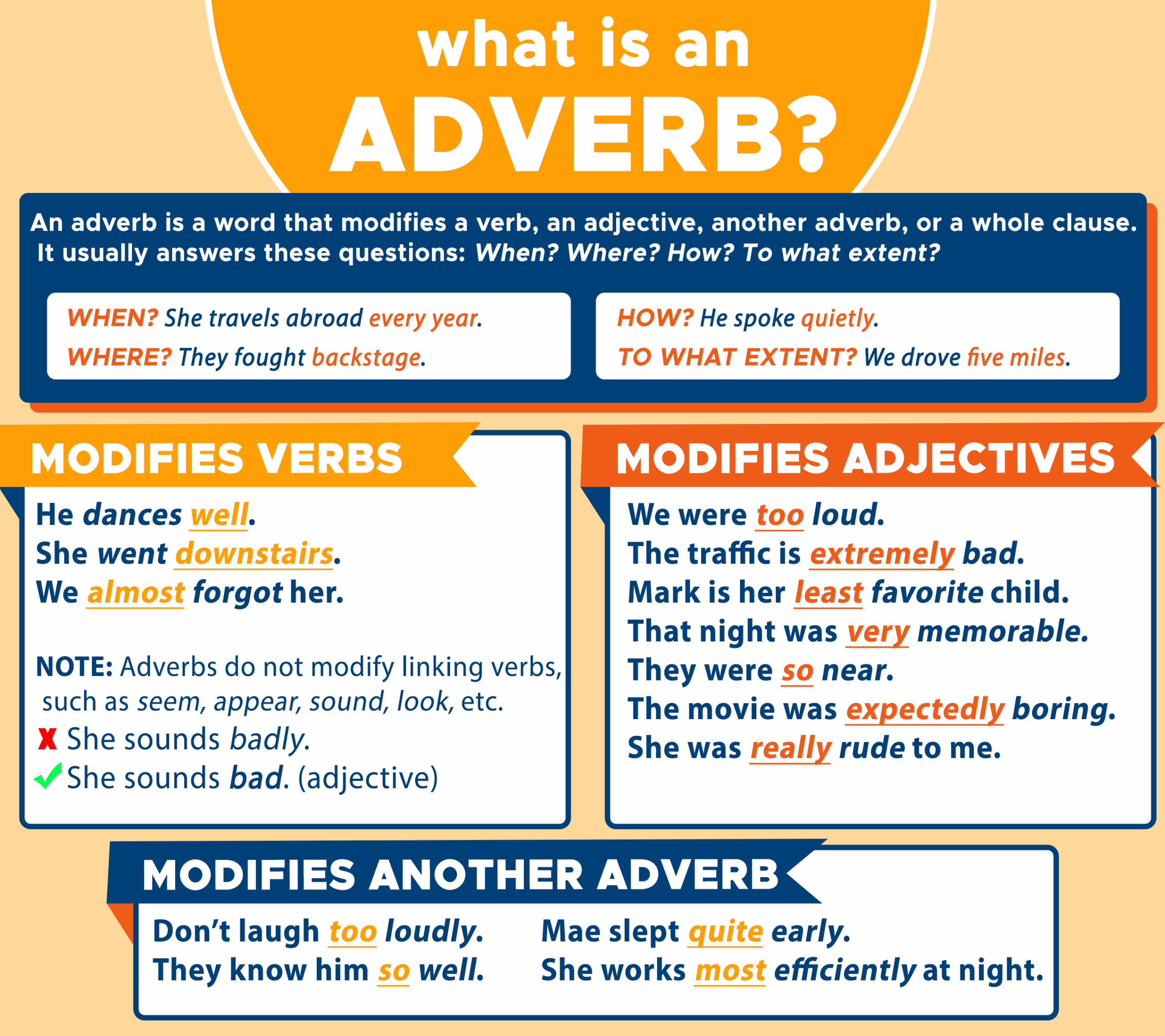
Examples of Adjectives to Adverbs
1. Adjective: She is a beautiful singer.
Adverb: She sings beautifully.
2. Adjective: He is an excellent student.
Adverb: He studies excellently.
3. Adjective: They are quick runners.
Adverb: They run quickly.
4. Adjective: She is a careful driver.
Adverb: She drives carefully.
5. Adjective: He is a hard worker.
Adverb: He works hard.
By converting adjectives to adverbs, you can add variety and specificity to your writing, allowing you to paint a more detailed and nuanced picture for your audience. Experiment with different adjectives and their corresponding adverbs to see how they can enhance the overall impact of your sentences.
In conclusion, mastering the transition from adjectives to adverbs is a valuable skill for any writer or communicator. By understanding the differences between the two and practicing their conversion, you can elevate the quality of your writing and effectively convey your message. So next time you’re crafting a sentence, consider how you can incorporate adverbs to bring your words to life.