The present perfect simple tense is used to indicate actions that have been completed at some point in the past but have relevance to the present. It is formed by using the auxiliary verb “have” or “has” followed by the past participle of the main verb. Understanding the formula for present perfect simple can help you construct sentences correctly and convey the intended meaning.
It is important to note that “have” is used with plural subjects (I, you, we, they) and “has” is used with singular subjects (he, she, it). The past participle of regular verbs is formed by adding “-ed” to the base form of the verb, while irregular verbs have specific past participle forms that must be memorized.
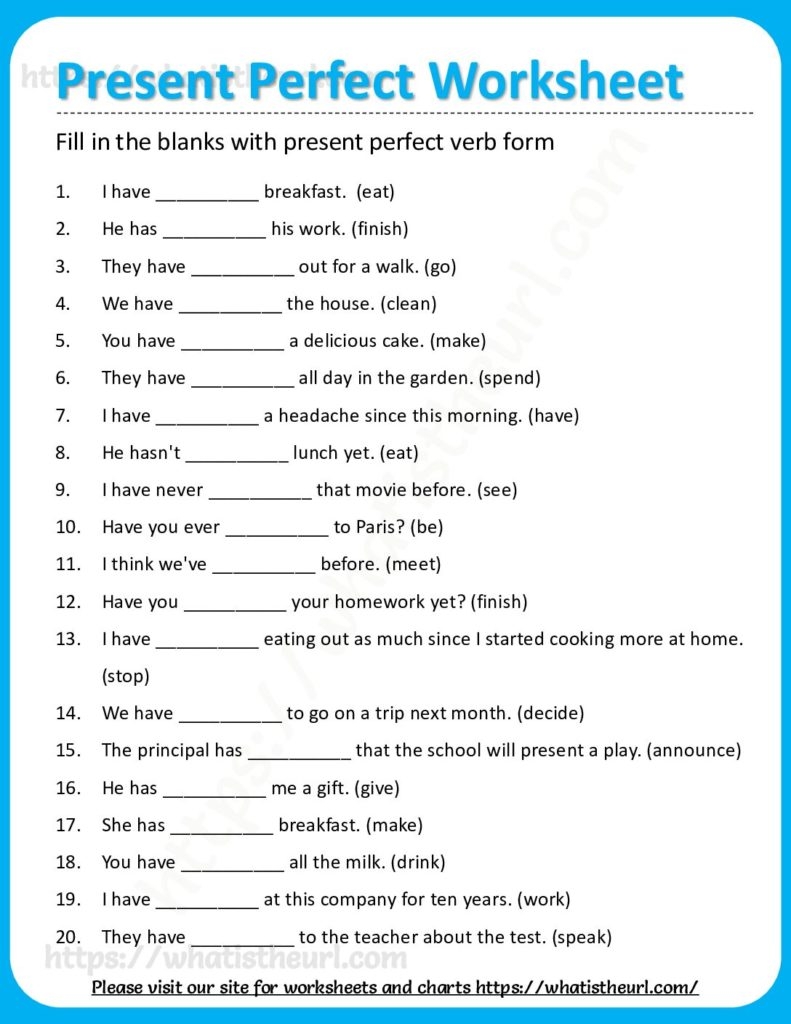
Present Perfect Simple Formula
The formula for present perfect simple is: subject + have/has + past participle. For example, “I have finished my homework.” In this sentence, “I” is the subject, “have” is the auxiliary verb, and “finished” is the past participle of the main verb “finish.”
When forming negative sentences in present perfect simple, “not” is placed between the auxiliary verb and the past participle. For example, “She has not visited the museum.” In this sentence, the negative form of the present perfect simple is used to indicate that the action of visiting the museum has not been completed.
Questions in present perfect simple are formed by inverting the subject and the auxiliary verb. For example, “Have you seen this movie?” In this sentence, “you” is the subject and “have” is the auxiliary verb, and they are inverted to form a question.
It is important to remember that the present perfect simple tense is often used to talk about experiences, achievements, or actions that have a connection to the present moment. By understanding the formula for present perfect simple and how to use it correctly, you can effectively communicate in English and express yourself with clarity.
In conclusion, the present perfect simple formula consists of the subject, the auxiliary verb “have” or “has,” and the past participle of the main verb. By following this formula and understanding how to form positive, negative, and question sentences, you can master the present perfect simple tense and use it confidently in your conversations and writing.