Adjectives and adverbs are two essential parts of speech that are often confused due to their similar functions in a sentence. However, they serve distinct roles and have different uses in English grammar. Understanding the difference between adjectives and adverbs is crucial for effective communication and writing. Let’s explore the characteristics of each and how they can enhance your language skills.
Adjectives are words that describe or modify nouns and pronouns. They provide more information about the quality, size, shape, or color of the noun they are referring to. For example, in the sentence “The beautiful flowers bloomed in the garden,” the word “beautiful” is an adjective that describes the noun “flowers.” Adjectives add detail and specificity to our language, allowing us to paint a vivid picture with our words.
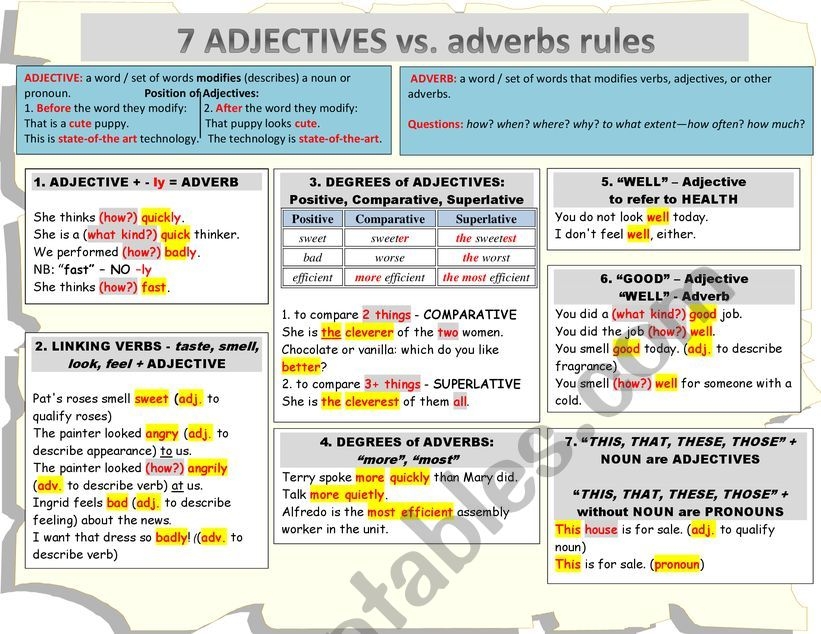
On the other hand, adverbs are words that modify verbs, adjectives, or other adverbs. They answer questions such as how, when, where, or to what extent an action is performed. Adverbs can enhance the meaning of a verb by providing information about the manner in which it is carried out. For instance, in the sentence “She ran quickly to catch the bus,” the word “quickly” is an adverb that describes how she ran.
One key difference between adjectives and adverbs is their placement in a sentence. Adjectives typically come before the noun they are modifying, while adverbs often appear after the verb they are modifying. For example, in the sentence “He wore a bright red shirt,” the adjectives “bright” and “red” come before the noun “shirt.” In contrast, in the sentence “She sang beautifully,” the adverb “beautifully” follows the verb “sang.”
It is important to use adjectives and adverbs correctly to convey your intended meaning clearly. Misplacing or misusing these words can lead to confusion or ambiguity in your writing. By mastering the distinctions between adjectives and adverbs, you can improve the precision and effectiveness of your language use.
In conclusion, adjectives and adverbs play vital roles in enhancing the quality of our communication. While adjectives describe nouns and provide more detail, adverbs modify verbs and add depth to our descriptions. By understanding how to use these parts of speech effectively, you can elevate your writing and express yourself more eloquently. Practice incorporating adjectives and adverbs into your sentences to sharpen your language skills and make your writing more engaging.