The present perfect tense is a verb form that indicates an action that has taken place at an unspecified time before now. It is used to show that an action started in the past and continues into the present or has just been completed. This tense is commonly used in English to talk about experiences, changes, and actions that have a connection to the present.
Learning how to use the present perfect tense can be a bit challenging for English learners, but with practice and understanding, it can become easier to master. One helpful tool in understanding this tense is a present perfect tense chart, which visually displays the different forms and uses of this verb tense.
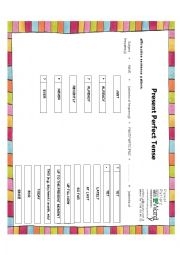
Present Perfect Tense Chart
Below is a present perfect tense chart that shows the structure of this verb tense:
| Subject | Auxiliary Verb | Main Verb (Past Participle) |
|---|---|---|
| I | have | worked |
| You | have | studied |
| He/She/It | has | finished |
| We | have | traveled |
| They | have | seen |
In the present perfect tense, the auxiliary verb “have” or “has” is used with the past participle form of the main verb to form the tense. The subject of the sentence determines whether “have” or “has” is used. For example, “I have visited Paris” or “She has finished her homework.”
It is important to note that the present perfect tense is often used with time expressions such as “already,” “yet,” “just,” and “for,” to indicate when the action took place or how long it lasted. For example, “I have already eaten lunch” or “She has been in the library for two hours.”
By referring to a present perfect tense chart and practicing using this verb tense in context, English learners can improve their understanding and use of the present perfect tense. With time and practice, using the present perfect tense accurately will become second nature.
In conclusion, the present perfect tense is a valuable tool in English grammar that allows speakers to talk about past actions with a connection to the present. By using a present perfect tense chart and practicing with various examples, learners can enhance their skills and confidently use this verb tense in their communication.