Grammar plays a crucial role in effective communication, allowing us to convey our thoughts and ideas clearly. One important aspect of grammar is the use of tenses, which help us indicate the time frame of an action or event. Among the various tenses, the present perfect tense stands out as a versatile and widely used form in English.
Understanding how to properly use the present perfect tense can greatly enhance your writing and speaking skills, enabling you to express yourself more accurately and confidently. Let’s delve into the nuances of this tense and explore its various applications.
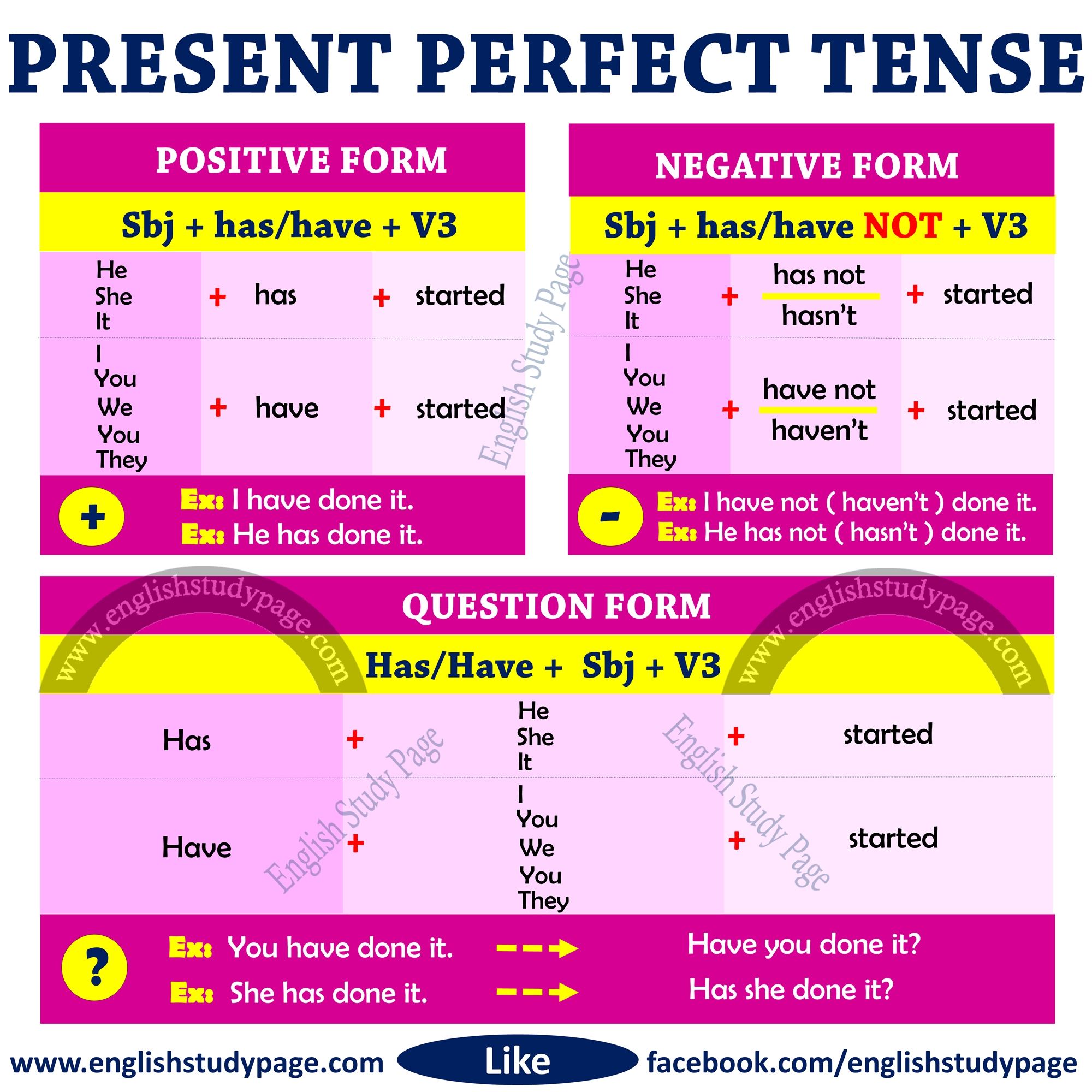
Present Perfect Tense Grammar
The present perfect tense is formed by using the auxiliary verb “have” or “has” followed by the past participle of the main verb. It is used to indicate actions or events that have occurred at an unspecified time in the past or have relevance to the present moment. For example, “I have visited Paris” suggests that the action of visiting Paris took place at some point in the past, but the exact time is not specified.
One common use of the present perfect tense is to describe experiences or accomplishments that have an impact on the present. For instance, “She has written a book” implies that the act of writing a book has relevance to the present situation, highlighting the author’s achievement.
Additionally, the present perfect tense is often used to talk about recent actions or events that have just happened. For example, “I have just finished my homework” indicates that the completion of homework is a recent occurrence, emphasizing the immediacy of the action.
Moreover, the present perfect tense can also be used to express repeated actions or habits that have taken place over a period of time. For instance, “He has been to Italy several times” conveys the idea that the person has visited Italy on multiple occasions in the past, indicating a recurring pattern of behavior.
By mastering the nuances of present perfect tense grammar, you can enhance the clarity and precision of your communication, making your writing and speaking more effective and engaging. Practice using this versatile tense in various contexts to improve your language skills and convey your thoughts with confidence.
In conclusion, the present perfect tense is a valuable tool in English grammar, allowing us to express past actions with relevance to the present. By understanding and applying the rules of this tense correctly, you can elevate your communication skills and convey your ideas more effectively. Keep practicing and incorporating the present perfect tense into your language usage to become a more proficient and confident communicator.