The present perfect tense is a grammatical tense used to describe actions that have been completed at some point in the past, but have a connection to the present. It is important to understand the rules and usage of this tense in order to communicate effectively in English.
Many English learners find the present perfect tense to be confusing because it does not exist in some other languages. However, once you grasp the rules and practice using this tense, it can greatly enhance your language skills.
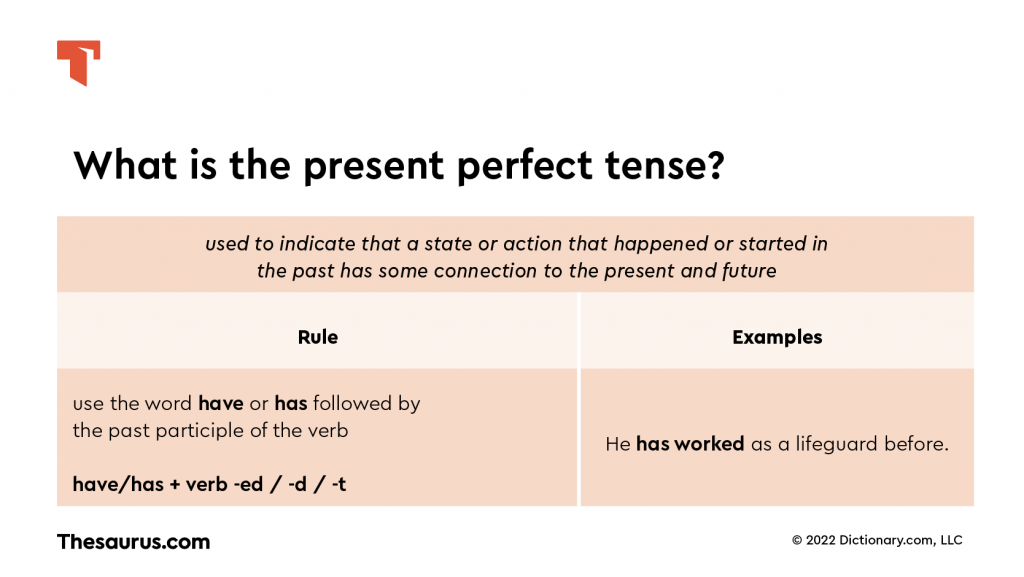
Present Perfect Tense Rule
The present perfect tense is formed by using the auxiliary verb “have” or “has” followed by the past participle of the main verb. For example, “She has finished her homework.” In this sentence, “has” is the auxiliary verb and “finished” is the past participle of the main verb “finish.”
It is important to note that the present perfect tense is used to talk about experiences, actions that have been completed recently, or actions that have relevance to the present. For example, “I have visited Paris three times.” This sentence indicates a past experience that is relevant to the present moment.
Another important rule to remember is that the time frame of the action is not specified in the present perfect tense. This means that the focus is on the result or completion of the action rather than when it occurred. For example, “They have already eaten dinner.” The emphasis is on the fact that dinner has been eaten, not the exact time it happened.
Additionally, the present perfect tense is often used with time expressions such as “already,” “yet,” “just,” and “for.” These words help to indicate the connection between the past action and the present moment. For example, “I have just finished my work.” The word “just” shows that the action was completed very recently.
By understanding and applying the rules of the present perfect tense, you can improve your English language skills and communicate more effectively. Practice using this tense in conversation and writing to become more comfortable with its usage.
In conclusion, the present perfect tense is a valuable tool for expressing completed actions with a connection to the present. By following the rules and practicing regularly, you can enhance your language abilities and communicate more confidently in English.