Understanding the difference between simple past tense and present perfect is crucial for English learners. Both tenses are used to talk about actions that have already happened, but they are used in different contexts and convey different meanings.
Simple past tense is used to describe actions that were completed at a specific point in the past. It is formed by adding -ed to regular verbs or using the irregular verb form for irregular verbs. For example, “I walked to the store yesterday” or “She ate lunch an hour ago.” Simple past tense is used to talk about specific events that happened and are no longer ongoing.
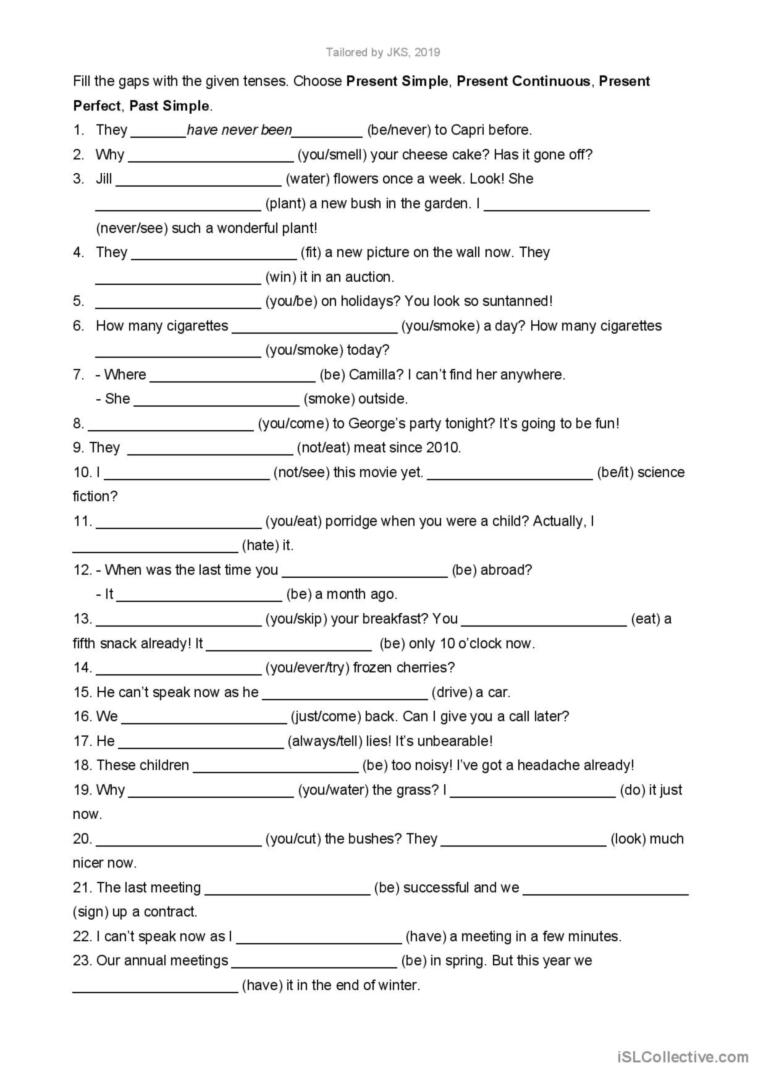
Simple Past Tense vs Present Perfect
Present perfect, on the other hand, is used to talk about actions that were completed at an unspecified time in the past or have relevance to the present. It is formed by using the auxiliary verb “have” or “has” with the past participle of the main verb. For example, “I have eaten breakfast” or “She has visited Paris.” Present perfect is often used to talk about experiences, changes, or actions that have a connection to the present moment.
One key difference between simple past tense and present perfect is the time frame they refer to. Simple past tense refers to a specific time in the past, while present perfect refers to an unspecified time in the past that has a connection to the present. For example, “I visited London last year” (simple past) vs “I have visited London several times” (present perfect).
Another difference is the use of adverbs with each tense. Simple past tense is often used with adverbs of definite time, such as yesterday, last week, or in 1999. Present perfect, on the other hand, is often used with adverbs of indefinite time, such as ever, never, or already. For example, “She has already seen that movie” (present perfect) vs “She saw that movie last night” (simple past).
In conclusion, understanding when to use simple past tense and present perfect is essential for effective communication in English. By recognizing the differences in meaning and usage between the two tenses, English learners can improve their language skills and convey their ideas more accurately.