When it comes to understanding the English language, one of the key components to grasp is the concept of auxiliary verbs. These verbs play a crucial role in forming tenses, asking questions, and negating sentences. Without auxiliary verbs, it would be challenging to convey complex ideas and nuances in language.
Auxiliary verbs, also known as helping verbs, work in conjunction with main verbs to express various meanings. They can indicate tense, mood, voice, and aspect in a sentence. Understanding how to use auxiliary verbs correctly can greatly enhance your ability to communicate effectively in English.
What are Auxiliary Verbs?
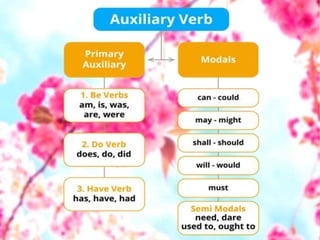
Auxiliary verbs are used to help the main verb in a sentence. They can be divided into two categories: primary auxiliary verbs and modal auxiliary verbs. Primary auxiliary verbs include “be,” “have,” and “do,” while modal auxiliary verbs include “can,” “could,” “may,” “might,” “shall,” “should,” “will,” “would,” “must,” and “ought to.”
Primary auxiliary verbs are used to form tenses, questions, and negatives. For example, in the sentence “She is reading a book,” the auxiliary verb “is” helps to indicate the present continuous tense. Modal auxiliary verbs, on the other hand, express possibility, necessity, permission, or ability. For instance, in the sentence “You should study for the exam,” the modal auxiliary verb “should” suggests a recommendation or advice.
It is essential to use auxiliary verbs correctly to convey the intended meaning in a sentence. Misplacing or omitting an auxiliary verb can alter the message and lead to confusion. Practice using auxiliary verbs in different contexts to improve your language skills and fluency.
In conclusion, auxiliary verbs are an integral part of the English language that help to convey nuances and complexities in communication. By understanding how to use auxiliary verbs effectively, you can enhance your writing and speaking skills. Remember to pay attention to the role of auxiliary verbs in forming tenses, questions, and negatives to ensure clarity and accuracy in your language use.