Pronouns are an essential part of language that replace nouns to make sentences more concise and clear. There are several categories of pronouns that serve different purposes in a sentence.
Understanding the various types of pronouns can help improve your grammar and communication skills. Let’s explore the different categories of pronouns in more detail.
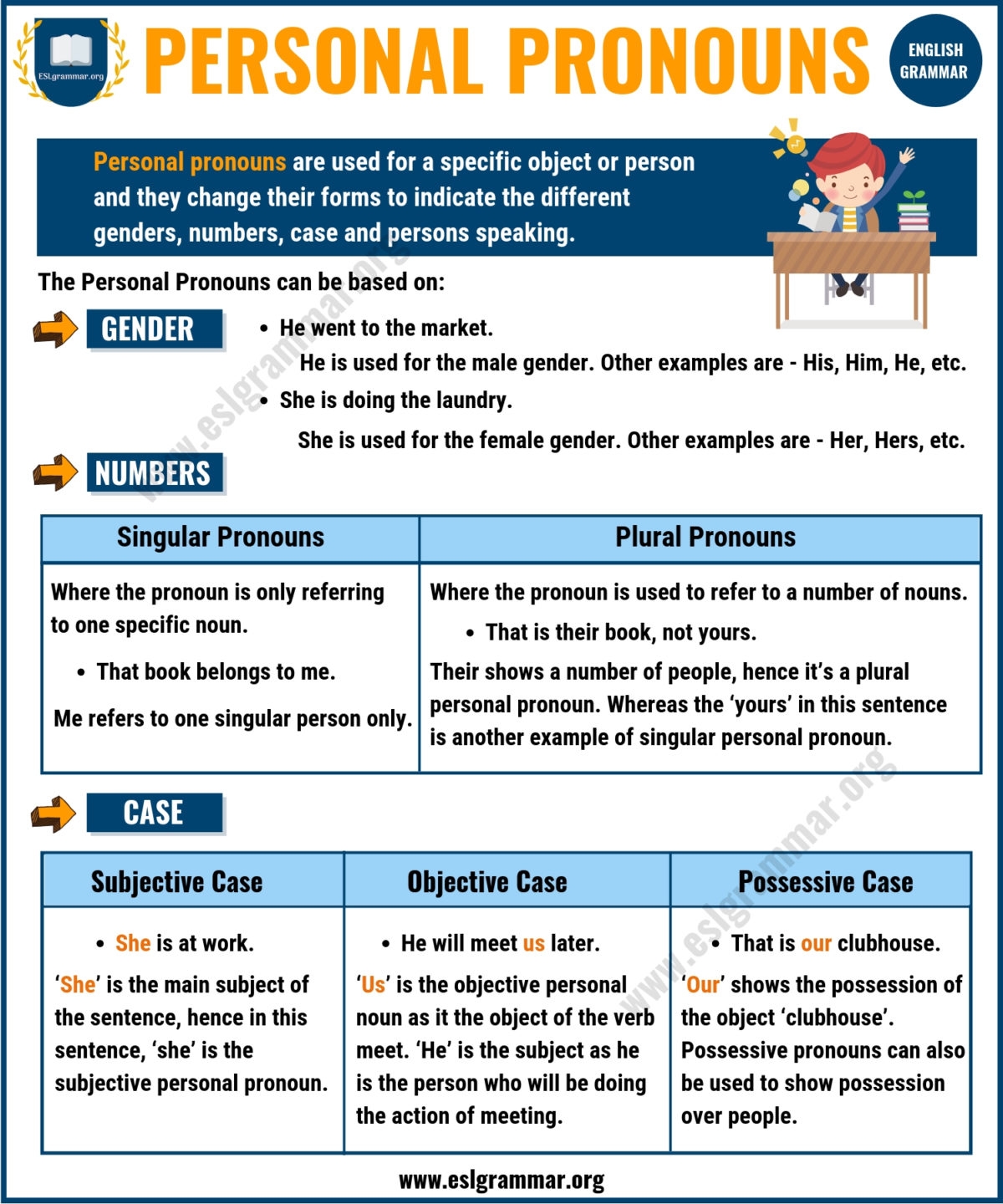
Categories of Pronouns
1. Personal Pronouns: Personal pronouns refer to specific people or things and are used to indicate the subject or object in a sentence. Examples include: I, you, he, she, it, we, and they.
2. Demonstrative Pronouns: Demonstrative pronouns point to specific things or people and indicate their position in space or time. Examples include: this, that, these, and those.
3. Possessive Pronouns: Possessive pronouns indicate ownership or possession of something. Examples include: mine, yours, his, hers, ours, and theirs.
4. Reflexive Pronouns: Reflexive pronouns are used when the subject and object of a sentence are the same. Examples include: myself, yourself, himself, herself, itself, ourselves, yourselves, and themselves.
5. Interrogative Pronouns: Interrogative pronouns are used to ask questions and gather information. Examples include: who, whom, whose, which, and what.
Each category of pronouns serves a different function in a sentence and is essential for effective communication. By understanding and using pronouns correctly, you can improve the clarity and readability of your writing.
In conclusion, pronouns play a crucial role in language by replacing nouns and making sentences more concise. By familiarizing yourself with the different categories of pronouns, you can enhance your grammar skills and communicate more effectively.