Adjectives and adverbs are both essential parts of speech that help to provide a more detailed description of nouns and verbs. While they may seem similar, they serve different purposes in a sentence and can greatly impact the overall meaning and tone of a sentence.
Adjectives are words that modify or describe nouns and pronouns. They provide information about the size, shape, color, texture, and more of the noun they are describing. For example, in the sentence “The red car is parked outside,” the word “red” is an adjective that describes the noun “car.” Adjectives help to add specificity and detail to a sentence, allowing the reader to visualize and understand the noun more clearly.
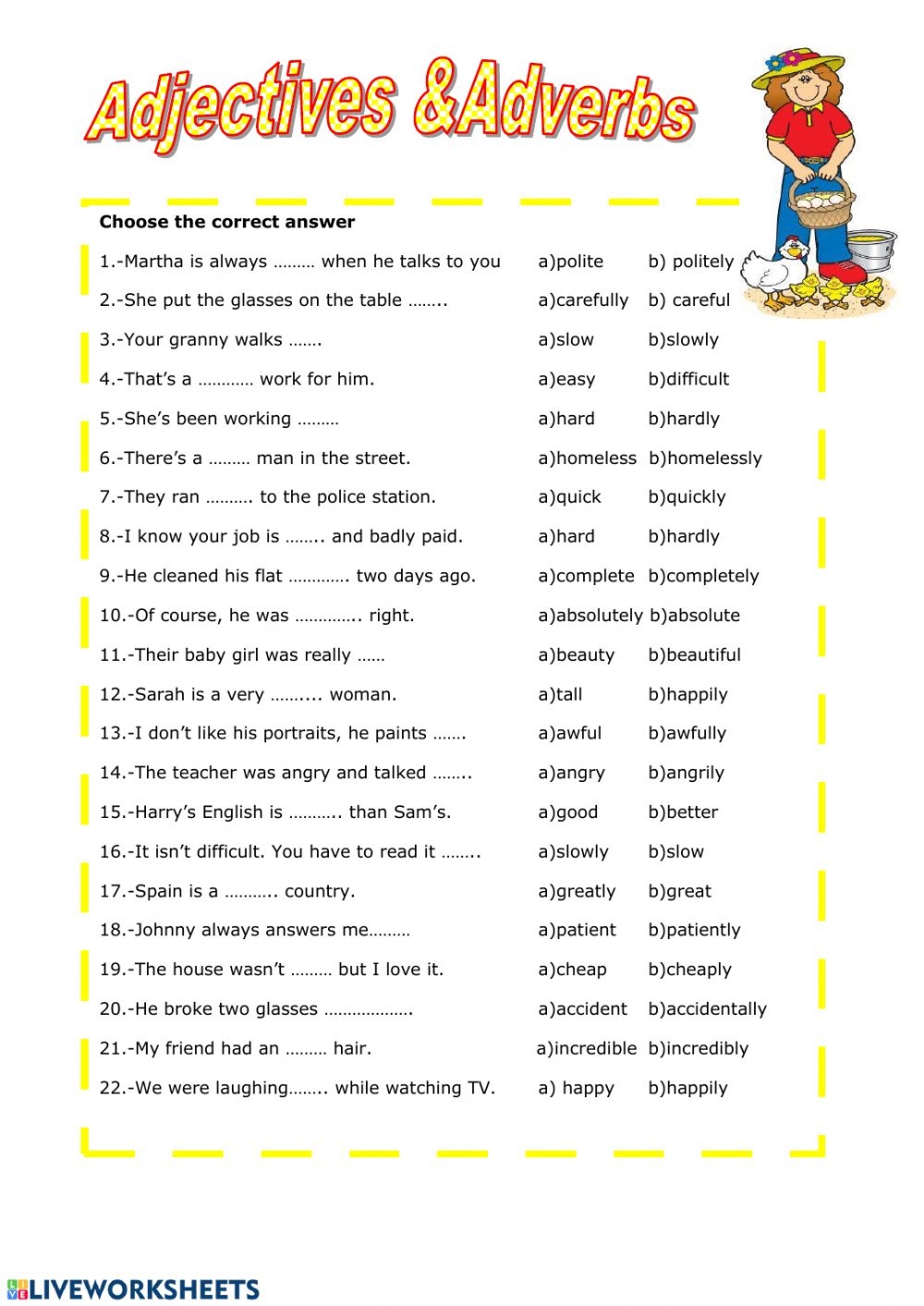
Adjective vs Adverb
Adverbs, on the other hand, modify or describe verbs, adjectives, or other adverbs. They provide information about how, when, where, why, or to what extent an action is taking place. For example, in the sentence “She sings beautifully,” the word “beautifully” is an adverb that describes how she sings. Adverbs help to add depth and nuance to a sentence, providing additional information about the action being performed.
One key difference between adjectives and adverbs is their placement within a sentence. Adjectives typically come before the noun they are describing, while adverbs usually come after the verb they are modifying. However, there are exceptions to this rule, and adverbs can sometimes appear at the beginning or end of a sentence for emphasis. It is important to pay attention to the placement of adjectives and adverbs to ensure that they are modifying the correct words in a sentence.
Another important distinction between adjectives and adverbs is their comparative and superlative forms. Adjectives use the suffixes “-er” and “-est” to show a comparison of two or more nouns, while adverbs use the words “more” and “most” before the adverb to indicate a comparison. For example, “bigger” and “biggest” are the comparative and superlative forms of the adjective “big,” while “more slowly” and “most slowly” are the comparative and superlative forms of the adverb “slowly.”
In conclusion, adjectives and adverbs play crucial roles in adding detail and depth to a sentence. Adjectives describe nouns, while adverbs describe verbs, adjectives, or other adverbs. By understanding the differences between adjectives and adverbs and how they are used in a sentence, writers can create more vivid and engaging prose that effectively communicates their intended message.