When it comes to constructing sentences in English, auxiliary verbs play a crucial role. These verbs, also known as helping verbs, work alongside main verbs to express various tenses, moods, and voices. Without auxiliary verbs, sentences would lack clarity and precision, making it difficult to convey the intended meaning.
Understanding the function and usage of auxiliary verbs is essential for anyone looking to communicate effectively in English. Whether you are writing an essay, giving a presentation, or engaging in a casual conversation, auxiliary verbs help you convey your message accurately and efficiently.
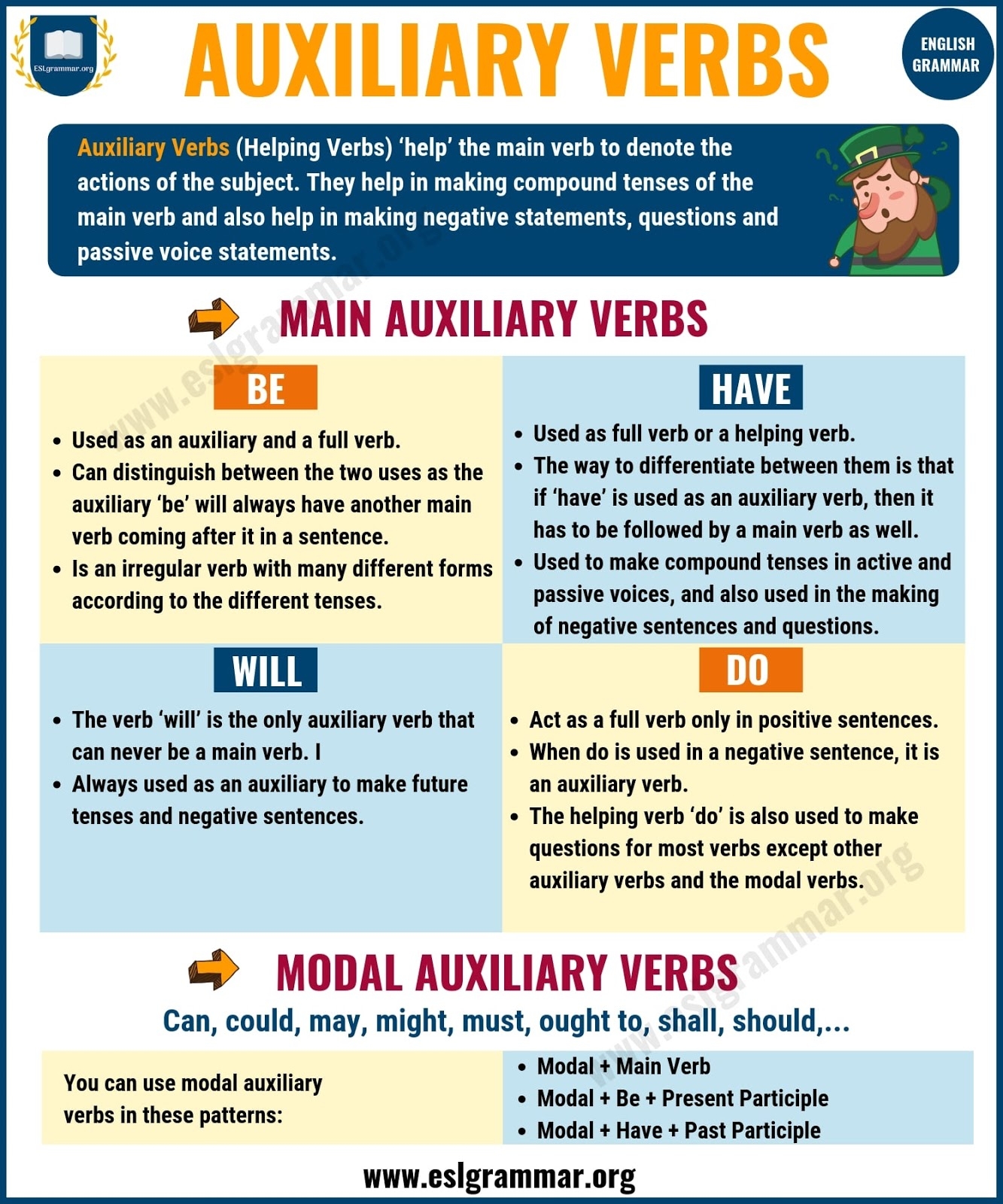
Auxiliary Verbs
Auxiliary verbs can be divided into two main categories: primary auxiliary verbs and modal auxiliary verbs. Primary auxiliary verbs include “be,” “do,” and “have,” which are used to form various tenses, questions, and negatives. Modal auxiliary verbs, on the other hand, express possibility, necessity, permission, or ability, such as “can,” “could,” “may,” “might,” “shall,” “should,” “will,” “would,” and “must.”
One important aspect of auxiliary verbs is their ability to change the meaning of a sentence. For example, the sentence “She is writing a book” conveys a different message than “She will write a book” or “She can write a book.” By using different auxiliary verbs, you can modify the tense, mood, or voice of a sentence to suit your intended meaning.
Auxiliary verbs also play a crucial role in forming questions and negatives. In English, questions are typically formed by inverting the subject and the auxiliary verb, such as “Are you coming?” or “Have you finished?”. Negatives, on the other hand, are formed by adding “not” after the auxiliary verb, such as “I do not like coffee” or “She will not attend the meeting.”
In conclusion, auxiliary verbs are an indispensable part of the English language, helping to clarify meaning, express different tenses and moods, and form questions and negatives. By understanding the function and usage of auxiliary verbs, you can enhance your communication skills and convey your message effectively. So next time you write a sentence or engage in a conversation, remember the importance of auxiliary verbs in shaping the meaning of your words.