When it comes to the English language, the word “can” is a versatile verb that can be used in a variety of ways. Whether it’s expressing ability, permission, or possibility, this small but powerful word plays a big role in everyday communication. Let’s explore the different ways in which “can” can be used as a verb.
One of the most common uses of “can” as a verb is to express ability. For example, when someone says “I can speak French,” they are indicating that they have the skill or capability to communicate in the French language. This use of “can” is essential for describing what a person is able to do.
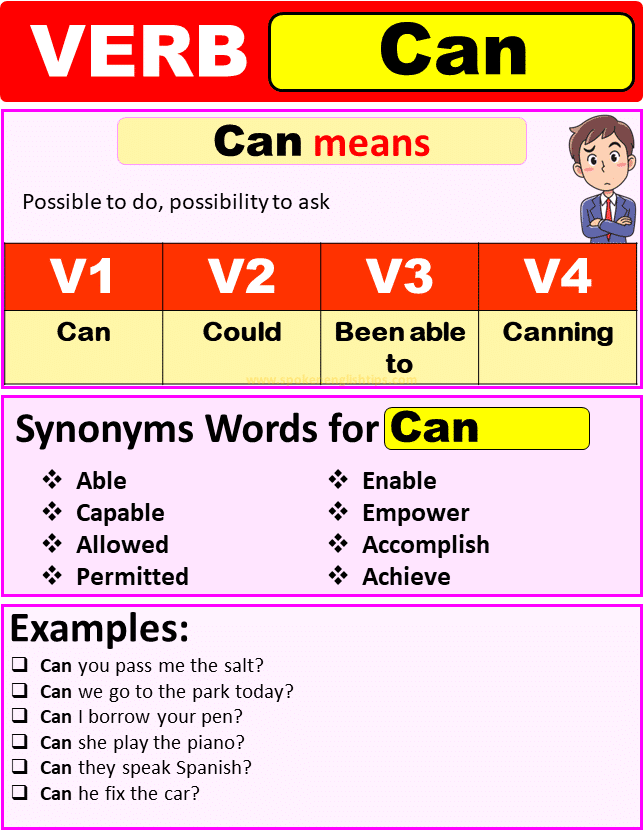
Another way in which “can” is used as a verb is to indicate permission. When someone asks “Can I go to the bathroom?” they are seeking approval to leave the room temporarily. In this context, “can” is used to ask for or grant authorization to do something. It’s a polite way of seeking permission in various situations.
Additionally, “can” can be used to express possibility. For example, when someone says “It can rain later,” they are suggesting that there is a chance or likelihood of rain occurring at some point in the future. This use of “can” is important for discussing potential outcomes or events that may happen.
Furthermore, “can” can also be used to make requests or offers. For instance, when someone says “Can you pass me the salt?” they are asking for assistance in passing an item. This use of “can” is a way of politely making a request or extending an offer to help someone else.
In conclusion, the word “can” as a verb is a versatile tool in the English language that can be used to express ability, permission, possibility, and make requests. Its flexibility and adaptability make it an essential part of everyday communication. So next time you use the word “can,” remember its many meanings and how it can enhance your language skills.