The Civil War was a significant event in American history that took place from 1861 to 1865. It was a time of great conflict and division as the Northern states (Union) fought against the Southern states (Confederacy) over issues such as slavery, states’ rights, and the preservation of the Union. As with any war, there were specific terms and vocabulary used during this period that are important to understand in order to grasp the full context of the events that transpired.
Understanding Civil War vocabulary is essential for anyone studying or interested in this period of American history. These terms provide insight into the key concepts, strategies, and battles that shaped the course of the war. By familiarizing yourself with these terms, you can gain a deeper understanding of the complexities and nuances of the Civil War.
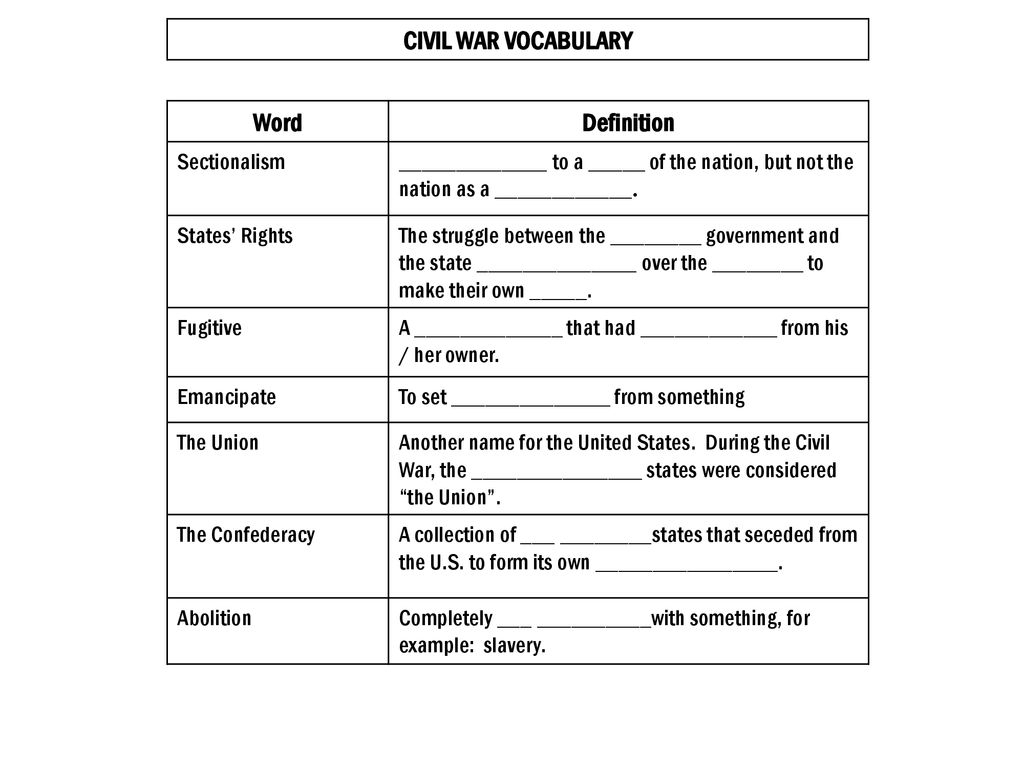
1. Secession: Secession refers to the act of a state formally withdrawing from the Union. During the Civil War, several Southern states seceded from the United States in response to the election of Abraham Lincoln, ultimately leading to the formation of the Confederacy.
2. Emancipation: Emancipation is the act of freeing individuals from slavery. President Abraham Lincoln issued the Emancipation Proclamation in 1863, declaring that all slaves in Confederate-held territory were to be set free. This was a significant turning point in the war and had far-reaching implications for the future of slavery in America.
3. Reconstruction: Reconstruction refers to the period following the Civil War when the United States sought to rebuild and reunite the country. This era was marked by efforts to integrate the Southern states back into the Union, establish civil rights for freed slaves, and address the economic and social challenges that arose in the aftermath of the war.
4. Gettysburg Address: The Gettysburg Address was a speech delivered by President Abraham Lincoln in 1863 at the dedication of the Soldiers’ National Cemetery in Gettysburg, Pennsylvania. In this brief but powerful speech, Lincoln emphasized the principles of equality, liberty, and democracy that were at the heart of the Civil War.
As you delve into the study of the Civil War, familiarizing yourself with the vocabulary of this period will enhance your understanding of the key events, figures, and ideas that shaped this pivotal moment in American history. By immersing yourself in the language of the Civil War, you can gain a deeper appreciation for the complexities and consequences of this tumultuous time.