When it comes to learning Spanish, one of the most important verbs to master is “hacer.” This versatile verb can be used in a variety of contexts and is essential for expressing actions and making requests. In this article, we will explore how to conjugate “hacer” in different tenses and moods.
Whether you are a beginner or more advanced Spanish learner, understanding how to use “hacer” correctly will greatly enhance your communication skills and fluency in the language. Let’s dive into the conjugation of this important verb!
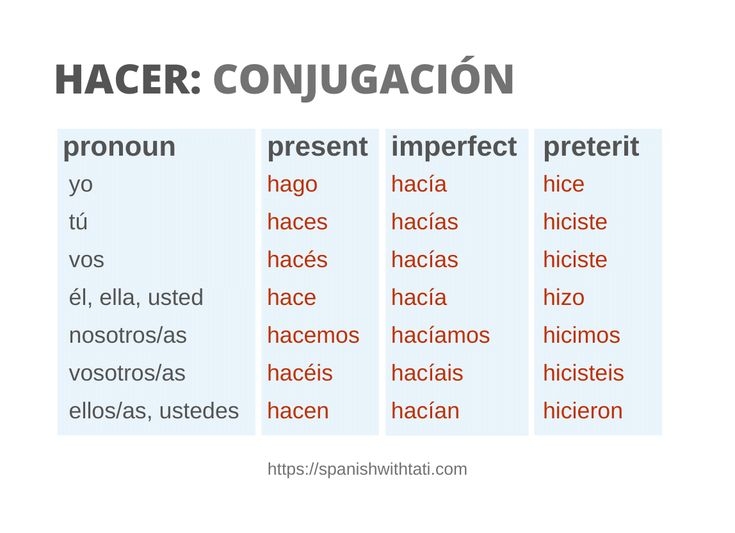
Conjugate the Verb Hacer
1. Present Tense:
– Yo hago (I do/make)
– Tú haces (You do/make)
– Él/Ella/Usted hace (He/She/You do/make)
– Nosotros/Nosotras hacemos (We do/make)
– Vosotros/Vosotras hacéis (You all do/make)
– Ellos/Ellas/Ustedes hacen (They/You all do/make)
2. Preterite Tense:
– Yo hice (I did/made)
– Tú hiciste (You did/made)
– Él/Ella/Usted hizo (He/She/You did/made)
– Nosotros/Nosotras hicimos (We did/made)
– Vosotros/Vosotras hicisteis (You all did/made)
– Ellos/Ellas/Ustedes hicieron (They/You all did/made)
3. Imperfect Tense:
– Yo hacía (I used to do/make)
– Tú hacías (You used to do/make)
– Él/Ella/Usted hacía (He/She/You used to do/make)
– Nosotros/Nosotras hacíamos (We used to do/make)
– Vosotros/Vosotras hacíais (You all used to do/make)
– Ellos/Ellas/Ustedes hacían (They/You all used to do/make)
4. Future Tense:
– Yo haré (I will do/make)
– Tú harás (You will do/make)
– Él/Ella/Usted hará (He/She/You will do/make)
– Nosotros/Nosotras haremos (We will do/make)
– Vosotros/Vosotras haréis (You all will do/make)
– Ellos/Ellas/Ustedes harán (They/You all will do/make)
5. Subjunctive Mood:
– Que yo haga (That I do/make)
– Que tú hagas (That you do/make)
– Que él/ella/usted haga (That he/she/you do/make)
– Que nosotros/nosotras hagamos (That we do/make)
– Que vosotros/vosotras hagáis (That you all do/make)
– Que ellos/ellas/ustedes hagan (That they/you all do/make)
In conclusion, mastering the conjugation of the verb “hacer” is essential for anyone looking to improve their Spanish language skills. By practicing the different tenses and moods, you will be able to confidently express yourself in a variety of situations. Keep practicing and soon you will be using “hacer” like a native speaker!