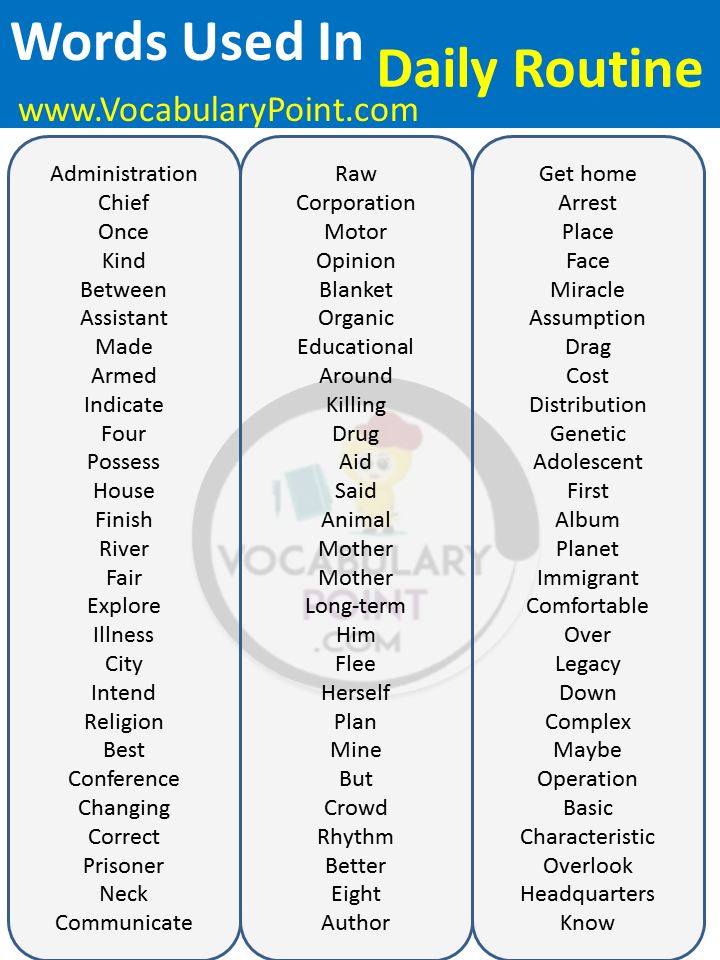
Establishing a daily routine is essential for productivity and overall well-being. By incorporating specific tasks and activities into our daily schedule, we can create a sense of structure and organization in our lives. Here is a list of vocabulary related to daily routines that can help you describe your daily activities.
1. Wake up – to stop sleeping and open your eyes in the morning.
2. Brush teeth – to clean your teeth with a toothbrush.
3. Have breakfast – to eat the first meal of the day.
4. Commute – to travel from home to work or school.
5. Work – to perform tasks or duties for an employer.
Our daily routine often consists of a combination of personal care activities, work or school responsibilities, and leisure time. We wake up in the morning, brush our teeth, and have breakfast to start our day. We then commute to work or school, where we spend a significant portion of our day performing tasks and duties. After work, we may engage in recreational activities such as exercising, socializing with friends, or pursuing hobbies.
Throughout the day, we may also take breaks to rest and recharge. It is important to find a balance between work and leisure to maintain a healthy lifestyle. By following a consistent daily routine, we can improve our productivity and overall well-being.
In the evening, we wind down by having dinner, relaxing, and preparing for bed. We may read a book, watch TV, or engage in other activities to help us unwind before going to sleep. Establishing a bedtime routine can also help us get a restful night’s sleep and prepare us for the next day.
In conclusion, incorporating a daily routine into our lives can help us stay organized, focused, and productive. By using the vocabulary list provided, we can effectively communicate our daily activities and describe our routines to others. Whether it’s waking up, going to work, or relaxing in the evening, having a structured daily routine is essential for achieving our goals and maintaining a healthy work-life balance.