The present perfect tense is a grammatical structure used in the English language to indicate an action that has been completed at some point in the past but has relevance or connection to the present moment. It is a versatile tense that is widely used in both spoken and written English.
Native English speakers use the present perfect tense to express actions that have occurred in the recent past or have some impact on the present situation. It is important to understand when and how to use this tense correctly in order to communicate effectively.
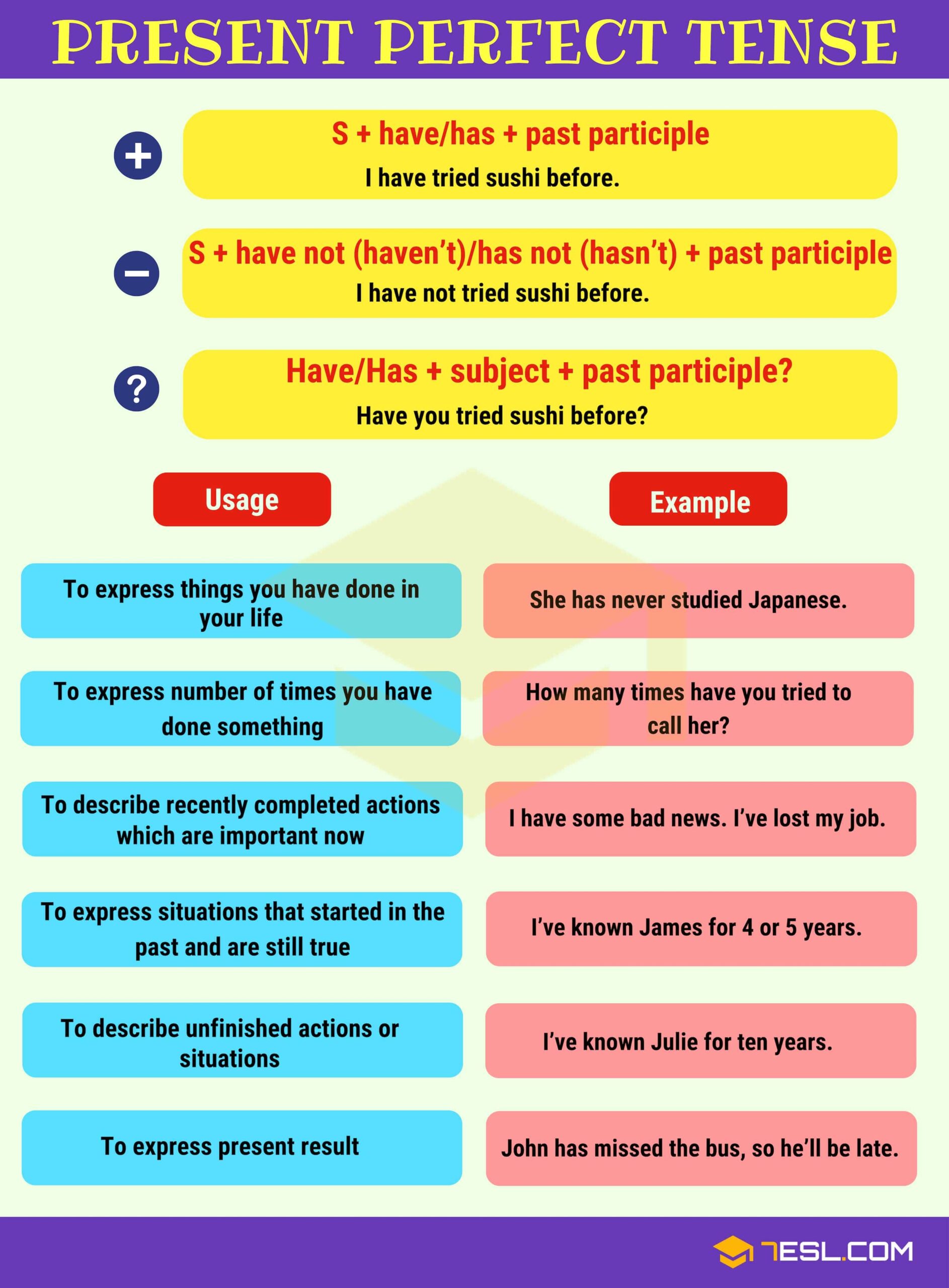
Definition of Present Perfect
The present perfect tense is formed by using the auxiliary verb “have” or “has” followed by the past participle of the main verb. This tense is used to describe actions that have taken place at an unspecified time in the past or have relevance to the present moment. It is often used to talk about experiences, accomplishments, or changes that have occurred.
One common use of the present perfect tense is to talk about past actions that have an effect on the present situation. For example, “I have lost my keys” indicates that the action of losing the keys happened in the past but has an impact on the present moment because the keys are still missing.
Another use of the present perfect tense is to talk about experiences in a person’s life. For example, “I have visited Paris three times” indicates that the action of visiting Paris has happened multiple times in the past. This tense is often used with adverbs such as “never,” “ever,” “already,” and “yet” to indicate the timing of the action.
It is important to note that the present perfect tense is not used to describe actions that have a specific time reference in the past. In these cases, the simple past tense is more appropriate. Understanding the nuances of the present perfect tense can help improve your English language skills and make your communication more precise.
In conclusion, the present perfect tense is a valuable tool in the English language that allows speakers to connect past actions to the present moment. By mastering this tense, you can effectively communicate about experiences, accomplishments, and changes in a clear and concise manner.