Modal verbs are a type of auxiliary verb that express necessity, possibility, permission, ability, or obligation. They play a crucial role in English grammar and are used to indicate the attitude of the speaker towards the action or state of being in the sentence. Understanding how to use modal verbs correctly can help improve your communication skills and make your writing more precise and effective.
In this article, we will explore some examples of modal verbs and how they are used in sentences to convey different meanings and nuances. By learning how to use modal verbs properly, you can enhance your language proficiency and express yourself more clearly in various contexts.
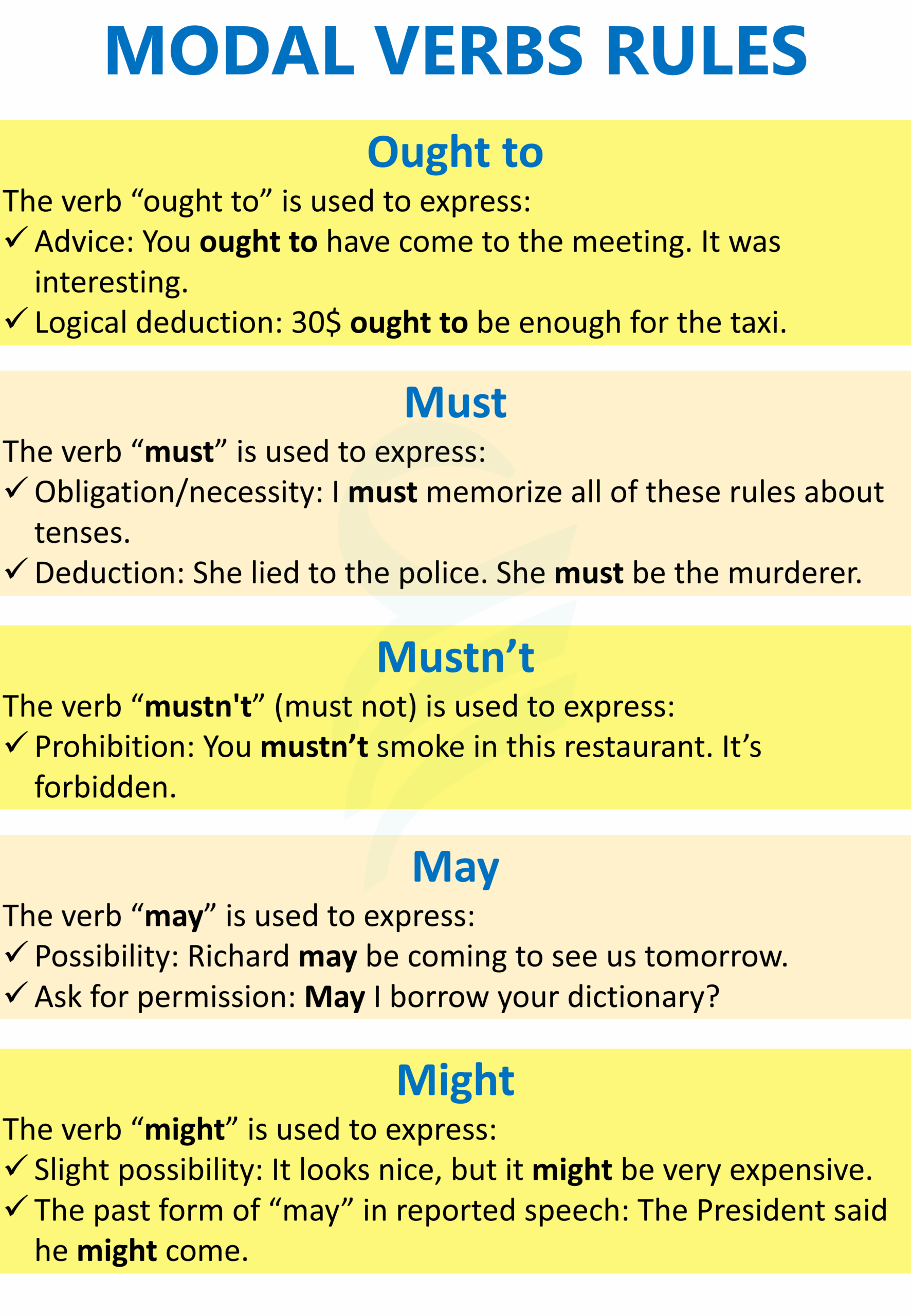
Examples of Modal Verbs
1. Can: I can swim. (ability)
2. Could: Could you help me with this? (polite request)
3. Should: You should apologize for your mistake. (advice)
4. Must: I must finish my homework before going out. (obligation)
5. May: May I borrow your pen? (permission)
Modal verbs can also be used to express possibility, probability, and certainty in a sentence. They are versatile and can be combined with other verbs to create complex meanings and convey different shades of meaning. It is essential to understand the nuances of each modal verb to use them correctly in your writing and speaking.
Modal verbs are often followed by the base form of the main verb in a sentence. They do not change form according to the subject, and they are always followed by the base form of the main verb. For example, “I can speak English fluently” or “She must study for the exam.”
Learning how to use modal verbs effectively can help you communicate more clearly and effectively in English. By understanding the different meanings and nuances of modal verbs, you can express yourself with precision and convey your intended message to others. Practice using modal verbs in your writing and speaking to improve your language skills and enhance your overall communication abilities.
In conclusion, modal verbs are an essential part of English grammar that can help you express necessity, possibility, permission, ability, or obligation in a sentence. By mastering the use of modal verbs and understanding their various meanings and nuances, you can become a more proficient and confident English speaker. Keep practicing and incorporating modal verbs into your language usage to enhance your communication skills and express yourself more effectively.