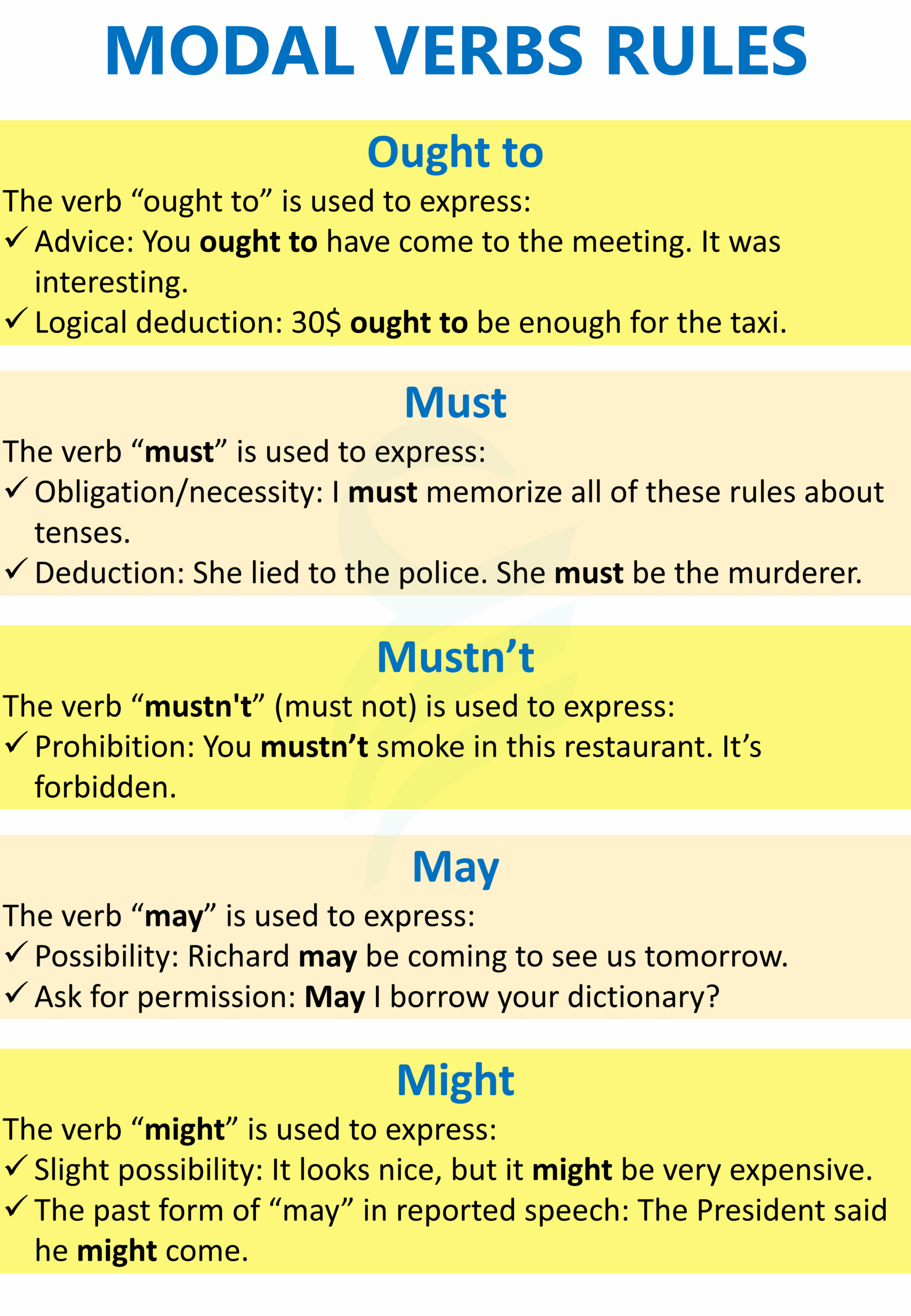
Modal verbs are auxiliary verbs used to express various degrees of necessity, possibility, permission, and ability. They help convey the attitude or mood of the speaker. In English, modal verbs include can, could, may, might, must, shall, should, will, would, and ought to. Let’s explore some examples of modal verbs in action.
1. Must: She must study for her exam tomorrow. This shows a strong necessity or obligation.
2. Can: I can speak Spanish fluently. This indicates an ability or capability.
3. May: You may borrow my car if you promise to be careful. This shows permission or possibility.
4. Should: We should arrive at the airport early to catch our flight. This suggests a recommendation or advice.
5. Could: He could have helped us with the project, but he chose not to. This indicates past ability or possibility.
Modal verbs can also be used to express politeness, requests, offers, and suggestions. They play a crucial role in shaping the tone and meaning of sentences. By understanding how to use modal verbs effectively, you can enhance your communication skills and convey your message with clarity and precision.
Overall, modal verbs are versatile tools that add depth and nuance to the English language. Whether you are expressing certainty, asking for permission, making a suggestion, or offering assistance, modal verbs can help you communicate effectively in various situations. Practice using modal verbs in your writing and speech to become more proficient in expressing yourself in English.
Next time you come across a sentence with a modal verb, pay attention to the subtle nuances it conveys and how it influences the overall meaning of the sentence. Modal verbs are powerful linguistic tools that can enhance your communication skills and make your language more expressive and nuanced.