Understanding the various tenses in English grammar is essential for effective communication. One of the tenses that often confuses learners is the past perfect tense. It is used to indicate an action that was completed before another action in the past. Mastering the past perfect tense can greatly enhance your writing and speaking skills.
Many people struggle with when to use the past perfect tense and how to form it correctly. By learning the rules and practicing its usage, you can become more proficient in conveying precise timelines and sequences of events in your writing.
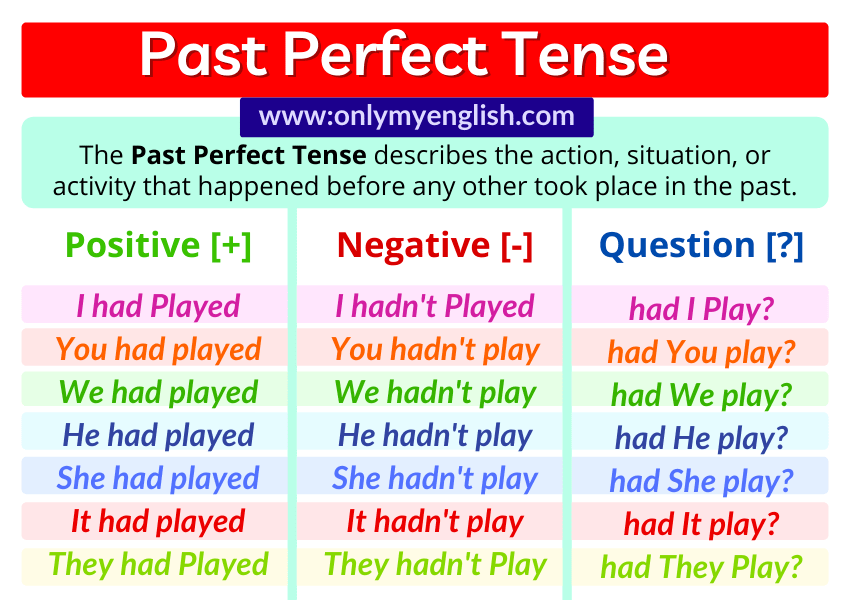
Form of Past Perfect Tense
The past perfect tense is formed by using the auxiliary verb “had” followed by the past participle of the main verb. For example, “I had finished my homework before dinner.” In this sentence, “had finished” is the past perfect form of the verb “finish.” It is important to remember to use “had” for all subjects when forming the past perfect tense.
It is also common to use the past perfect tense in reported speech to indicate that the reported action occurred before the reporting verb. For instance, “She said that she had already seen the movie.” Here, “had already seen” is the past perfect form of the verb “see.”
Additionally, the past perfect tense can be used to show cause and effect relationships in the past. For example, “Because he had studied hard, he passed the exam with flying colors.” In this sentence, the action of studying hard (past perfect) led to the result of passing the exam (simple past).
Overall, mastering the past perfect tense can greatly improve the clarity and precision of your writing. By understanding its form and usage, you can effectively convey the sequence of events in the past and avoid confusion for your readers.
In conclusion, the past perfect tense plays a crucial role in accurately expressing the timing of events in relation to one another. By practicing and incorporating this tense into your writing, you can elevate the quality of your communication and better convey complex timelines and sequences.