Pronouns are words that are used in place of nouns to avoid repetition and make sentences flow better. They can refer to people, animals, things, or ideas. Pronouns play an important role in language and communication, allowing us to express ourselves more efficiently.
There are several different types of pronouns, each serving a specific purpose in a sentence. Some common pronouns include personal pronouns, possessive pronouns, reflexive pronouns, demonstrative pronouns, and relative pronouns.
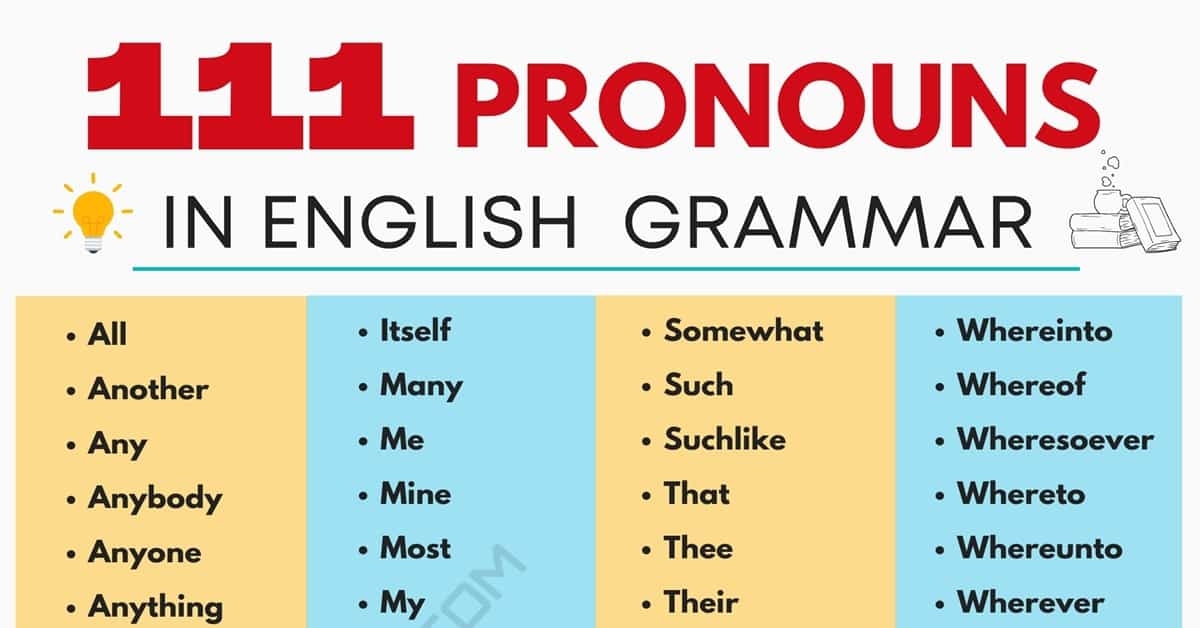
Full List of Pronouns:
– Personal Pronouns: I, you, he, she, it, we, they
– Possessive Pronouns: mine, yours, his, hers, its, ours, theirs
– Reflexive Pronouns: myself, yourself, himself, herself, itself, ourselves, themselves
– Demonstrative Pronouns: this, that, these, those
– Relative Pronouns: who, whom, whose, which, that
Personal pronouns are used to refer to specific people or things, while possessive pronouns show ownership or possession. Reflexive pronouns are used to reflect back to the subject of the sentence, while demonstrative pronouns point to specific things. Relative pronouns introduce relative clauses that provide additional information about a noun in the sentence.
It’s important to use pronouns correctly in sentences to ensure clarity and coherence. Using the wrong pronoun or omitting pronouns altogether can lead to confusion and ambiguity in communication. By understanding the different types of pronouns and how they function in sentences, you can improve your writing and speaking skills.
Next time you’re writing or speaking, pay attention to the pronouns you use and make sure they are appropriate for the context. Practicing with pronouns will help you become more proficient in using them effectively. Remember, pronouns are essential tools in language that help us communicate more efficiently and express ourselves with precision.
In conclusion, pronouns are versatile words that serve a variety of functions in language. By familiarizing yourself with the full list of pronouns and understanding how to use them correctly, you can enhance your communication skills and express yourself more effectively. So, next time you’re constructing a sentence, don’t forget to consider the role of pronouns and choose the right ones for the job.